MEDICAL CANNABIS PATIENTS & CAREGIVERS
|
The Oklahoma Medical Marijuana Authority (OMMA) oversees the Oklahoma Medical Marijuana Program, established through a voter-approved State Question 788 in 2018. Patients and their caregivers must be registered with the program to benefit from the rights and protections granted under these statutes. |
Medical cannabis may not be the best treatment choice for all patients. Learn more.
A LEGAL MEDICAL CANNABIS PATIENT ...
1. Is an Oklahoma resident and can provide proof of residency.
2. Is age 18 or older (or is a minor patient, age 0-17, whose parent or legal guardian applies on their behalf).
3. Has received a signed physician recommendation form from a licensed Oklahoma physician who is registered with OMMA (required as of January 1, 2026). Oklahoma does not maintain a fixed list of qualifying conditions. Under State Question 788, any licensed Oklahoma physician may recommend cannabis for any condition they deem appropriate using their clinical judgment.
Conditions for which physicians commonly issue recommendations include, but are not limited to:
- Chronic pain
- Cancer
- Epilepsy or seizure disorders
- Multiple sclerosis
- Post-traumatic stress disorder (PTSD)
- Crohn's disease
- Anxiety and depression
- Glaucoma
- HIV/AIDS
- Cachexia (wasting syndrome)
Because Oklahoma imposes no fixed condition list, any condition may qualify if a registered physician determines cannabis is appropriate. Visit the OMMA Physicians page for more information.
4. Has submitted a completed application, supporting documents, and the application fee to OMMA through the OMMA MedPortal.
5. Holds a valid OMMA-issued medical cannabis patient license card, which serves as legal proof of patient status.
ENROLLMENT PROCESS
To apply for an Oklahoma medical cannabis patient license:
Step 1: Visit a licensed Oklahoma physician who is registered with OMMA. As of January 1, 2026, physicians must be registered with OMMA and have completed the required medical cannabis education before they may sign a recommendation form. A current list of registered physicians is available from OMMA.
Step 2: Have your physician complete and sign the Adult Patient Physician Recommendation Form. The form must be dated within 30 days of your application submission date.
Step 3: Gather required documents. You will need proof of Oklahoma residency (such as an Oklahoma driver's license or ID, utility bill, residential property deed, rental agreement, or prior-year state tax return), proof of identity, and a clear color digital photo. See the full documentation checklist on the OMMA Patient Licenses page.
Step 4: Apply online through the OMMA MedPortal. Upload all required documents and your physician recommendation form.
Step 5: Pay the application fee. The standard fee is $100. Patients who provide proof of Medicaid (SoonerSelect), Medicare enrollment, or status as a 100% disabled veteran pay a reduced fee of $20. Fees are non-refundable. Payment must be made by Visa, MasterCard, or Discover.
Step 6: Await approval. OMMA processes patient applications within 14 business days. Once approved, you will receive an approval notification. Your license card serves as legal proof of your patient status. If you are approved but have not received your card within 30 days, log into your account at the OMMA MedPortal to request a replacement.
PATIENT RENEWAL
Adult patient licenses are valid for up to two years from the date of issuance.
To renew your license, you must submit a new application through the OMMA MedPortal, including a new physician recommendation form dated within 30 days of the renewal application date. The renewal fee is $100 (or $20 for eligible Medicaid, Medicare, or 100% disabled veteran patients). Licenses are subject to revocation by the recommending physician or OMMA at any time. For renewal instructions, visit the OMMA Patient Licenses page.
ENROLLING MINOR PATIENTS
Oklahoma residents under age 18 may apply for a minor patient license. Minor patient licenses are valid for up to two years from the date of issuance or until the patient turns 18, whichever comes first. Minor applications require a Minor Patient Physician Recommendation Form signed by two licensed Oklahoma physicians. A parent or legal guardian must also sign the application and designate themselves as the minor's caregiver. Only a parent or legal guardian may serve as a caregiver for a minor patient.
Oklahoma's caregiver license is available to designated caregivers of homebound patients, or patients who need assistance due to a developmental disability or physical or mental condition that prevents self-administration or purchase. The patient's physician must certify the need for a caregiver on the Adult Patient Physician Recommendation Form. Being a minor patient does not, by itself, qualify a patient for a caregiver; a physician certification of need is required (except for minor patients, whose caregiver must be a parent or legal guardian). Caregivers hold the same possession and cultivation rights as the patient they serve, but may not use cannabis themselves unless they also hold their own patient license.
A caregiver
- is an Oklahoma resident age 18 or older.
- is designated by the patient (or the patient's parent or legal guardian for a minor patient).
- Submits proof of the patient's license and homebound or disability status.
- Submits the completed Caregiver Designation Form (signed by the patient, or if a minor, signed by the patient's parent or guardian).
- Apply through the OMMA MedPortal and pay the applicable fee.
Dispensaries:
Once licensed, patients may purchase cannabis from any OMMA-licensed dispensary. Oklahoma has one of the highest concentrations of licensed dispensaries in the country. To verify whether a dispensary is licensed, use the OMMA Verify tool.
What to bring:
- Your valid OMMA medical cannabis patient license (digital or printed from your OMMA account), or your official OMMA approval email or MedPortal approval notification, which is accepted as temporary identification at dispensaries.
- Government-issued photo ID.
- A list of your current medications (recommended for your first visit).
- Insurance does not cover the cost of medical cannabis.
Possession Limits
A licensed patient may legally possess at one time:
- Up to 3 oz. (84.9 g) of cannabis on their person
- Up to 8 oz. (226.4 g) of cannabis at their residence
- Up to 1 oz. (28.3 g) of concentrated cannabis
- Up to 72 oz. (2,037.6 g) of edible cannabis
- Up to 72 oz. of topical cannabis
- 6 mature cannabis plants and the harvested cannabis from those plants
- 6 seedling plants
Home Cultivation:
Licensed patients may cultivate cannabis at home.
- Plants must be grown on real property owned by the patient, or the patient must have written permission from the property owner.
- Plants must not be visible from any adjacent street by a person with 20/20 vision.
- Use of potentially hazardous extraction processes (butane, propane, carbon dioxide) is prohibited on residential property.
Caregivers may also cultivate on behalf of their designated patient(s), subject to the same plant limits per patient.
Need tips on home cultivation?
Cannabis Product Safety:
Cannabis, in its natural form, is inherently safe for most patients, but it is especially susceptible to contaminants during cultivation, manufacturing, handling & even storing. Whether you are purchasing cannabis from regulated, grey, or illicit markets or cultivating your own cannabis, you should be aware of the contaminants commonly found in cannabis and the symptoms that accompany their presence.

Products sold in Oklahoma's dispensaries and adult-use retail locations must be tested for contaminants, pesticides, and adulterants based on these thresholds set by state regulators. For more information about cannabis safety, download ASA's "What’s in Your Cannabis? A Patient & Consumer Guide to Navigating Cannabis Safety."
It can be challenging for patients to determine which businesses offering cannabis products are licensed and approved by the state. Review this list of medical cannabis retailers to find out where to purchase regulated cannabis in Oklahoma.
Licensed patients may use cannabis on private property, but cannot smoke or vape it in public places where it is illegal to smoke or vape commercial tobacco.
Property owners and businesses may prohibit smoking and vaping cannabis on their premises, within structures, or within 10 feet of any entryway, under 63 O.S. § 427.8(C). However, a property owner or business may not prohibit a patient from using non-smoke or non-vapor cannabis products, such as edibles, tinctures, or topicals, that are otherwise legally permitted.
Smoking and vaping cannabis is prohibited in the same locations where tobacco smoking is prohibited under Oklahoma's Smoking in Public Places and Indoor Workplaces Act (63 O.S. § 1-1521 et seq.). This includes public places, indoor workplaces, educational facilities, and state-owned buildings.
Smoking and vaping cannabis is generally permitted in:
- Stand-alone bars, taverns, and cigar bars
- Guest rooms of lodging establishments where smoking is not otherwise prohibited
- Private offices used exclusively by one or more smokers or licensed patients
- Outdoor restaurant seating areas, except within 15 feet of a public doorway or air intake
- Employer-designated enclosed smoking rooms where no work is performed
Minor patients may not smoke or vape cannabis unless both recommending physicians certify it is medically necessary.
Oklahoma does not have a legal adult-use cannabis market. A valid medical cannabis registration is the only legal pathway to access cannabis in the state.
Federal Protections Apply Only to Registered Patients
Some federal protections are now available, but only to patients who are officially registered in their state’s medical cannabis program.
A federal order issued April 28th,2026, AG Order No. 6754-2026, treats a state medical cannabis certification or registration as similar to a prescription under federal law. This means that being registered is not just a state requirement; it may also affect whether a patient qualifies for federal protections.
To receive these protections, a patient’s registration must stay active, current, and in good standing. Learn more here.
Legal Protections
A licensed patient in actual possession of their OMMA license is not subject to arrest, prosecution, or penalty under state or local law for conduct permitted under the program.
- Patients may not be denied eligibility for public assistance programs, including Medicaid, SNAP, WIC, TANF, or similar programs, solely because of their patient status, unless required by federal law.
- Patients may not be denied the right to own, purchase, or possess a firearm, ammunition, or firearm accessories solely because they are patients. Note: federal firearms law may impose separate restrictions that are unaffected by state law.
Civil Protections
- Employment - Employers may not discipline, terminate, or refuse to hire a person solely because they hold an Oklahoma medical cannabis patient license, unless required by federal law or to maintain federal funding. Employers may not take adverse employment action solely based on a positive cannabis test, unless the employee has safety-sensitive job duties or was possessing, consuming, or under the influence of cannabis at work. Employers are not required to permit possession or use of cannabis at the workplace.
- Housing - No landlord may refuse to lease to or penalize a licensed patient solely because of their patient status, unless failing to do so would cause a financial or licensing-related loss under federal law or regulations.
- Child Custody - Licensed patients may not be denied custody, visitation, or parenting time with a minor child solely based on their patient status. There is no presumption of neglect or child endangerment for conduct permitted under the law, unless the patient's behavior creates an unreasonable danger to the safety of the minor child.
- Organ Transplant - For the purposes of medical care, including organ transplants, a licensed patient's authorized use of cannabis is considered equivalent to the use of any other physician-directed medication and does not constitute use of an illicit substance or otherwise disqualify the patient from medical care.
Privacy Protections
Patient application and license information maintained by OMMA is subject to state privacy protections. OMMA does not publish a list of licensed patients.
Keeping the Medical Program Strong:
Enrollment helps demonstrate continued patient need for Oklahoma’s medical cannabis program. A strong registry helps protect and sustain the program, supports continued access for patients with serious health needs, and reinforces the importance of maintaining a medical pathway alongside adult-use access.
Oklahoma offers a temporary out-of-state patient license for non-residents who hold a valid medical cannabis license issued by another state with a state-regulated program. Temporary licenses are valid for 30 days, cost $100 (non-refundable), and may be renewed by submitting a new application. Applicants must provide proof of their valid out-of-state medical cannabis license.
To apply, visit the OMMA MedPortal. Temporary license holders have the same possession and use rights as Oklahoma resident patients while their license is valid.
For more information about traveling as a medical cannabis patient, check out our Travel Guide.
*UPDATE: AG ORDER NO. 6754-2026 CHANGED FEDERAL CANNABIS LAWS ON APRIL 28, 2026: Learn more here.
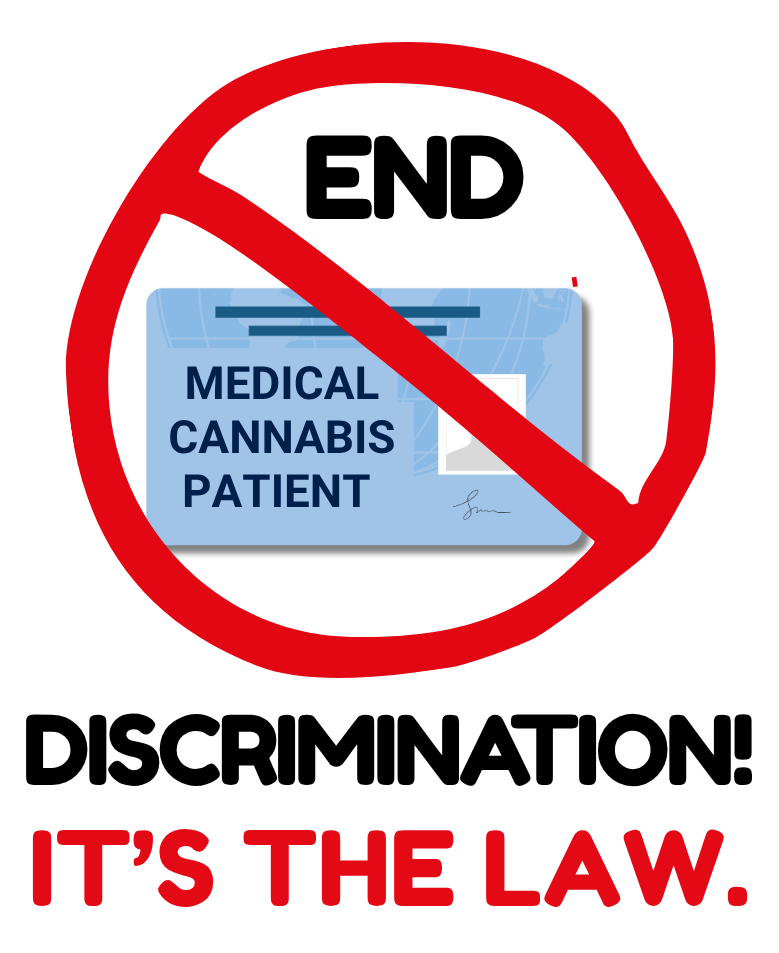
Federal cannabis laws affect far more than whether a patient can access medical cannabis. For decades, federal prohibition has limited protections for medical cannabis patients under laws such as the Americans with Disabilities Act (ADA) and the Fair Housing Act (FHA). As a result, patients have often been denied the basic protections that people with other serious health conditions expect in employment, housing, healthcare, and access to federal programs.
Federal prohibition has also affected patients’ access to essential healthcare, housing, and financial support programs, sometimes forcing patients to choose between the medicine they need and the benefits they depend on. It has also created barriers to federal employment, healthcare autonomy, firearm ownership, and other aspects of daily life.
As federal and state cannabis laws change, implementation matters. Advocates must stay vigilant to ensure public agencies, private institutions, employers, housing providers, and healthcare systems update their policies in ways that respect patient rights and protect safe, legal access to medical cannabis.
It is important to stay active, engaged, and informed. Sign up to get ASA updates and learn more about ending patient discrimination.
Rights and protections for medical cannabis patients are evolving. In some cases, outdated policies may impact how patients are treated. In other cases, like those in the military, policy changes will have to come from Washington, DC. In the case of organ transplants, stigma still plays a role in medical cannabis patients having access to life-saving treatment, even if state laws ban discrimination. Please use the resources below to better understand patient rights and how to navigate these programs and services.
Medical cannabis may be legal in your state, but it is illegal to cross state lines, even if the bordering state also has a medical cannabis program. For more information about traveling as a medical cannabis patient, check out our Travel Guide.
Stigma and discrimination also make patients targets for law enforcement encounters. Keep in mind that the best law enforcement encounter is the one that never occurs! It's crucial for individuals involved in medical cannabis to understand not only medical cannabis laws and regulations but also their rights. Be Prepared. Know Your Rights!
| State laws frequently change; if you find information that is out of date, incorrect, or has a broken link, let us know! Email [email protected] |
Medical cannabis patients can find additional resources here.
Get Involved! Learn more about ASA Campaigns and Take Action to improve the lives of medical cannabis patients today!
If you appreciate ASA's work, join now to become a part of the movement & sign up to get ASA updates.
Share this page