Medical Cannabis Patients: Claim Your Federal Protections & Privileges
Patient and Caregiver's Guide to Exercising Your Rights and Fighting for Recognition Under the New Cannabis Laws
On April 28, 2026, federal cannabis policy changed.
The Department of Justice issued AG Order No. 6754-2026, placing FDA-approved cannabis products and cannabis products regulated by qualifying state medical cannabis licenses into Schedule III of the Controlled Substances Act. For the first time, federal law recognizes state medical cannabis programs as part of the healthcare landscape and recognizes patients participating in those programs as using cannabis under a lawful medical framework.
Federal laws affect far more than whether a patient can possess cannabis. For years, medical cannabis patients were excluded from basic protections. This change validates the real-world experiences of patients and medical professionals and extends federal rights and protections in housing, employment, healthcare, and federal services and programs.
In other words, medical cannabis patients can no longer be excluded or punished simply for using cannabis as medicine.
The rights and protections under the Americans with Disabilities Act, the Fair Housing Act, and Section 504 of the Rehabilitation Act now apply to medical cannabis patients. But agencies, employers, landlords, healthcare facilities, and public programs will not automatically update their policies just because the law has changed.
Laws have changed. Stigma will delay implementation.
Medical cannabis patients in state-approved programs must assert their rights, demand fair treatment, and challenge policies that still treat them like criminals. Some systems will move slowly. Some will resist. Some may try to ignore the change altogether.
That is why patients, caregivers, providers, advocates, and allies must act now.
Rights Only Exist if They Are Exercised
The recognition of cannabis as legitimate medicine grants patients federal rights and protected access. But rights mean very little if people are too afraid, too isolated, or too exhausted to use them. Medical cannabis patients have spent decades hiding their medicine and avoiding disclosure because of the very real risk of losing housing, employment, healthcare, child custody, public benefits, services, or medical procedures.
That era must end. But this legal shift does not automatically rewrite every outdated policy, form, drug testing rule, housing policy, hospital protocol, or agency practice.
Medical cannabis patients still need to be prepared to assert their rights, document discrimination, demand written explanations, and push public and private systems to catch up with the law. This will require advocacy from every angle: the White House, federal agencies, Congress, state agencies, healthcare providers, landlords, employers, and patients themselves. ASA is here to help!
What Patients & Caregivers Can Do Now to Exercise Their Rights |
You do not need to wait for agencies to figure this out. Medical cannabis patients and caregivers can claim these rights, protections, and privileges now!
ASSERT YOUR RIGHTS
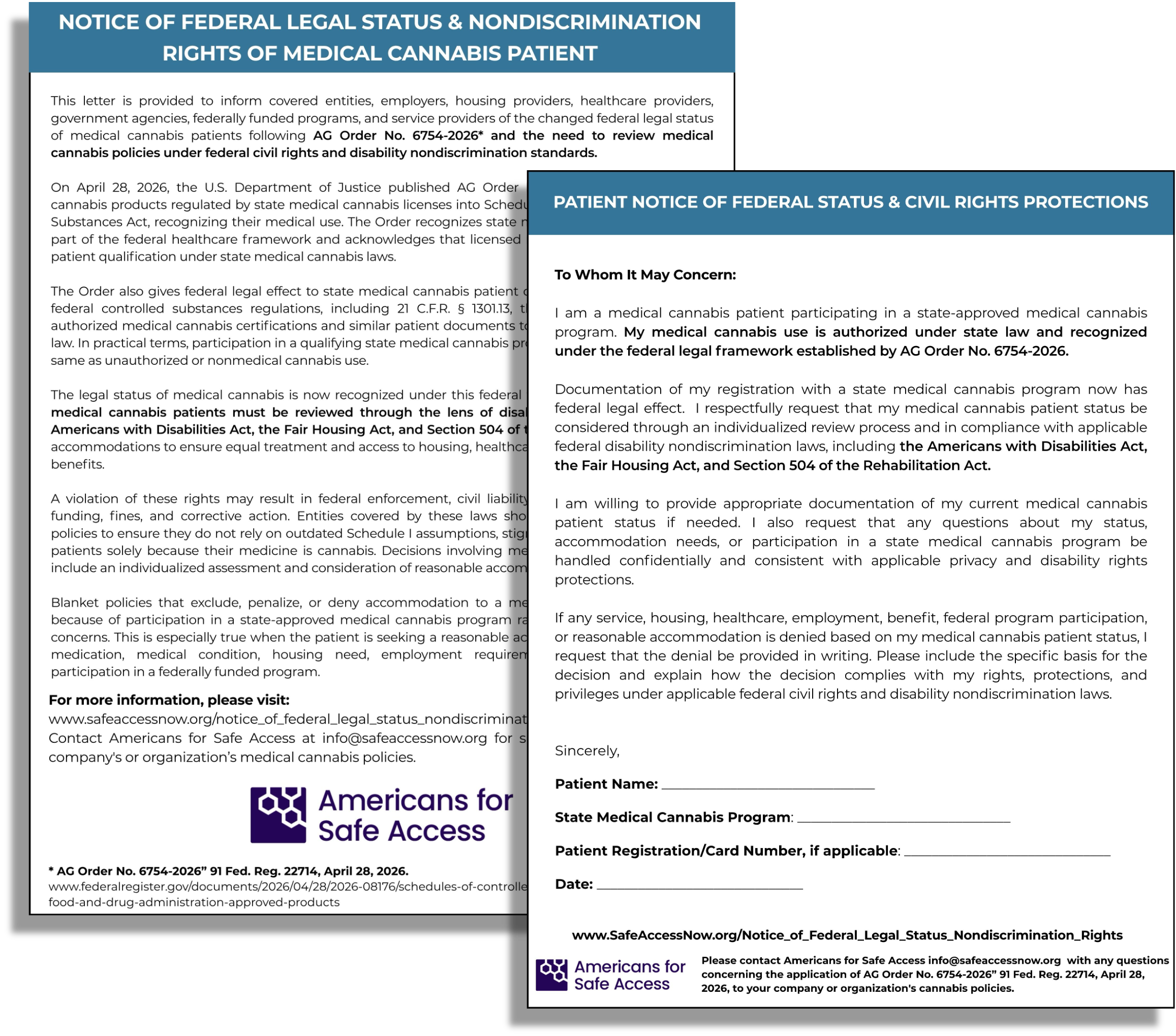 Describe yourself as a medical cannabis patient participating in a state-authorized program. Do not allow others to frame your medicine as non-medical use, misconduct, or substance misuse. Use these "Notice of Federal Legal Status & Nondiscrimination Rights of Medical Cannabis Patient" one-pagers to educate employers, housing providers, healthcare providers, government agencies, federally funded programs, and service providers.
Download Notice of Federal Legal Status: Patient
Download Notice of Federal Legal Status: Caregiver
If you are denied housing, care, employment, benefits, services, or accommodation, ask for the policy and decision in writing. A written explanation can help identify whether the decision is based on outdated assumptions, stigma, or policies that need to be challenged.
BE PREPARED
 Make sure your state medical cannabis registration is up to date. Keep documentation of your state medical cannabis registration (healthcare provider certification, ID card, etc.), caregiver authorization, and product information where appropriate with your medicine.
Save emails, letters, denial notices, drug testing communications, housing notices, medical records, policy documents, and names of decision-makers. Documentation is not just paperwork. It is how individual experiences become evidence for policy change.
DEMAND FAIR TREATMENT
Patients should not be automatically excluded from housing, healthcare, employment, public benefits, federal services, or private services solely because they are registered medical cannabis patients.
A cannabis-positive test alone does not prove impairment, misconduct, unsafe conduct, poor performance, or lack of fitness for duty. Policies must move toward individualized review, actual risk, clinical judgment, reasonable accommodation, and evidence-based decision-making.
EDUCATE YOUR COMMUNITY
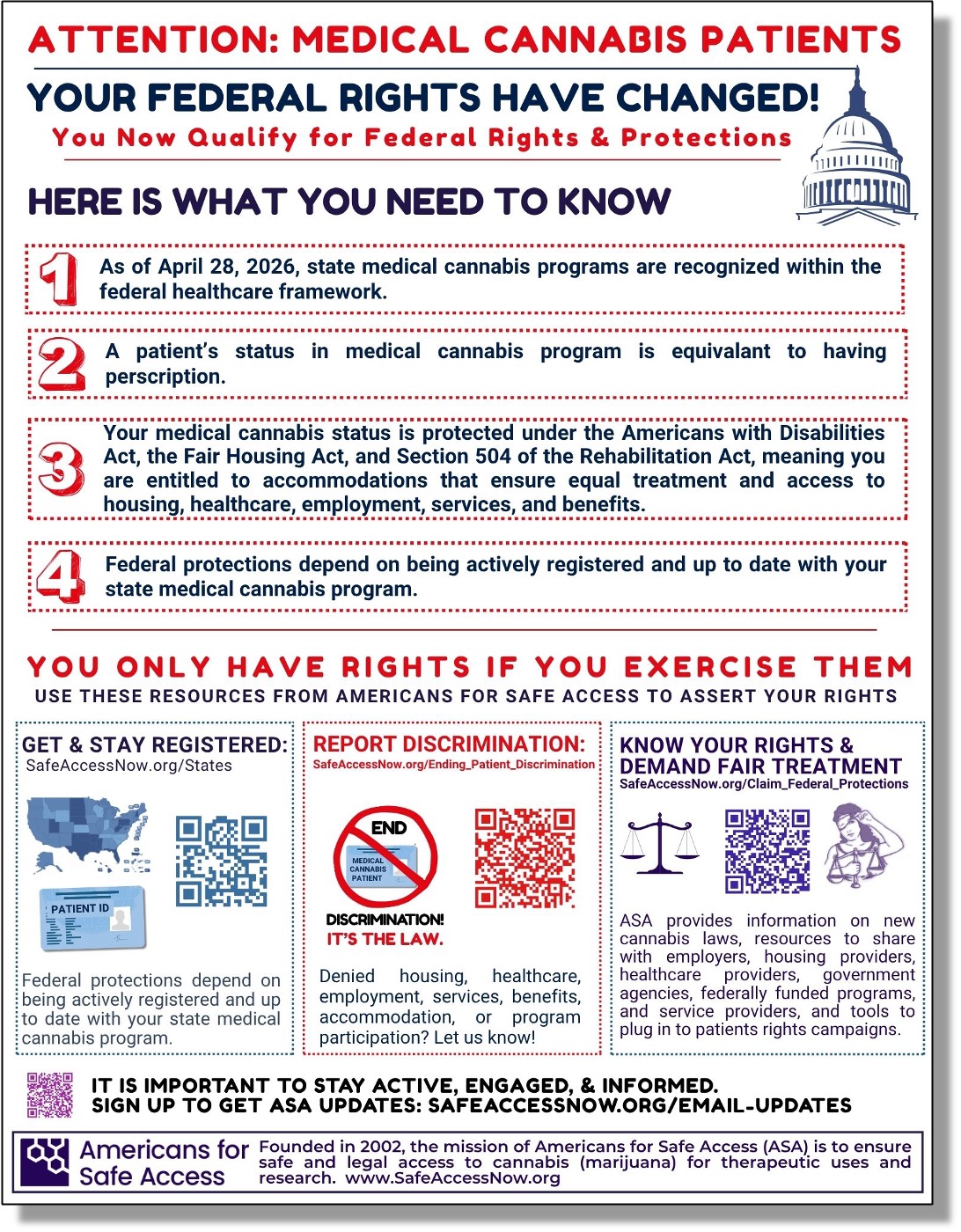
 Patients should not have to fight these battles alone. Share information with your family, healthcare providers, housing advocates, disability rights organizations, veterans’ groups, legal aid networks, patient communities, and elected officials.
The more people understand that medical cannabis patients are no longer violating federal law, the harder it becomes for outdated policies to survive.
Download and share these posters/flyers to spread the word! Reach out to ASA for presentations and other materials to help with your outreach efforts.
REPORT DISCRIMINATION
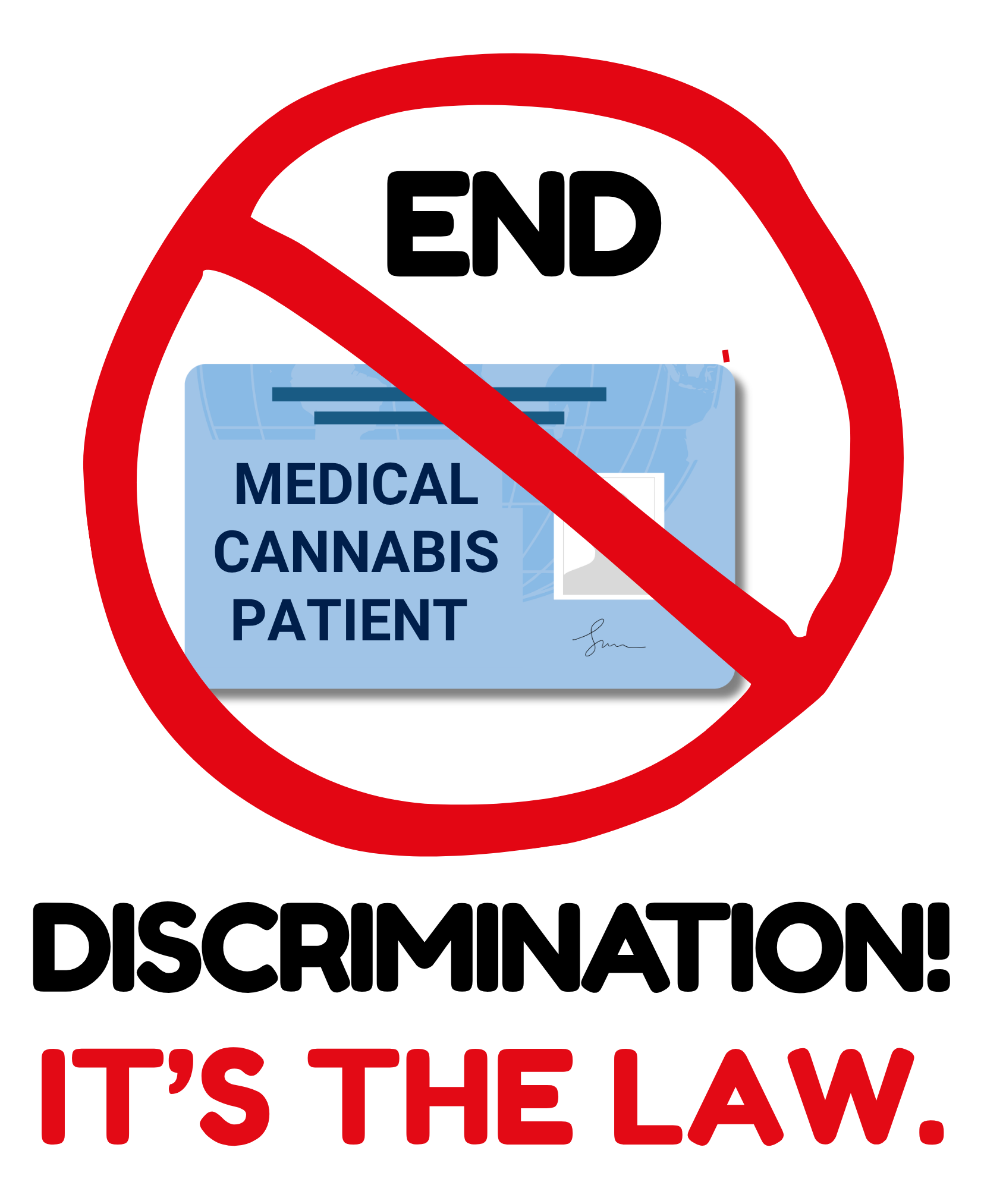 ASA is collecting reports from patients, caregivers, veterans, workers, tenants, parents, service members, and others who have experienced discrimination because of medical cannabis.
These reports help ASA identify patterns, educate policymakers, support legal and administrative advocacy, and push agencies, institutions, and private actors to update harmful policies.
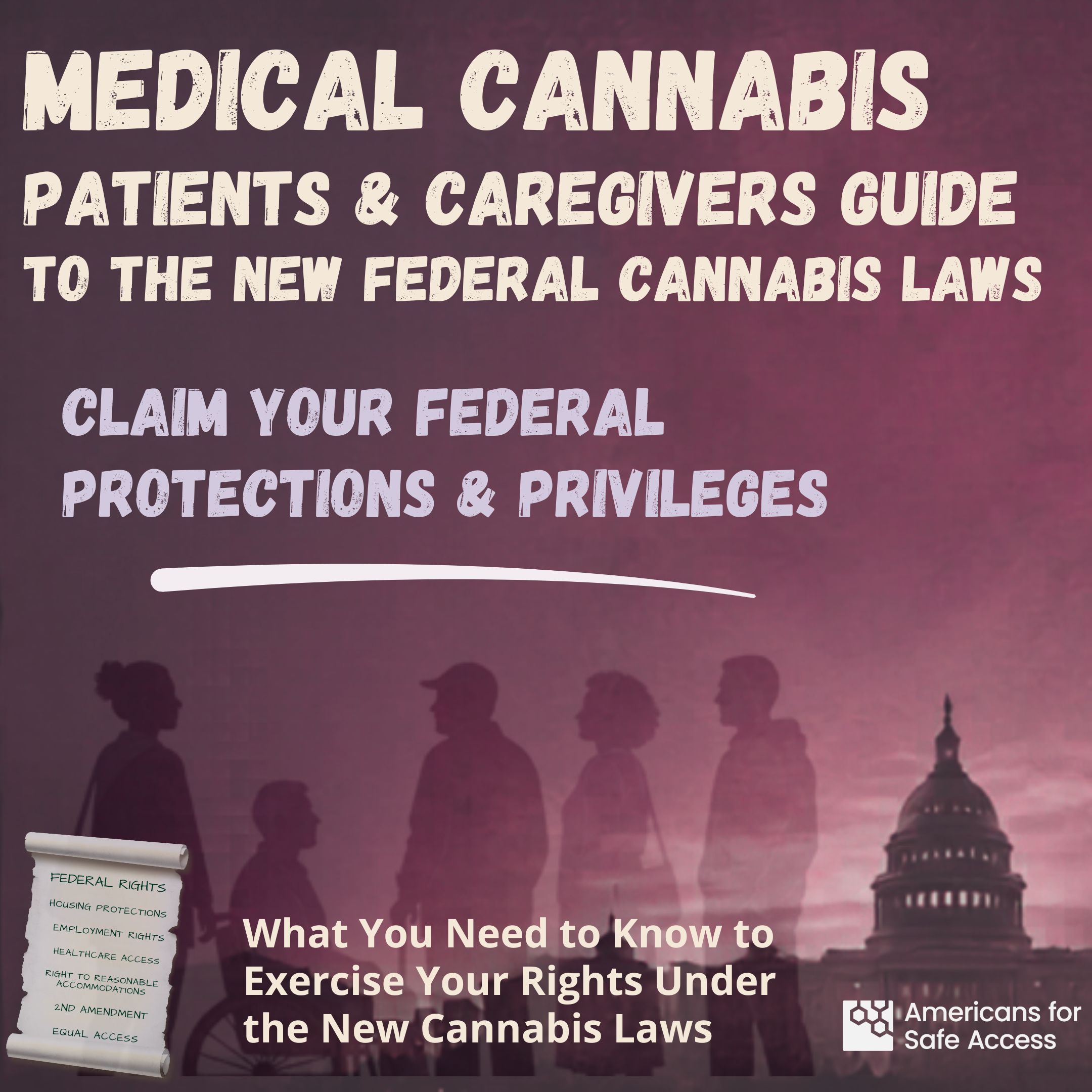
See the ASA full Patient & Caregiver Guide to New Federal Laws here!
Patients and Caregivers Must Take Action Now to Ensure Recognition! |
Tell President Trump & the Department of Justice to Guide and Enforce Implementation

Americans for Safe Access is calling on the White House and federal agencies to make sure this change has practical meaning for patients. Federal policy must now move from automatic exclusion to individualized review, reasonable accommodation, patient safety, clinical judgment, and actual evidence of risk.
ASA is asking federal agencies to update policies that still treat medical cannabis patients as categorically engaged in illegal drug use and to issue guidance protecting patients in housing, healthcare, employment, veterans’ services, disability rights, federal benefits, and public programs.
Sign on to the letter to Trump & DOJ.
Tell Congress to Oversee Implementation and Finish What DOJ Started
 Federal agencies must act now, but Congress also has a responsibility to make sure this transition protects patients.
ASA is calling on Congress to require agency cooperation through the appropriations process and to pass comprehensive medical cannabis legislation. Through appropriations, Congress should require federal agencies to review and update policies, guidance documents, forms, enforcement practices, grant conditions, and program rules that still rely on outdated Schedule I assumptions.
Congress should also pass comprehensive medical cannabis legislation that creates a national medical cannabis program, protects patients, supports research, improves product safety, integrates cannabis into healthcare, and ends the patchwork of conflicting rules that leaves patients vulnerable.
Tell Congress to protect medical cannabis patients!
ENSURE ASA CAN FIGHT FOR PATIENTS
Medical cannabis patients have waited long enough for federal policy to catch up with medical reality. The law has changed. Now, policy, practice, and enforcement must change too.
Patients need enforceable rights, safe access, consistent standards, and a national access program!
We are closer than ever to fulfilling ASA’s mission. Now is the time to double our efforts and get this done.
Assert your rights. Be prepared. Demand fair treatment. Report discrimination. Educate your community. Take Action! |
Changes in cannabis laws at the state and federal levels require vigilance from advocates to ensure implementation in the public and private sectors respects patients' rights and accommodates them accordingly. It is important to stay active, engaged, and informed. Sign up to get ASA updates!

Share this page