CANNABIS SCHEDULING & YOU!
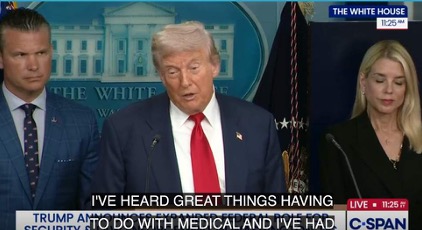
”I’ve heard great things having to do with medical [cannabis]…for pain and various things. I’ve heard some pretty good things. But for other things, I’ve heard some pretty bad things.” - President Trump
In 2022, President Biden called upon the United States’ leading health and law enforcement agencies to initiate a formal review of the federal classification (scheduling) of cannabis, expressing concerns about the appropriateness of its prohibition and associated criminal penalties. This directive marked a crucial step forward in the journey towards embracing the therapeutic potential of cannabis. While the process remains ongoing, the initial findings have already yielded the most significant victory in the fifty-year battle for safe and legal access to medical cannabis: the validation that cannabis has "currently accepted medical use for treatment in the United States"
“Scheduling” refers to the federal classification of drugs, Schedules I-V, created by Congress in 1970 through the Controlled Substances Act (CSA). A substance’s designated schedule determines how it is regulated (prohibited, prescription, or over-the-counter) and the severity of associated criminal penalties for unregulated possession, production, or sales.

Cannabis is classified at the most restrictive level, Schedule I. This schedule is reserved for substances that have been deemed to have a high potential for abuse, have no “accepted medical use in the United States,” and are essentially banned. Over the past 50+ years, the Schedule I status of Cannabis has been responsible for the imprisonment of millions of Americans and barriers to research and development and is at the heart of the struggle for access to cannabis therapeutics.
Scheduling a substance under the Controlled Substances Act (CSA) involves a comprehensive process. This process includes a medical and scientific evaluation known as the "Eight Factor Analysis" and a "five-element test" to determine if the drug has a currently accepted medical use in the United States. This evaluation is conducted by the Health and Human Services (HHS) and the Department of Justice (DOJ). Additionally, there is a review of the United Nations' classification to ensure compliance with international drug treaties.
Over the last 50 years, HHS and DOJ have conducted five scheduling reviews of cannabis, initiated by the petition process defined in the CSA. The last review concluded in 2016 with the DEA’s issuing “Denial of Petition to Initiate Proceedings to Reschedule Marijuana.”
Congress can override this process and schedule or change the scheduling of a substance without HHS or DOJ.
In 2020, the United Nations adopted the World Health Organization’s (WHO) 2015 recommendations and changed the classification of cannabis to recognize its medical use. This change frees any signatory country to international drug treaties to change their classification and facilitate access. Today, over 60 countries have federal medical cannabis programs.
In 2022, President Biden initiated the rescheduling process by issuing a statement that called on the Health and Human Services (HHS) and the Department of Justice (DOJ) to revisit the scheduling of cannabis. In August 2023, HHS recommended a Schedule III status after conducting its review. On May 1, 2023, the DOJ confirmed that it is moving forward with the rescheduling process based on HHS's Schedule III recommendation.
That’s right, HHS and the FDA concluded that cannabis has accepted medical use in the United States, and the DOJ agrees!
On August 30, 2023, HHS confirmed that it had recommended a Schedule III status after conducting its review, and on January 12, 2023, the report HHS sent to the DEA its recommendation was made public through a FOIA request. Americans for Safe Access (ASA) provided guidance and data to the Food & Drug Administration (FDA), which were incorporated into the FDA's approach to the scheduling process and utilized in reaching the conclusion that cannabis does, in fact, have accepted medical use.

The full implications of rescheduling will be determined ultimately by the executive branch. However, one certainty is that cannabis will no longer fall solely under the jurisdiction of the DOJ and the CSA. Currently, state-level cannabis programs operate outside the CSA, making it reasonable to expect that the DOJ would refrain from enforcing drug trafficking statutes for unregulated Schedule II/III substances when cannabis is rescheduled. However, these substances are still illegal and carry significant penalties akin to Schedule I substances.
The definition of all the other schedules (II-V) includes a finding that the substance has “accepted medical use in treatment in the United States,” but this does not mean that the federal government recognizes cannabis as a medicine. This definition is reserved for products that have achieved FDA approval, a process ill-suited for herbal products with multiple active compounds like cannabis. The FDA categorizes “herbal medicines” as dietary supplements that cannot make health claims and are primarily absent from curricula for medical professionals and insurance coverage.
Most products intended for human consumption in the U.S. fall under the Food, Drug, and Cosmetic Act (FDCA) guidelines or the Dietary Supplement Health and Education Act (DSHEA), both regulated by the FDA. However, in January 2023, the FDA declared its inability to regulate cannabinoid products despite their removal from the CSA through the Hemp Authorization of the 2018 Farm Bill. The FDA has urged Congress to create a new pathway with extended authority for this purpose.
State programs operate outside the Controlled Substances Act (CSA), and medical cannabis programs will continue to be protected from federal interference by the Justice Department (DOJ) as long as the medical cannabis amendment to the Commerce-Justice-Science (CJS) budget is reauthorized every year.
No matter what happens next, the FDA has confirmed that cannabis has accepted medical use in the United States. This will no doubt have an impact on attitudes about medical cannabis, reducing stigma and increasing the acceptance of cannabis for medical professionals, employers, state regulators, and hopefully Congress.
Take A Bow, Patients! The federal prohibition of cannabis sent medical cannabis advocates to their states for legal protection and, eventually, access. Through state programs, we were able to develop regulations for various stages of the supply chain, train a workforce, stimulate interest in cannabis research, and, as HHS has concluded, establish “accepted medical use in the United States.”

For medical cannabis advocates, rescheduling means that the struggle for access to medical cannabis has moved to the federal level. A change in schedule pushes the issue before federal agencies beyond determining IF cannabis has accepted medical properties to HOW we can integrate cannabis into the healthcare infrastructure.
But rescheduling alone will not change the experience of cannabis stakeholders. Cannabis in the state programs would remain illegal federally. That would mean that Congress and individual federal agencies will still have to create a pathway for cannabis products for any stakeholder to have the rights and protections afforded to other Americans.
You Can Help Make Cannabis Rescheduling Count for Patients! Get Involved Today
10 Things You Should Know About Trump & Cannabis Scheduling
Conversations around rescheduling in Washington are often murky, full of half-truths, acronyms, and bureaucratic processes that even seasoned observers find confusing.

Federal Cannabis Laws
Over the years, we’ve made progress in easing the severity of the enforcement of federal cannabis laws. However, medical cannabis remains illegal federally, preventing the locally licensed cannabis businesses that serve patients from operating as...

HHS Report & Schedule III
For over 2 decades Americans for Safe Access (ASA) has been advocating for a change in the scheduling of cannabis to recognize its medical use. We are excited to see that the Food & Drug Administration (FDA) incorporated many of our suggestions in...

Share this page