States Must Act to Bring Patients Federal Protections
Tell Your Governor & State Officials: Protect Medical Cannabis Patients Before the June 26 DEA Registration Deadline
 Federal cannabis policy has changed, but patients still need their states to act.
AG Order No. 6754-2026 created a new federal pathway for certain state-licensed medical cannabis businesses to seek DEA registration. This is a major step forward for medical cannabis patients, caregivers, healthcare professionals, and advocates who have worked for decades to secure federal recognition of cannabis medicines.
But the Order does not automatically protect every patient, every business, or every state cannabis program. Adult-use cannabis remains outside the federal medical cannabis framework. Patients who rely on adult-use stores, hemp-derived products, or expired medical registrations may not have the documentation they need to benefit from federal recognition.
That is why governors, state legislators, cannabis regulators, health departments, and attorneys general need to act now, BEFORE THE JUNE 26 DEA REGISTRATION DEADLINE.

Americans for Safe Access has released State Preparedness for Federal Cannabis Regulation & Enforcement: Part 1, State Actions Needed to Preserve & Protect Patient Access Before the June 26, 2026, DEA Registration Deadline, and Watch webinar, "Emergency Action Needed. Are States Prepared for June 26 DEA Medical Cannabis Registration?"
Background:
The June 26, 2026, DEA registration deadline should be treated as a patient-access deadline.
If too few medical cannabis businesses are prepared to apply for DEA registration, patients may be left with federal recognition on paper but no reliable medical supply chain in practice. If states do not help patients enroll, renew, or document medical cannabis status, patients may have a harder time asserting protections in housing, employment, healthcare, education, state services, and other settings.
States do not control the DEA’s final registration decisions, but they do control the systems that make federal recognition practical for patients. States can help patients get documented, help medical cannabis businesses document state-authorized medical activity, and protect access during the federal transition.
What States Should Do
States should take emergency action to:
- Help patients enroll, renew, or re-enter state medical cannabis programs through fast, affordable, confidential pathways.
- Educate patients that the current state medical cannabis documentation now has practical legal significance.
- Issue state verification letters so eligible medical cannabis businesses can document their license status, authorized medical activity, ownership information, premises, and conditions for federal review.
- Educate licensees about the DEA registration opportunity, the June 26 deadline, and the risks of assuming all state-licensed cannabis activity is now protected.
- Restore or preserve medical-only supply chains, especially in adult-use and dual-market states where medical and adult-use systems have been merged or blurred.
- Automatically clear eligible cannabis records so old state cannabis convictions do not block patients, caregivers, workers, owners, or legacy operators from participating in the new federal medical cannabis framework.
What YOU can do
Take Action NOW to Ensure Your State is Preparing for Federal Medical Cannabis Regulations
Contact your governor, state legislators, cannabis regulators, health department, and attorney general today. Ask them to review ASA’s state guidance memo and take emergency action to protect patients before the June 26 DEA registration deadline. Click on the action for your state below>
 Adult-Use/Dual-Market States
Alaska, Arizona, California, Colorado, Connecticut, Delaware, Illinois, Maine, Maryland, Massachusetts, Michigan, Minnesota, Missouri, Montana, Nevada, New Jersey, New Mexico, New York, Ohio, Oregon, Rhode Island, Vermont, Virginia, Washington, Guam, Northern Mariana Islands, U.S. Virgin Islands
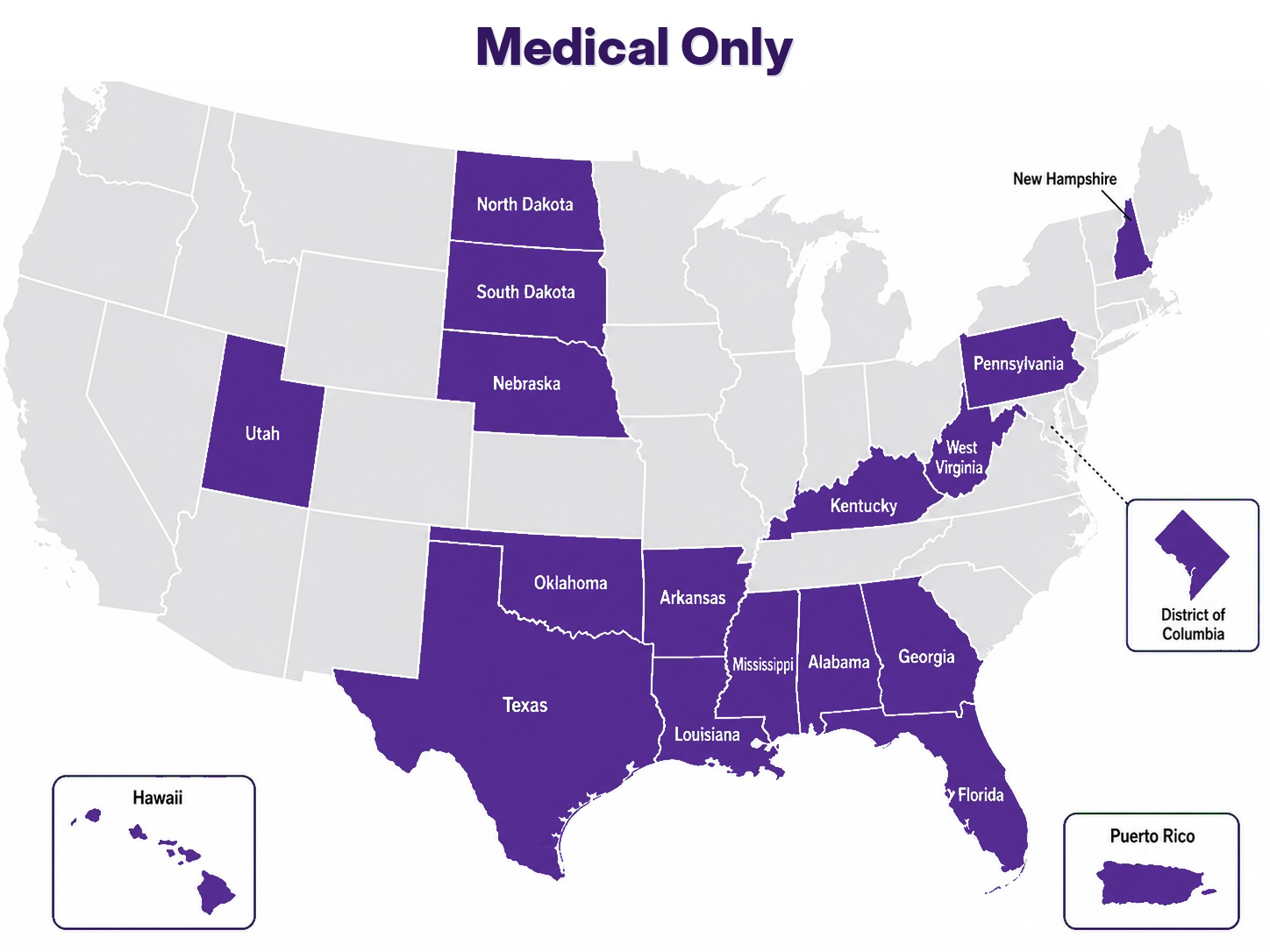 Medical-Only States
Alabama, Arkansas, District of Columbia, Florida, Georgia, Hawaii, Kentucky, Louisiana, Mississippi, Nebraska, New Hampshire, North Dakota, Oklahoma, Pennsylvania, South Dakota, Texas, Utah, West Virginia, Puerto Rico
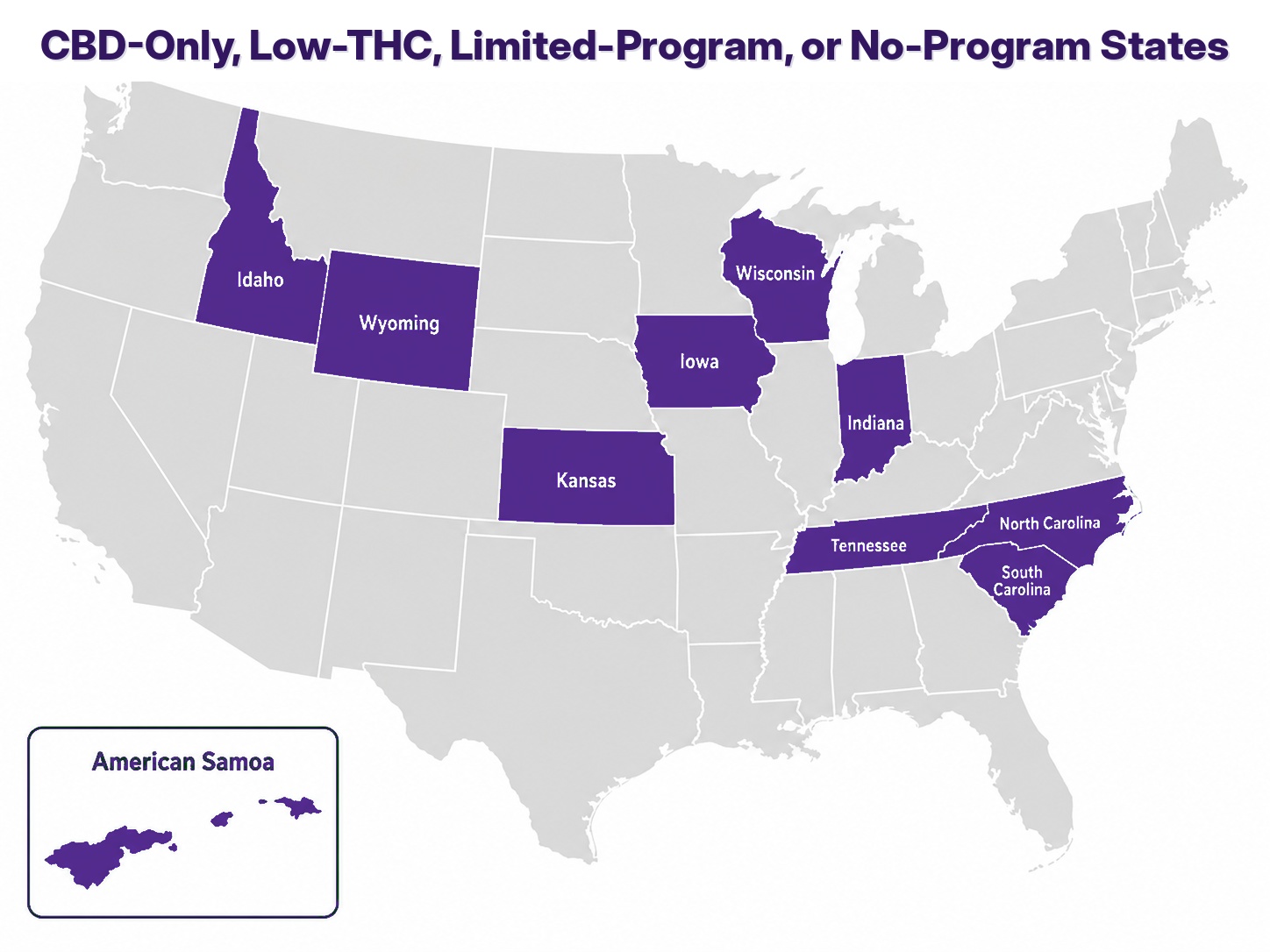 CBD-Only, Low-THC, Limited-Program, or No-Program States
Idaho, Indiana, Iowa, Kansas, North Carolina, South Carolina, Tennessee, Wisconsin, Wyoming, American Samoa
www.safeaccessnow.org/part_1_state_guidance_dea_registration
Share this page