IMPORTANT UPDATE: On APRIL 28th, 2026, the Attorney General ordered the Rescheduling of Cannabis in the state medical cannabis programs from Schedule I to Schedule III through AG Order No. 6754-2026. Learn more about what this means for patients and caregivers here!
All other cannabis remains illegal and is classified as a Schedule I substance under the Controlled Substances Act
MEDICAL CANNABIS PATIENTS HAVE NO CIVIL PROTECTIONS UNDER FEDERAL LAW.
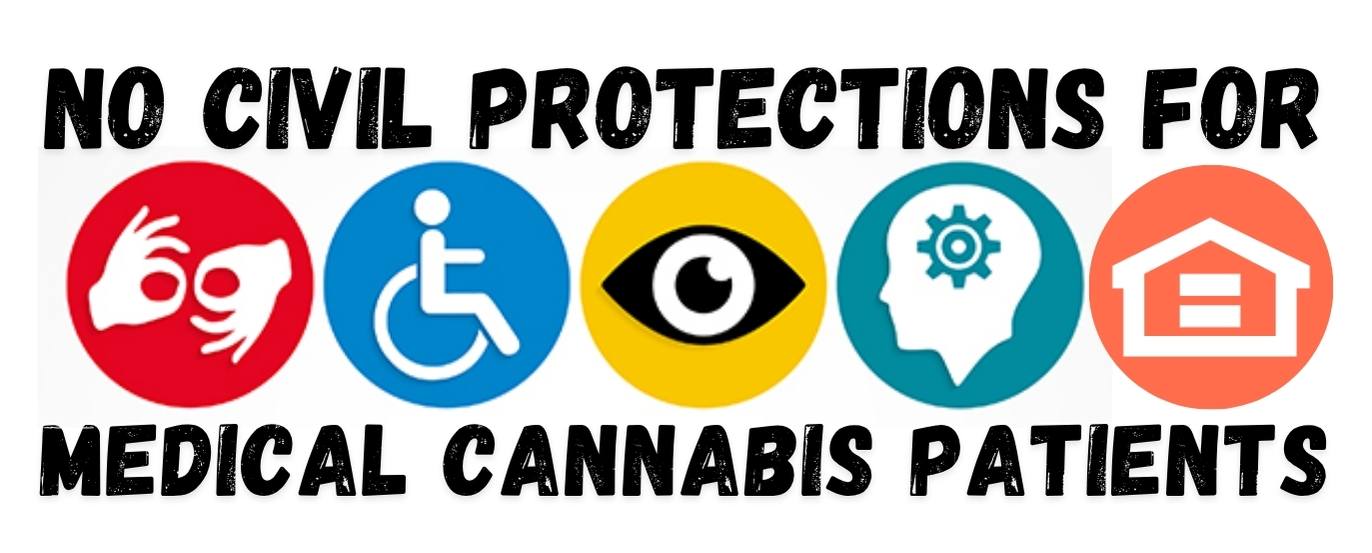 Despite the fact that medical cannabis is legal in some form in 49 states, 4 of 5 U.S. territories, and the District of Columbia, millions of patients relying on cannabis to treat serious and often debilitating conditions remain unprotected under the nation’s most important civil rights laws.
Medical cannabis patients are not protected under the Americans with Disabilities Act (ADA) or the Fair Housing Act (FHA) — two federal laws that were designed to ensure people with disabilities are not discriminated against in the workplace, housing, education, and public services.
Let that sink in: You can be using cannabis medicines under the direction of your physician in accordance with your state’s law, but still be fired from your job, denied housing, or lose access to disability accommodations simply because you're treating your condition with a federally illegal substance.
This is a civil rights crisis, and the only fix is Congress.
WHY THE ADA AND FHA FAIL MEDICAL CANNABIS PATIENTS
The Americans with Disabilities Act of 1990 prohibits discrimination against individuals with disabilities in employment, public accommodations, transportation, and government services (42 U.S.C. § 12101 et seq.).
But here’s the catch: the ADA does not protect individuals who use illegal drugs, and cannabis remains a Schedule I substance under the Controlled Substances Act — defined as having “no currently accepted medical use.”
ADA carveout (42 U.S.C. § 12210):
“The term ‘individual with a disability’ does not include an individual who is currently engaging in the illegal use of drugs…”
Even when cannabis use is recommended by a physician and legal under state law, it is still considered “illegal drug use” under federal law, disqualifying patients from ADA protection.
The Fair Housing Act (42 U.S.C. §§ 3601-3619) offers similar protections from housing discrimination. But courts have consistently ruled that housing providers can evict tenants or deny housing based solely on cannabis use—because federal law overrides any state medical protections.
REAL-LIFE CONSEQUENCES
Here are just a few ways this plays out:
- A veteran using cannabis can be evicted from federally subsidized housing.
- A cancer survivor using cannabis for pain or nausea can be fired from their job or denied reasonable accommodations.
- A child with epilepsy using medical cannabis can be refused enrollment in a public school-based program.
- A chronically ill patient may lose their disability benefits because their prescribed medication is federally illegal.
None of these patients have recourse under the ADA or FHA.
THE COURTS HAVE SPOKEN — AND PATIENTS KEEP LOSING
Federal courts have been crystal clear: unless Congress changes the law, medical cannabis patients are not protected.
- In James v. City of Costa Mesa (2012), the Ninth Circuit ruled that individuals using medical cannabis are not protected under the ADA because cannabis is illegal under federal law.
Decision text via Justia - In Garcia v. Walmart (2021), a worker was fired after testing positive for cannabis, despite having a state medical card. The court upheld the firing, citing federal preemption.
- In Forest City Residential Management v. Beasley (2016), a housing complex in Michigan legally evicted a tenant who was using medical cannabis. The court ruled the eviction was lawful, citing federal housing law.
A LEGISLATIVE FIX: THE MEDICAL CANNABIS AND CANNABINOID ACT (MCCA)
The only way to protect medical cannabis patients from discrimination is to change federal law.
Learn more about the Medical Cannabis and Cannabinoid Act (MCCA)
This proposed legislation would:
- Establish federal recognition of cannabis as a therapeutic treatment, extending the protections of the ADA and the Fair Housing Act to all medical cannabis patients
- Protect public employees, veterans, students, and disability recipients who rely on cannabis therapies from losing critical rights and services;
Until something like the MCCA is passed, patients will continue to face a legal minefield where they are treated as second-class citizens, simply for using the medicine that works for them.
EQUAL RIGHTS REQUIRE FEDERAL RECOGNITION
You shouldn’t have to forfeit your civil rights to access your medicine. But that’s exactly what is happening to millions of Americans using medical cannabis today. These patients aren’t breaking the law—they’re following state laws, working with doctors, and seeking relief from pain, seizures, PTSD, and other serious conditions.
The federal government’s refusal to reconcile cannabis policy with civil rights law is denying patients equal protection under the law.
The ADA and FHA were landmark achievements in American civil rights. It’s time to bring those protections into the 21st century. Congress must act. Patients’ rights—civil rights—are on the line.
If you appreciate ASA's work, sign up to get alerts and updates and make a donation to support ASA's vital mission.

Share this page