MEDICAL CANNABIS PATIENTS & CAREGIVERS
|
The New Mexico Medical Cannabis Program was established through the Lynn and Erin Compassionate Use Act, passed in 2007. The program has expanded over time and is now overseen by the New Mexico Health Department. Patients and their caregivers must be registered with the program to benefit from the rights and protections granted under these statutes. |
Medical cannabis may not be the best treatment choice for all patients. Learn more.
A LEGAL MEDICAL CANNABIS PATIENT ...
A Legal Medical Cannabis Patient:
- Is a New Mexico resident.
- Has one of the qualifying medical conditions certified by a New Mexico-licensed practitioner (MD, DO, nurse practitioner, or prescribing psychologist) who is licensed to prescribe and administer controlled substances and whose primary place of practice is in New Mexico. Conditions include, but are not limited to:
- ALS
- Alzheimer's disease
- Anorexia/cachexia
- Arthritis
- Cancer
- Crohn's disease
- Damage to the nervous tissue of the spinal cord with objective neurological indication of intractable spasticity
- Epilepsy
- Glaucoma
- HIV/AIDS
- Hepatitis C
- Huntington's disease
- Inflammatory bowel disease
- Insomnia
- Lupus
- Multiple sclerosis
- Muscular dystrophy
- Obstructive sleep apnea
- Parkinson's disease
- PTSD
- Painful peripheral neuropathy
- Spinal muscular atrophy
- Spastic quadriplegia
- Tourette's syndrome
- Ulcerative colitis
- Has a written certification from a registered practitioner who has a bona fide practitioner-patient relationship with the patient, including a prior in-person examination.
- Is registered with the NMDOH Medical Cannabis Program through the Online Patient Portal. Applications have been fully online since April 2023, and no paper applications are accepted.
ENROLLMENT PROCESS
Step 1: Schedule an appointment with a New Mexico-licensed practitioner registered with the Medical Cannabis Program. Your practitioner must have examined you in person at least once before certifying via telehealth. Initial certifications require an in-person evaluation. Confirm the appointment format with your practitioner's office before scheduling.
Step 2: Obtain a written certification. If your practitioner determines you are eligible, they will initiate your patient application directly in the NMDOH Online Patient Portal.
Step 3: Create or log in to your account on the NMDOH Medical Cannabis Program Online Patient Portal and complete your portion of the patient application.
Step 4: Upload the following documents through the portal:
- a valid New Mexico government-issued photo ID (driver's license or state ID)
- proof of New Mexico residency
- and, for minor patients, a completed Parental/Guardianship Consent Form.
Step 5: Sign and submit your application. Applications are typically processed within 5 business days. Upon approval, you will have immediate access to your electronic registry identification card through your portal account. There is no fee to enroll in the Medical Cannabis Program or to register and use the Online Patient Portal.
You have 90 calendar days from the date of your written certification to complete and submit your application. If you do not submit within that window, you will need a new certification before applying.
PATIENT RENEWAL
Registry identification cards issued on or after June 16, 2023 are valid for two years from the date of issuance. Cards issued before that date carry a three-year validity period. You should begin the renewal process at least 30 to 45 days before your card expires to avoid any gap in your legal access to medical cannabis.
To renew your registry identification card:
Step 1: Visit your practitioner. Your practitioner must issue a new written certification confirming your continued eligibility. Your previous certification cannot be used for renewal. The certification must be obtained within 90 calendar days prior to the expiration of your current card.
Step 2: Your practitioner will initiate the renewal application in the NMDOH Online Patient Portal.
Step 3: Log in to your portal account, verify the information your practitioner entered, and complete any remaining required fields. Upload your current New Mexico government-issued photo ID.
Step 4: Sign and submit. Renewal applications submitted through the Online Patient Portal are typically processed within 5 business days. Paper renewal applications are no longer accepted.
There is no fee to renew your registry identification card. The NMDOH does charge a $50 fee to replace a lost card.
ENROLLING MINOR PATIENTS
Minors with qualifying conditions may participate in the Medical Cannabis Program. The following requirements apply:
- The minor's practitioner must provide written documentation that they have explained the potential risks and benefits of cannabis use to both the minor and the minor's parent or legal representative.
- The minor's parent or legal guardian must provide written consent to: allow the minor's use of cannabis and cannabis-derived products; serve as the minor's primary caregiver; and control the acquisition of cannabis, dosage, and frequency of use.
- The parent or legal guardian completing the Parental/Guardianship Consent Form must register as the minor's primary caregiver through the Online Patient Portal.
Once a minor patient turns 18, they may apply for their own registry identification card as an adult and no longer need a designated caregiver to participate in the program.
In New Mexico, a caregiver in the Medical Cannabis Program is referred to as a "primary caregiver." Under the Lynn and Erin Compassionate Use Act and 7 NM Admin Code 7.34.3.10(E) and (F), a primary caregiver is a person designated to take responsibility for managing the well-being of a qualified patient with respect to their medical use of cannabis.
To qualify as a primary caregiver in New Mexico, you must:
- Be at least 18 years old.
- Be a resident of New Mexico.
- Have a valid New Mexico driver's license or comparable state-issued photo ID.
- Receive written approval from each patient you will serve, and written approval from at least one certifying practitioner for each patient.
- Not be a family member of the patient within the second degree of consanguinity or the first degree of affinity unless you are the parent, legal guardian, or custodian of a qualified minor patient.
Additional requirements and limits:
- A primary caregiver may manage the well-being of up to four qualified patients at one time.
- A qualified patient may have only one primary caregiver.
- No background check is required.
- A primary caregiver may only be reimbursed by their patient for the actual cost of travel, supplies, or utilities related to their caregiver duties. No payment for labor is permitted.
- All cannabis possessed by a primary caregiver for a patient remains the legal property of the patient.
- A primary caregiver may obtain cannabis from a licensed dispensary on behalf of their patient and, if the patient holds a personal production license, may assist the patient in cultivating cannabis at the licensed cultivation location.
How to register as a primary caregiver:
If you are being added as a caregiver for a new or recertifying patient, your information will be included in that patient's application. Your patient's practitioner and the patient will both approve your designation through the Online Patient Portal.
If you are being added as a caregiver for an existing patient, the patient's practitioner must initiate a separate caregiver application. Once the patient approves your designation, you will receive an email notification to complete your portion of the application through the NMDOH Online Patient Portal. Caregiver applications are typically processed within 5 business days of submission. Upon approval, you will receive an electronic registry identification card through your portal account.
Possession Limits:
Registered patients may purchase up to 425 units (approximately 425 grams, or about 15 ounces) of medical cannabis within a 90-day period from licensed dispensaries, tax exempt. At any given time, a registered patient or their primary caregiver may possess no more than an adequate supply of usable cannabis, defined under 7 NM Admin Code 7.34.4.7(D) as no more than 8 ounces (230 grams). Patients may also possess their personal harvest if they hold a personal production license. Purchases beyond a patient's medical unit limit are treated as adult-use sales and are subject to the Cannabis Excise Tax.
Dispensaries:
Registered patients may purchase medical cannabis from licensed dispensaries across New Mexico. A dispensary may not sell cannabis products to anyone under 18. Patients between the ages of 18 and 20 must present a valid medical cannabis registry identification card and a valid government-issued photo ID to enter a licensed dispensary. Minors under 18 must have their primary caregiver purchase and administer cannabis on their behalf.
Find a licensed dispensary near you using the NMDOH dispensary locator.
What to Bring:
- Your valid New Mexico Medical Cannabis Program registry identification card
- Government-issued photo ID
- A list of your current medications (recommended for your first visit)
- Payment. Insurance does not cover the cost of medical cannabis.
Home Cultivation:
Registered patients in New Mexico may apply for a Personal Production License (PPL) to grow medical cannabis for their own use. Home cultivation requires a separate license and is not automatic with program enrollment.
Under 7 NM Admin Code 7.34.4.8(A) and 7 NM Admin Code 7.34.4.21, the following rules apply to personal production license holders:
- A patient may hold no more than one personal production license at a time.
- Cultivation is permitted indoors or outdoors at a single approved location.
- No more than two personal production licenses may be issued for the same residential location, provided that a second registered patient resides there. Personal production licenses are not issued for non-residential locations.
- A patient with a personal production license may possess no more than four mature female cannabis plants and a combined total of 12 seedlings and male cannabis plants at one time.
- All plant material must be sourced from licensed non-profit producers.
- Cultivation must not be visible from the street or other public areas.
- All cannabis, cannabis-derived products, and related equipment must be kept secure and inaccessible to children.
- A primary caregiver may assist a patient who holds a personal production license in cultivating at the licensed location. The primary caregiver may not independently cultivate cannabis.
To apply for a Personal Production License, visit the NMDOH Medical Cannabis Program. A non-refundable application fee applies.
Need tips on home cultivation?
Cannabis Product Safety:
Cannabis, in its natural form, is inherently safe for most patients, but it is especially susceptible to contaminants during cultivation, manufacturing, handling & even storing. Whether you are purchasing cannabis from regulated, grey, or illicit markets or cultivating your own cannabis, you should be aware of the contaminants commonly found in cannabis and the symptoms that accompany their presence.
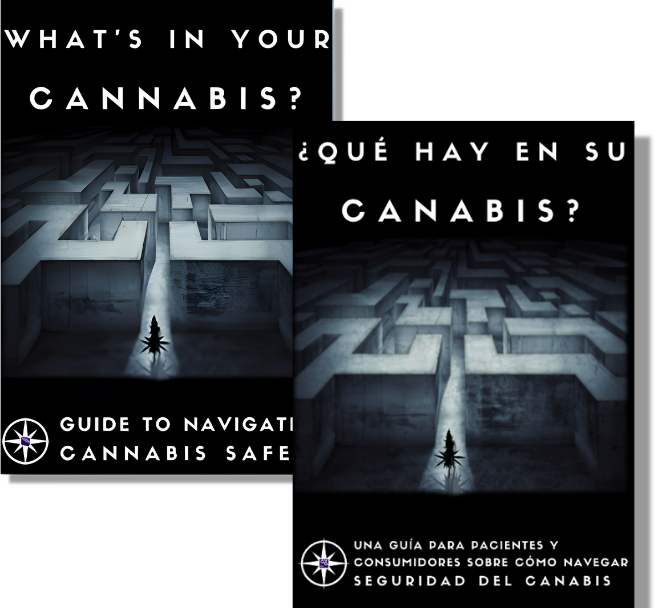
Products sold in New Mexico's dispensaries and adult-use retail locations must be tested for contaminants, pesticides, and adulterants based on these thresholds set by state regulators. For more information about cannabis safety, download ASA's "What’s in Your Cannabis? A Patient & Consumer Guide to Navigating Cannabis Safety."
It can be challenging for patients to determine which businesses offering cannabis products are licensed and approved by the state. Review this list of medical cannabis retailers to find out where to purchase regulated cannabis in New Mexico.
Under the Cannabis Regulation Act, NMSA 1978, Section 26-2C-7, all cannabis consumption in New Mexico, including by registered medical cannabis patients, is limited to private residences or licensed cannabis consumption lounges. It is illegal to use cannabis in any public place.
Patients may not use cannabis:
- In any public place, including parks, sidewalks, restaurants, and similar spaces
- While driving or riding in a vehicle, whether as the driver or a passenger
- On school grounds or within 300 feet of any school, church, or daycare center
- In any location where the use would be visible to the public
Violations may result in a civil fine of up to $50.
Patients who are renters should review their lease agreement before using cannabis at home. Landlords may have restrictions on smoking or cannabis use on their property.
New Mexico has an adult-use cannabis program, but registering as a medical cannabis patient still offers important benefits. While the medical program may require additional steps, registration can provide patients and caregivers with added support, stronger protections, and access to medical guidance.
Federal Protections Apply Only to Registered Patients
Some federal protections are now available, but only to patients who are officially registered in their state’s medical cannabis program.
A federal order issued April 28th,2026, AG Order No. 6754-2026, treats a state medical cannabis certification or registration as similar to a prescription under federal law. This means that being registered is not just a state requirement; it may also affect whether a patient qualifies for federal protections.
To receive these protections, a patient’s registration must stay active, current, and in good standing. Learn more here.
LEGAL PROTECTIONS
Under the Lynn and Erin Compassionate Use Act, NMSA 1978, Section 26-2B-4, registered patients and their primary caregivers are protected from arrest, prosecution, and all civil and criminal penalties for the possession and medical use of cannabis, as long as the quantity possessed does not exceed an adequate supply. A patient may also possess their personal harvest of cannabis.
Additional protections include:
- Possessing, transporting, purchasing, or obtaining an adequate supply of cannabis does not constitute grounds for detention, search, arrest, or a violation of probation or parole. Cannabis possessed lawfully is not contraband and is not subject to seizure or forfeiture under the Controlled Substances Act or the Forfeiture Act.
- Property owned or used in connection with the medical use of cannabis shall not be harmed, injured, or destroyed while in the possession of state or local law enforcement. Property seized from a registered patient or primary caregiver must be returned immediately upon a determination that the person is entitled to the program's legal protections.
- A registered patient or primary caregiver who is not in possession of their registry identification card at the time of a law enforcement encounter must be given an opportunity to produce the card before any arrest, criminal charges, or other penalties are initiated.
- No person shall be subject to arrest or prosecution for a cannabis-related offense for simply being present while another person uses cannabis in a manner allowed under the Act.
- Persons serving probation or parole, or under other state supervision, shall not be penalized for conduct allowed under the Act.
- Possession of or application for a registry identification card does not constitute probable cause or give rise to reasonable suspicion for any government agency to search a person or their property.
Protections do not apply to cannabis use in the workplace, in a vehicle, or in public places. Patients and primary caregivers remain subject to prosecution for any conduct not authorized under the Act, and for fraudulent representation to a law enforcement officer regarding program participation.
PRIVACY PROTECTIONS
Under NMSA 1978, Section 26-2B-7(H), the New Mexico Department of Health maintains a confidential registry of all persons who have applied for or received a registry identification card. Individual names and information on this list are confidential and not subject to public disclosure. Registry information may only be shared:
- With authorized NMDOH employees or agents, as necessary to perform program duties.
- With authorized state or local law enforcement employees, solely for the purpose of verifying that a person is lawfully in possession of a registry identification card.
- With the Cannabis Control Division of the Regulation and Licensing Department.
- As required under the federal Health Insurance Portability and Accountability Act (HIPAA).
Dispensaries may not collect or track a patient's personal information to report to any external organizations, including state or federal entities, under the Cannabis Regulation Act, NMSA 1978, Section 26-2C-6(H).
- Employment - Under NMSA 1978, Section 26-2B-9, it is unlawful for an employer to take an adverse employment action against an applicant or employee based solely on conduct allowed under the Lynn and Erin Compassionate Use Act, unless failing to do so would cause the employer to lose a monetary or licensing-related benefit under federal law or federal regulations. This protection does not restrict an employer's ability to prohibit cannabis use on the premises or during work hours, or to take adverse action against an employee who is impaired by cannabis at work. It does not apply to employees in safety-sensitive positions, as defined in the Act.
- Child Custody - Under NMSA 1978, Section 32A-3A-15, a person's participation in the Medical Cannabis Program shall not in itself constitute grounds for intervention, removal, or placement of a child in state custody under the Abuse and Neglect Act, or for state prevention or intervention services under the Family Services Act. A person shall not be denied custody of, visitation with, or parenting time with a child based solely on conduct allowed under the Lynn and Erin Compassionate Use Act. There is no presumption of neglect or child endangerment based on a parent's participation in the program.
- Organ Transplant - Under NMSA 1978, Section 32A-3A-15(D), for the purposes of medical care, including an organ transplant, a qualified patient's use of cannabis pursuant to the Lynn and Erin Compassionate Use Act shall be treated the same as the use of any other lawfully prescribed medication. A patient shall not be denied an organ transplant solely on the basis of their participation in the Medical Cannabis Program.
TAX BENEFITS
Registered medical cannabis patients in New Mexico benefit from tax-exempt purchases at licensed dispensaries. Purchases of up to 425 units (approximately 425 grams, or about 15 ounces) of cannabis within a 90-day period are not subject to the Cannabis Excise Tax. Purchases beyond that limit within the same 90-day window are treated as adult-use sales and are subject to the Cannabis Excise Tax.
Keeping the Medical Program Strong
Enrollment helps demonstrate continued patient need for New Mexico’s medical cannabis program. A strong registry helps protect and sustain the program, supports continued access for patients with serious health needs, and reinforces the importance of maintaining a medical pathway alongside adult-use access.
New Mexico accepts out-of-state medical cannabis patients as reciprocal participants. Reciprocal participants may purchase medical cannabis at participating New Mexico dispensaries tax-exempt, up to the same 90-day purchase limit as registered New Mexico patients.
Who is eligible:
To register as a reciprocal participant, you must:
- Hold a valid, government-issued proof of enrollment in a medical cannabis program from another U.S. state, the District of Columbia, a U.S. territory or commonwealth, or a New Mexico Indian Nation, Tribe, or Pueblo.
- Hold a government-issued photo ID, such as a driver's license or state identification card, showing that you reside in the same jurisdiction as the entity that issued your proof of enrollment. A passport or other photo ID is not accepted for reciprocal purposes.
- Your photo ID and your proof of enrollment must be from the same jurisdiction. If your ID is from a different state than your proof of enrollment, you do not qualify.
New Mexico residents may not register as reciprocal participants. New Mexico residents must enroll as qualified patients through the NMDOH Medical Cannabis Program. The only exception is for members of a New Mexico Indian Nation, Tribe, or Pueblo who hold proof of enrollment in that nation, tribe, or pueblo's own medical cannabis program.
How to register:
Online application is not available. You must register in person at a participating New Mexico dispensary. Not all dispensaries are registered to accept reciprocal participants. Confirm with the dispensary before your visit.
Step 1: Go to a participating dispensary and present your government-issued proof of enrollment and your government-issued photo ID.
Step 2: Dispensary staff will upload your information into the statewide registration system. You must sign the electronic acknowledgment yourself at the dispensary. Dispensary staff cannot sign on your behalf.
Step 3: Once registered, your reciprocal identification number is entered in the statewide system. You do not need to re-register at the same or a different dispensary.
Important: You must present both your proof of enrollment and your government-issued photo ID every time you make a purchase as a reciprocal participant. This is required by law.
Do not apply at more than one dispensary. Attempting to register at multiple dispensaries may result in your application being rejected for potential fraud.
For more information about traveling as a medical cannabis patient, check out our Travel Guide.
*UPDATE: AG ORDER NO. 6754-2026 CHANGED FEDERAL CANNABIS LAWS ON APRIL 28, 2026: Learn more here.
Federal cannabis laws affect far more than whether a patient can access medical cannabis. For decades, federal prohibition has limited protections for medical cannabis patients under laws such as the Americans with Disabilities Act (ADA) and the Fair Housing Act (FHA). As a result, patients have often been denied the basic protections that people with other serious health conditions expect in employment, housing, healthcare, and access to federal programs.
Federal prohibition has also affected patients’ access to essential healthcare, housing, and financial support programs, sometimes forcing patients to choose between the medicine they need and the benefits they depend on. It has also created barriers to federal employment, healthcare autonomy, firearm ownership, and other aspects of daily life.
As federal and state cannabis laws change, implementation matters. Advocates must stay vigilant to ensure public agencies, private institutions, employers, housing providers, and healthcare systems update their policies in ways that respect patient rights and protect safe, legal access to medical cannabis.
It is important to stay active, engaged, and informed. Sign up to get ASA updates and learn more about ending patient discrimination.
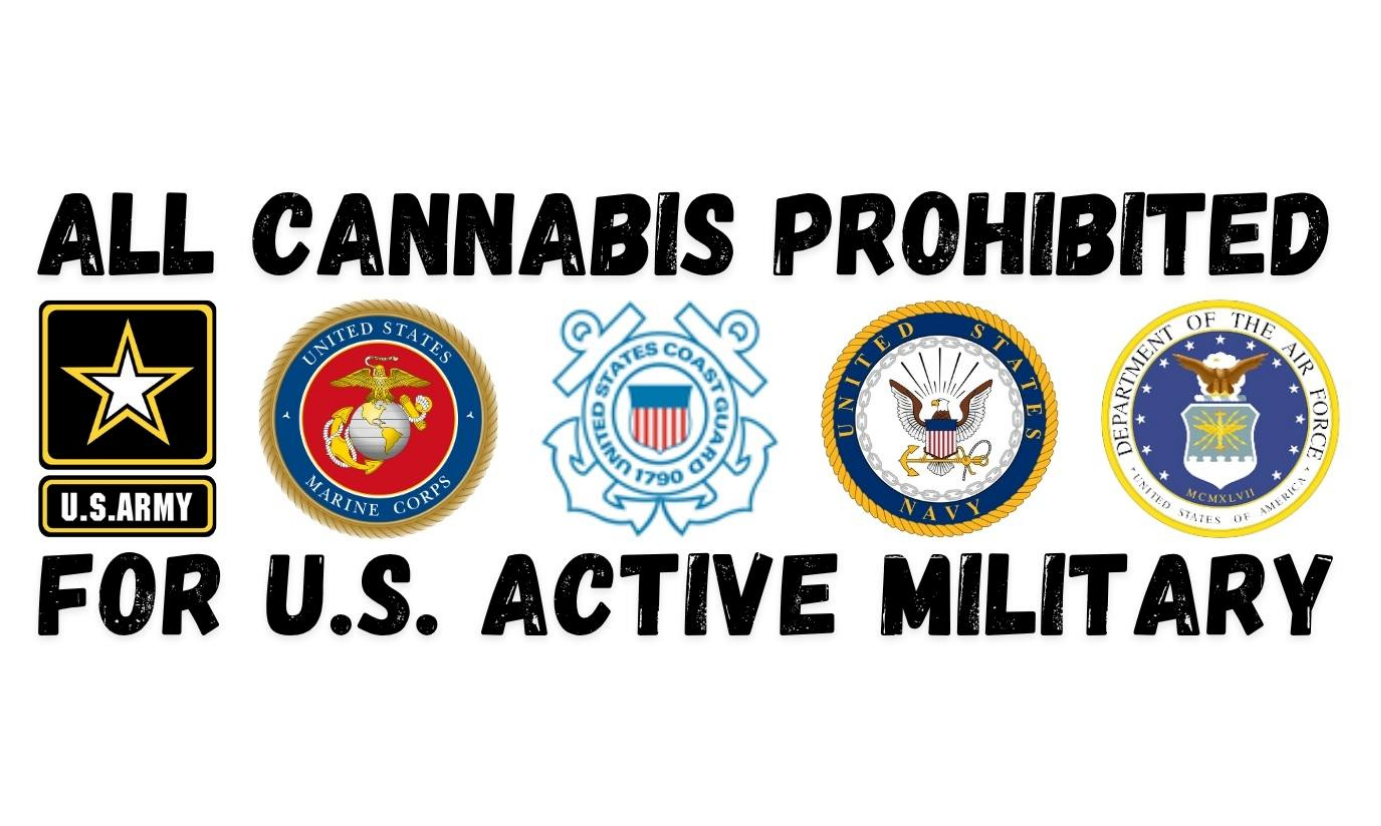
Rights and protections for medical cannabis patients are evolving. In some cases, outdated policies may impact how patients are treated. In other cases, like those in the military, policy changes will have to come from Washington, DC. In the case of organ transplants, stigma still plays a role in medical cannabis patients having access to life-saving treatment, even if state laws ban discrimination. Please use the resources below to better understand patient rights and how to navigate these programs and services.
Medical cannabis may be legal in your state, but it is illegal to cross state lines, even if the bordering state also has a medical cannabis program. For more information about traveling as a medical cannabis patient, check out our Travel Guide.
Stigma and discrimination also make patients targets for law enforcement encounters. Keep in mind that the best law enforcement encounter is the one that never occurs! It's crucial for individuals involved in medical cannabis to understand not only medical cannabis laws and regulations but also their rights. Be Prepared. Know Your Rights!
| State laws frequently change; if you find information that is out of date, incorrect, or has a broken link, let us know! Email [email protected] |
Medical cannabis patients can find additional resources here.
Get Involved! Learn more about ASA Campaigns and Take Action to improve the lives of medical cannabis patients today!
If you appreciate ASA's work, join now to become a part of the movement & sign up to get ASA updates.
QUALIFYING PATIENTS IN NEW MEXICO
First, your doctor must certify that you have an eligible condition from among those listed below. They must also certify that the condition is debilitating and cannot be helped by standard treatments, and the potential risks and benefits of the use of medical cannabis for the condition have been discussed with the patient. This recommendation may need to be accompanied by further proof of your debilitating medical condition depending on the condition. For example, for chronic pain you need objective proof of severe chronic pain such as X-rays, CT scans, and MRIs and you must receive two recommendations, one from your primary care physician and one from a specialist. Recommendations must be submitted to the New Mexico department of health along with a completed application.
Once you have a recommendation from a doctor, you can fill out an application. Application forms are available on the Medical Cannabis Program website or can be acquired by calling (505) 827-2321.
Eligible conditions:
If you are diagnosed with one of the following conditions, you may be eligible for physician certification as a patient in New Mexico
- Alzheimer's disease
- Autism spectrum disorder
- cancer
- glaucoma
- multiple sclerosis
- epilepsy
- HIV/AIDS
- under hospice care
- severe chronic pain
- painful peripheral neuropathy
- intractable nausea/vomiting
- severe anorexia/cachexia
- hepatitis C infection currently receiving antiviral treatment
- Crohn's disease
- Post-traumatic Stress Disorder
- Amyotrophic Lateral Sclerosis (ALS or Lou Gehrig's disease)
- damage to the nervous tissue of the spinal cord with intractable spasticity
- inflammatory autoimmune-mediated arthritis
- spasmodic torticollis (cervical dystonia)
- inclusion body myositis
- Parkinson's disease
- Huntington's disease
- Spinal muscular atrophy
- ulcerative colitis
- any other condition approved by the department of health
Becoming a Patient as a Minor:
If you are under the age of 18 years old but wish to apply as a patient, the process is the same as an adult; however, as a minor you must have a parent or legal guardian sign your form and register as a caregiver on your behalf. Your caregiver will be responsible for acquiring your medicine and administering it based on a care plan they determine with your doctor.
Benefits of Being a Patient:
If you are arrested for cannabis possession in the state of New Hampshire, you will get an affirmative defense in court. You will be legally protected from discrimination due to cannabis use in child custody hearings. If you require an organ transplant you will not be turned away because of your cannabis use.
Becoming a Caregiver:
To become a caregiver in New Mexico, you must be at least 18 years old. Caregivers are allowed to assist patients with growing their medicine and can apply to grow it themselves on behalf of a patient; the process is detailed below. Registered caregivers are issued cards free of charge that protect them from arrest and prosecution for the possession of medical cannabis under New Mexico law. All caregiver applicants are required to undergo national background checks before they are approved. The forms for caregivers can be found on the Medical Cannabis Program website.
Out-of-State Patients:
The State of New Mexico recognizes Out-of-State patient registrations. Visitors will have the same legal protections as Out-of-State patients and may shop at New Mexico dispensaries. For more information about traveling as a medical cannabis patient, check out our Travel Guide.
Home Cultivation:
Medical patients and caregivers may apply for a personal production license. If approved, you will be allowed to grow up to four mature plants and twelve immature plants at home. There is a $30 application fee and the application must be renewed annually. Plants must be grown in a secure location out of sight from the public.
Cannabis Expungement:
In 2021, Senate Bill 2 was signed into law, which facilitated the automatic review and expungement process of conviction records for low-level offenses in the state of New Mexico. This meant anyone who was charged, convicted, or arrested for a cannabis related offense will have their public record erased after two years.
Medical cannabis patients can find additional resources here
If you appreciate ASA's work, join now to become a part of the movement & sign up to get ASA's monthly newsletters and updates.
Share this page