MEDICAL CANNABIS PATIENTS & CAREGIVERS
|
The New Hampshire Department of Health & Human Services oversees the New Hampshire Therapeutic Cannabis Program, which was established through Enabling Law RSA 126-X in 2013. Patients and their caregivers must be registered with the program to benefit from the rights and protections granted under these statutes. |
Medical cannabis may not be the best treatment choice for all patients. Learn more.
A LEGAL MEDICAL CANNABIS PATIENT ...
1. Is a New Hampshire resident
2. Is at least 18 years of age.
3. Has a qualifying medical condition or a combination of a qualifying diagnosis and a qualifying symptom certified by a licensed medical provider. New Hampshire recognizes three pathways to qualify for the Therapeutic Cannabis Program. You may qualify with a stand-alone qualifying condition, a combination of a qualifying diagnosis and a qualifying symptom, or, if you are 21 or older, any debilitating or terminal condition your provider believes may benefit from therapeutic cannabis. These include:
Qualifying Diagnoses (in combination with a qualifying symptom listed below):
-
- Cancer
- Glaucoma
- Positive status for HIV
- AIDS
- Hepatitis C
- Amyotrophic lateral sclerosis
- Muscular dystrophy
- Crohn's disease
- Multiple sclerosis
- Chronic pancreatitis
- Spinal cord injury or disease
- Traumatic brain injury
- Epilepsy
- Lupus
- Parkinson's disease
- Alzheimer's disease
- Ulcerative colitis
- Ehlers-Danlos syndrome
- Generalized anxiety disorder
- One or more injuries or conditions resulting in one or more qualifying symptoms below
Qualifying Symptoms (in combination with a qualifying diagnosis listed above):
-
- Elevated intraocular pressure
- Cachexia
- Chemotherapy-induced anorexia
- Wasting syndrome
- Agitation of Alzheimer's disease
- Severe pain
- Constant or severe nausea
- Moderate to severe vomiting
- Seizures
- Severe, persistent muscle spasms
- Moderate to severe insomnia
4. Has a written certification from a licensed medical provider who has an established provider-patient relationship with the patient.
5. Is registered with the TCP and holds a valid cannabis registry ID card. (A provider may certify a patient for up to 3 years. The standard card duration is 1 year.)
ENROLLMENT PROCESS
Step 1: Consult with a qualifying licensed provider. Eligible providers include:
- any NH-licensed physician (MD/DO)
- physician associate (PA)
- APRN
- any other NH-licensed provider with prescriptive authority (such as a dentist, podiatrist, optometrist, or naturopathic doctor).
- Physicians (MD/DO) and APRNs licensed in Maine, Massachusetts, or Vermont who are primarily responsible for your care related to your qualifying condition may also certify you. The initial certification requires an in-person physical examination. The provider must have an established provider-patient relationship with you.
Step 2: Obtain a completed written certification on the official DHHS form. Your provider must complete and sign the Written Certification for the Therapeutic Use of Cannabis. The written certification is valid for 6 months from the date the provider signs.
Step 3: Complete a Patient Application. Download the Patient Application form from the TCP forms page. Online submission is not available. Applications must be mailed or delivered in person.
Step 4: Mail or deliver your complete application packet to: NH DHHS, Therapeutic Cannabis Program, 29 Hazen Drive, Concord, NH 03301. An orange drop box is available in front of the building, and a second drop box is available inside the lobby. Both are checked daily. Include: (1) your completed Patient Application; (2) your signed written certification; (3) proof of NH residency (driver's license, state ID, utility or medical bill dated within 6 months, or current lease); and (4) a check or money order for $50 payable to "Treasurer, State of New Hampshire."
Step 5: Await processing. The TCP will send a Notice of Incomplete Application within 10 days if anything is missing. If your application is complete, your registry ID card will be mailed to you within approximately 3 weeks.
PATIENT RENEWAL
Registry ID cards are valid for 1 year by default. However, your provider may certify you for up to 3 years (including any extensions), after which a new written certification and application are required.
The renewal process is the same as the initial application. Each time you renew, you must submit:
- A completed Patient Application
- A new signed written certification from your provider (or a written certification extension form if your provider is extending an existing certification)
- A $50 application fee (check or money order payable to "Treasurer, State of New Hampshire")
- Proof of NH residency (not required if renewing at the same address)
Submit your renewal application at least 30 days before your card's expiration date to avoid a lapse. There is no penalty for late renewal; however, your card may have a short lapse if you submit your application late.
Telemedicine is permitted for recertifications (renewals) by the same provider.
ENROLLING MINOR PATIENTS
Patients under age 18 may enroll in the TCP with their custodial parent or legal guardian serving as their designated caregiver. The following requirements apply:
Qualifying Conditions for Minor Patients
Minor patients must be certified for one of the following conditions:
- Moderate to severe chronic pain
- Severe pain
- Moderate or severe post-traumatic stress disorder
- Autism spectrum disorder (requires additional consultation; see below)
- Opioid use disorder with associated symptoms of cravings or withdrawal (board-certified Addiction Medicine or Addiction Psychiatry provider required)
- Generalized anxiety disorder
- Any combination of a qualifying diagnosis and a qualifying symptom listed in the qualifying conditions section above
Two Written Certifications Required
The TCP must receive written certifications from two different medical providers for a minor patient. At least one of the two providers must be a Pediatric Care Provider, defined as:
- A provider whose medical specialty is pediatrics, family practice/family medicine, or a pediatric subspecialty
- A physician associate (PA) whose collaboration agreement (if required) is with a physician in one of the specialties above, or who is employed as a member of a pediatric healthcare team, or who has extensive training and experience treating children from birth through young adulthood
- Any other provider who attests to having extensive training and experience treating children from birth through young adulthood for their physical, emotional, and social healthcare needs
Autism Spectrum Disorder (Under Age 21)
For certification of autism spectrum disorder in a patient under age 21, the certifying provider must consult with a provider who is certified in child and/or adolescent psychiatry, developmental pediatrics, or pediatric neurology, and who confirms that the autism spectrum disorder has not responded to previously prescribed medication or that other treatment options produced serious side effects, and who supports the certification.
Caregiver Requirement for Minor Patients
The minor's custodial parent or legal guardian must be approved as the minor's designated caregiver. A minor may have up to two designated caregivers, both of whom must be the patient's custodial parent or legal guardian. The designated caregiver must purchase and control the frequency of the minor patient's therapeutic cannabis use.
For the minor patient application, visit dhhs.nh.gov/programs-services/population-health/therapeutic-cannabis.
A designated caregiver assists a qualifying patient with their therapeutic use of cannabis. To become a designated caregiver, you must:
- Be at least 21 years old
- Have no felony convictions
- Be designated as a caregiver on your patient's Patient Application, or added later using a Caregiver Designation Form.
Number of Patients
A designated caregiver may assist up to 5 qualifying patients. An exception applies if both you and any patients beyond 5 live more than 50 miles from the nearest ATC, in which case you may assist up to 9 patients.
Application and Fee
There is no application fee for caregivers. Submit a Caregiver Application by mail to: NH DHHS, Therapeutic Cannabis Program, 29 Hazen Drive, Concord, NH 03301.
Card Validity
Your caregiver registry ID card is valid for the same duration as your patient's registry ID card, up to 3 years. If your patient's card is extended, your card will be automatically extended to match. Submit your renewal application at least 30 days before your card's expiration.
Possession
A designated caregiver may possess up to 2 ounces of usable cannabis per patient, not to exceed 2 ounces per 10-day period per patient.
Compensation
A caregiver may be reimbursed for actual costs (such as transportation and cannabis product costs), but not for time or labor.
Dispensaries
After your registry ID card is issued, you may purchase therapeutic cannabis at any of New Hampshire's licensed Alternative Treatment Centers (ATCs). There are seven ATC dispensary locations in New Hampshire, operated by three organizations:
- GraniteLeaf Cannabis: Merrimack (380 Daniel Webster Highway) and Chichester (349 Dover Road)
- Sanctuary ATC: Plymouth (568 Tenney Mountain Highway) and Conway (234 White Mountain Highway)
- Temescal Wellness: Dover (26 Crosby Road), Lebanon (367 Route 120), and Keene (69 Island Street)
A qualifying patient or their designated caregiver may purchase cannabis from any ATC location in the state.
What to Bring
- Your valid NH Therapeutic Cannabis Program registry ID card
- Government-issued photo ID
- A list of your current medications (recommended for your first visit)
- Payment for your medicine. Insurance does not cover the cost of therapeutic cannabis.
Possession Limits
Under RSA 126-X:2, registered qualifying patients may possess up to 2 ounces of usable cannabis and any amount of unusable cannabis. Patients may not purchase more than 2 ounces of cannabis in any 10-day period. Designated caregivers may possess up to 2 ounces per patient they assist, subject to the same 10-day purchase limit per patient.
Home Cultivation:
Home cultivation is not permitted under New Hampshire's Therapeutic Cannabis Program. Neither qualifying patients nor designated caregivers may cultivate cannabis at any location.
Need tips on home cultivation?
Cannabis Product Safety
Cannabis, in its natural form, is inherently safe for most patients, but it is especially susceptible to contaminants during cultivation, manufacturing, handling & even storing. Whether you are purchasing cannabis from regulated, grey, or illicit markets or cultivating your own cannabis, you should be aware of the contaminants commonly found in cannabis and the symptoms that accompany their presence.
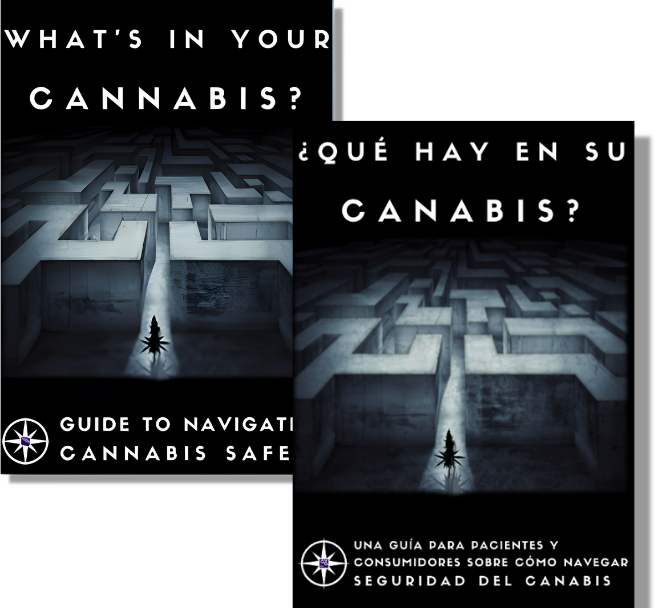
Products sold in New Hampshire's dispensaries and adult-use retail locations must be tested for contaminants, pesticides, and adulterants based on these thresholds set by state regulators. For more information about cannabis safety, download ASA's "What’s in Your Cannabis? A Patient & Consumer Guide to Navigating Cannabis Safety."
It can be challenging for patients to determine which businesses offering cannabis products are licensed and approved by the state. Review this list of medical cannabis retailers to find out where to purchase regulated cannabis in New Hampshire.
Qualifying patients may use therapeutic cannabis on privately owned property only with the written permission of the property owner. For leased property, written permission must be obtained from the tenant in possession of the property.
Therapeutic cannabis use is NOT permitted:
- Any public place, including public buses, public parks, public beaches, and public fields
- The building and grounds of any preschool, elementary, or secondary school located in a drug-free zone
- Any place of employment, unless the employer has given written permission
- Any correctional facility
- Any public recreation center or youth center
- Any law enforcement facility
Smoking and vaporization:
Smoking cannabis on leased property is prohibited if it violates the lease or the landlord's rental policies that apply to all tenants. However, a tenant may grant a qualifying patient permission to use cannabis by ingestion or inhalation through vaporization (which does not involve combustion) even if smoking is otherwise prohibited.
Open container:
Effective January 1, 2025, New Hampshire's open container law (SB 426) applies to cannabis and cannabis products in motor vehicles. This law does not apply to therapeutic cannabis patients, but the TCP recommends that registered patients keep their registry ID card with them at all times, keep cannabis in a locked container or in the trunk when transporting, and keep cannabis in its original ATC packaging.
New Hampshire does not have an adult-use cannabis program. Therapeutic cannabis registration is the only legal pathway for accessing cannabis in New Hampshire.
Federal Protections Apply Only to Registered Patients
Some federal protections are now available, but only to patients who are officially registered in their state’s medical cannabis program.
A federal order issued April 28th,2026, AG Order No. 6754-2026, treats a state medical cannabis certification or registration as similar to a prescription under federal law. This means that being registered is not just a state requirement; it may also affect whether a patient qualifies for federal protections.
To receive these protections, a patient’s registration must stay active, current, and in good standing. Learn more here.
Legal Protections
A qualifying patient who possesses a valid registry ID card and no more than 2 ounces of usable cannabis (and any amount of unusable cannabis) shall not be subject to arrest by state or local law enforcement, prosecution or penalty under state or municipal law, or denial of any right or privilege for the therapeutic use of cannabis in compliance with this chapter. A qualifying patient with a valid card is presumed to be lawfully engaged in the therapeutic use of cannabis, though this presumption may be rebutted by evidence that the conduct was not for therapeutic purposes. Protections apply only within New Hampshire and do not extend beyond the state's borders.
Privacy Protections
The TCP maintains the confidentiality of all personal information submitted to the program regarding applicants, qualifying patients, designated caregivers, and certifying providers. Registry information is kept in a confidential database. Limited registry information may be shared with state or local law enforcement only when a person has been arrested or detained, or when there is probable cause to believe cannabis is possessed at a specific address or by a specific individual. The program does not publish a list of certifying providers and will not refer patients to any provider.
Access to Pharmacists
Each licensed Alternative Treatment Center is required to have at least one physician, APRN, or pharmacist licensed in New Hampshire on its board of directors (though the medical professional may not hold an ownership interest in the ATC). The ATC administrative rules also limit dispensing activities to ATC-licensed personnel. Consult your ATC for information about available clinical support services.
Civil Protections
- Child Custody - A person otherwise entitled to custody of, or visitation or parenting time with, a minor shall not be denied such a right solely for conduct allowed under RSA 126-X, and there shall be no presumption of neglect or child endangerment based solely on therapeutic cannabis use in compliance with the program.
- Organ Transplant - For purposes of medical care, including organ transplants, a qualifying patient's authorized use of cannabis in accordance with RSA 126-X shall be considered the equivalent of the authorized use of any other medication used at the direction of a provider, and shall not constitute the use of an illicit substance.
Tax Benefits
Therapeutic cannabis sold by licensed Alternative Treatment Centers to registered qualifying patients (or their designated caregivers) is exempt from the Meals and Rooms tax. There is no state cannabis excise tax or sales tax on therapeutic cannabis purchases made by registered patients at licensed ATCs.
Keeping the Medical Program Strong:
New Hampshire's therapeutic cannabis program is the only legal pathway for accessing cannabis in the state. Your registration protects your access and ensures you receive quality-tested products from licensed ATCs. Keep your registration current and your written certification up to date. Find out how you can work with Americans for Safe Access to support patients in your community and across the country.
If you hold a valid medical cannabis card from another U.S. state, territory, or Canada, New Hampshire recognizes it as equivalent to a NH registry card. As of October 1, 2024, there are no longer any limits on how often visiting patients may purchase from a NH Alternative Treatment Center, regardless of their qualifying condition.
Requirements for visiting patients:
- Present your valid out-of-state or Canadian therapeutic cannabis identification card and a matching government-issued photo ID at the ATC
- Comply with the NH possession limit of 2 ounces of usable cannabis and the 10-day purchase limit of 2 ounces
- Comply with all NH state laws regarding therapeutic cannabis use
Visiting patients may not:
- Cultivate cannabis in New Hampshire
- Obtain or purchase cannabis from a NH qualifying patient or designated caregiver
For more information about traveling as a medical cannabis patient, check out our Travel Guide.
*UPDATE: AG ORDER NO. 6754-2026 CHANGED FEDERAL CANNABIS LAWS ON APRIL 28, 2026: Learn more here.
Federal cannabis laws affect far more than whether a patient can access medical cannabis. For decades, federal prohibition has limited protections for medical cannabis patients under laws such as the Americans with Disabilities Act (ADA) and the Fair Housing Act (FHA). As a result, patients have often been denied the basic protections that people with other serious health conditions expect in employment, housing, healthcare, and access to federal programs.
Federal prohibition has also affected patients’ access to essential healthcare, housing, and financial support programs, sometimes forcing patients to choose between the medicine they need and the benefits they depend on. It has also created barriers to federal employment, healthcare autonomy, firearm ownership, and other aspects of daily life.
As federal and state cannabis laws change, implementation matters. Advocates must stay vigilant to ensure public agencies, private institutions, employers, housing providers, and healthcare systems update their policies in ways that respect patient rights and protect safe, legal access to medical cannabis.
It is important to stay active, engaged, and informed. Sign up to get ASA updates and learn more about ending patient discrimination.
Rights and protections for medical cannabis patients are evolving. In some cases, outdated policies may impact how patients are treated. In other cases, like those in the military, policy changes will have to come from Washington, DC. In the case of organ transplants, stigma still plays a role in medical cannabis patients having access to life-saving treatment, even if state laws ban discrimination. Please use the resources below to better understand patient rights and how to navigate these programs and services.

Medical cannabis may be legal in your state, but it is illegal to cross state lines, even if the bordering state also has a medical cannabis program. For more information about traveling as a medical cannabis patient, check out our Travel Guide.
Stigma and discrimination also make patients targets for law enforcement encounters. Keep in mind that the best law enforcement encounter is the one that never occurs! It's crucial for individuals involved in medical cannabis to understand not only medical cannabis laws and regulations but also their rights. Be Prepared. Know Your Rights!
| State laws frequently change; if you find information that is out of date, incorrect, or has a broken link, let us know! Email [email protected] |
Medical cannabis patients can find additional resources here.
Get Involved! Learn more about ASA Campaigns and Take Action to improve the lives of medical cannabis patients today!
If you appreciate ASA's work, join now to become a part of the movement & sign up to get ASA updates.
Share this page