MEDICAL CANNABIS PATIENTS & CAREGIVERS
|
The Maine Office of Cannabis Policy oversees the Maine Medical Use of Cannabis Program, originally established through the Maine Medical Use of Cannabis Act, passed in 2009. Patients and their caregivers must be registered with the program to benefit from the rights and protections granted under these statutes. |
Medical cannabis may not be the best treatment choice for all patients. Learn more.
A Legal Medical Cannabis Patient:
- Is a Maine resident and at least 18 years of age, or is a qualifying minor with a designated caregiver.
- Has a written certification from a licensed Maine physician, nurse practitioner, or physician assistant. There is no fixed qualifying conditions list — the certifying provider exercises clinical judgment to determine whether cannabis may benefit the patient’s condition.
- State registration is not required. Your written certification entitles you to purchase and possess medical cannabis immediately at any licensed Maine dispensary or from a registered caregiver. A voluntary patient registry is available for patients who want additional legal documentation or workplace protection.
Qualifying Medical Conditions:
- Maine does not maintain a fixed list of qualifying conditions. A licensed Maine physician, nurse practitioner, or physician assistant exercises clinical judgment to determine whether a patient may benefit from cannabis.
- Because there is no statutory list, no individual conditions are enumerated. For current program guidance, visit the Maine Office of Cannabis Policy.
Step 1: Consult a licensed Maine medical provider.
Schedule an appointment with a Maine-licensed physician, nurse practitioner, or physician assistant. Telehealth appointments are permitted.
Step 2: Receive your written certification.
If approved, your provider will issue a written certification through the Maine OCP’s mandatory online certification portal. The portal produces a printed certification you can use immediately.
Step 3 (Optional): Enroll in the voluntary patient registry.
Visit the Maine OCP voluntary registry portal if you wish to enroll. Registry enrollment is not required for purchasing.
Patient renewals are completed using this form and selecting "Renew a Registration.”
A minor-patient's application must include parental consent and they must have their parent or legal guardian apply as caregiver on their behalf. In their role as caregiver, the parent or legal custodian/guardian must monitor the frequency of the cannabis dosage and control overall administration. You will need to submit copies of any documents establishing parental relationship or legal guardianship with the application.
Similar to an adult, a minor seeking treatment should ask their primary care doctor about recommending cannabis. With respect to minors, a physician must explain the risks & benefits of medical use of marijuana to the patient and parent or legal custodian/guardian. A second opinion from a consulting physician must also be obtained.
A child who holds a written certification for the medical use of cannabis under Title 22, section 2423‑B may not be denied eligibility to attend school solely because the child requires medical cannabis in a non-smokable form as a reasonable accommodation necessary for the child to attend school.
To assist applicants in the completion of the caregiver registry identification card online application process, the Office of Cannabis Policy (OCP) is provides instructions of what to expect in the application process. If you have additional questions, contact the Office of Cannabis Policy at [email protected].
The cost of a caregiver's registry identification card varies depending on the number of plants being grown. The application fee for a caregiver growing by canopy is $1,500. The application fee for a caregiver, based on plant count, increases incrementally by $240 for each additional plant.
Registered Caregiver Application Fees (Plant Count):
| Mature Plants | Immature Plants | Fee |
|---|---|---|
| 6 | 12 | $240 |
| 12 | 24 | $480 |
| 18 | 36 | $720 |
| 24 | 48 | $960 |
| 30 | 60 | $1,200 |
Dispensaries
After receiving your written certification, you can purchase medical cannabis at any licensed Maine dispensary or from a registered caregiver. Find a licensed dispensary near you.
What to Bring
- Your written certification from a licensed Maine medical provider
- Government-issued photo ID
- A list of your current medications (recommended for your first visit)
- Payment for your medicine. Insurance does not cover the cost of medical cannabis
Possession Limits
A qualifying patient may possess up to eight pounds of harvested cannabis.
https://www.maine.gov/dafs/ocp/resources/faq
Home Cultivation
Under Maine statute, registered patients may cultivate up to 3 mature (flowering) cannabis plants and up to 12 immature plants at their residence. An unlimited number of seedlings is also permitted. Some patients may exceed the 3-plant flowering limit if a greater quantity is documented as medically necessary by their certifying provider.
Any adult over the age of 21 may grow up to six mature plants in a secure location, either indoors or in a fenced area. A household with 2 adults can have up to 12 mature plants at a time. While the law has specific limitations on mature plants, no restrictions exist on clones or immature plants. The law defines "mature plants" as plants that are flowering, meaning plants at any stage before flowering are considered immature in the eyes of the law.
Need tips on home cultivation?
Cannabis Product Safety:
Cannabis, in its natural form, is inherently safe for most patients, but it is especially susceptible to contaminants during cultivation, manufacturing, handling, and storage. Whether you are purchasing cannabis from a regulated dispensary or cultivating your own, you should be aware of the contaminants commonly found in cannabis and the symptoms that accompany their presence.

Products sold at Maine’s licensed dispensaries must be tested for contaminants, pesticides, and adulterants based on state regulatory standards. Click here for Maine’s medical testing context and findings. For more information about cannabis safety, download ASA’s “What’s in Your Cannabis? A Patient & Consumer Guide to Navigating Cannabis Safety.”
It can be challenging to determine which businesses are licensed and approved by the state. Review this list of medical cannabis retailers to find out where to purchase regulated cannabis in Maine.
Registered patients may use medical cannabis in permitted private locations.
Patients may NOT use or possess medical cannabis in:
- Any public place
- Any school bus or the grounds of any preschool, primary, or secondary school
- Any correctional facility
- Any motor vehicle (as operator or passenger)
- Any private residence used for licensed childcare, foster care, or similar social service care
It is legal to smoke ONLY on private property. Smoking inside your car in a parking lot, or outside within a public or federally-owned park, is also illegal. Be mindful that property owners, lodgings, landlords, and rental companies can ban the use and possession of marijuana on their premises.
Maine has an adult-use cannabis program, but registering as a medical cannabis patient still offers important benefits. Certification — and optional registry enrollment — can provide higher possession limits than adult-use consumers, access to registered caregivers as an additional purchasing option, and optional documentation for workplace protection.
Federal Protections Apply Only to Registered Patients
Some federal protections are now available, but only to patients who are officially registered in their state’s medical cannabis program.
A federal order issued April 28, 2026, AG Order No. 6754-2026, treats a state medical cannabis certification or registration as similar to a prescription under federal law. This means that being registered is not just a state requirement; it may also affect whether a patient qualifies for federal protections.
To receive these protections, a patient’s registration must stay active, current, and in good standing. Learn more here.
Legal Protections
Maine protects patients and caregivers from being discriminated against by schools, employers, or landlords because of your status as a qualifying patient or caregiver. These protections do not apply if they would cause a school, employer, or landlord to risk losing federal funding or cause them to violate federal law. If smoking is prohibited in an area, including an apartment, then this will apply to medical cannabis as well as to tobacco.
Employment & Housing: Schools, employers, and landlords cannot refuse to enroll, hire, or lease to a patient solely for their medical cannabis status, unless doing so would cause the organization to lose federal funding or violate federal law.
Hospital Patients: Admitted patients can lawfully consume non-smoked cannabis (e.g., tinctures, edibles) in hospitals, and facilities are protected from penalties for permitting this.
Privacy Protections
Maine law limits the extent to which law enforcement can seize cannabis from lawful patients and mandates the prompt return of seized property. Registry and patient information is heavily protected to ensure patient privacy.
Civil Protections
Employment
Maine does not strictly protect adult-use consumers from workplace drug testing or termination. However, the state’s medical cannabis laws offer some protections for certified patients. Employers generally cannot refuse to hire or otherwise penalize an applicant or employee solely for their status as a registered medical patient, although employers can still discipline employees for being impaired by cannabis at work. Furthermore, the Maine Supreme Judicial Court has ruled that employers are not required to cover the cost of medical cannabis in workers' compensation cases
Tax Benefits
Certified patients are exempt from the state sales tax that applies to adult-use cannabis purchases. [verify current tax treatment for certified patients with the Maine OCP and Maine Revenue Services.]
Keeping the Medical Program Strong
Enrollment helps demonstrate continued patient need for Maine’s medical cannabis program. A strong registry helps protect and sustain the program, supports continued access for patients with serious health needs, and reinforces the importance of maintaining a medical pathway alongside adult-use access.
A qualifying visiting patient may purchase up to 2.5 ounces of a combination of medical cannabis and cannabis products every 15 days while visiting the state.
A visiting medical cannabis patient with an equivalent ID issued by another state is protected by Maine's medical cannabis laws provided the patient has a valid medical cannabis card issued by their home jurisdiction and a valid drivers license or other form of photo ID from the same jurisdiction. If your medical ID and photo ID are from different jurisdictions, you will not be allowed to shop at Maine's medical cannabis retail locations or caregiver storefronts. There are however a few retail locations open to all adults over 21.
Approved states: Alaska, Arizona, Arkansas, California, Connecticut, Florida, Hawaii, Illinois, Iowa, Maryland, Massachusetts, Michigan, Minnesota, Missouri, Montana, Nevada, New Hampshire, New Jersey, New Mexico, New York, North Dakota, Oklahoma, Oregon, Rhode Island, Utah, Virginia, Vermont, Washington, Washington, DC.
Patients who are residents of these states may purchase from a registered dispensary or caregiver medical cannabis and/or cannabis products while visiting Maine, subject to the limitations imposed by the laws and rules of the State of Maine the laws and rules of their state of residence. This list is subject to change.
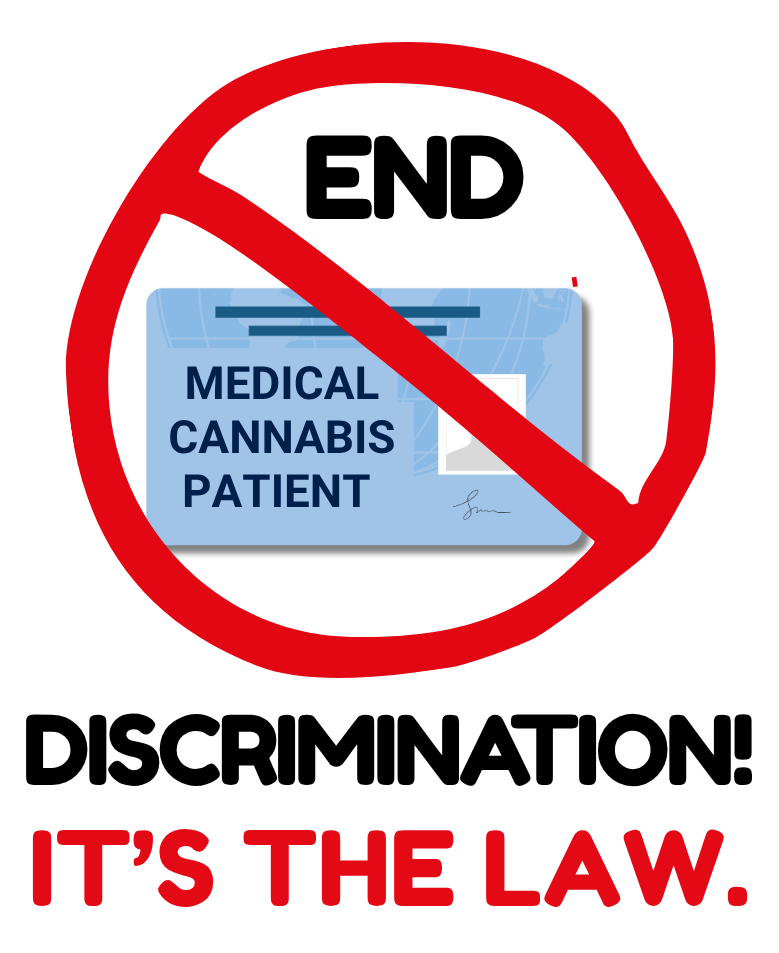
*UPDATE: AG ORDER NO. 6754-2026 CHANGED FEDERAL CANNABIS LAWS ON APRIL 28, 2026: Learn more here.
Federal cannabis laws affect far more than whether a patient can access medical cannabis. For decades, federal prohibition has limited protections for medical cannabis patients under laws such as the Americans with Disabilities Act (ADA) and the Fair Housing Act (FHA). As a result, patients have often been denied the basic protections that people with other serious health conditions expect in employment, housing, healthcare, and access to federal programs.
Federal prohibition has also affected patients’ access to essential healthcare, housing, and financial support programs, sometimes forcing patients to choose between the medicine they need and the benefits they depend on. It has also created barriers to federal employment, healthcare autonomy, firearm ownership, and other aspects of daily life.
As federal and state cannabis laws change, implementation matters. Advocates must stay vigilant to ensure public agencies, private institutions, employers, housing providers, and healthcare systems update their policies in ways that respect patient rights and protect safe, legal access to medical cannabis.
It is important to stay active, engaged, and informed. Sign up to get ASA updates and learn more about ending patient discrimination.
Rights and protections for medical cannabis patients are evolving. In some cases, outdated policies may impact how patients are treated. In other cases, like those in the military, policy changes will have to come from Washington, DC. In the case of organ transplants, stigma still plays a role in medical cannabis patients having access to life-saving treatment, even if state laws ban discrimination. Please use the resources below to better understand patient rights and how to navigate these programs and services.

Medical cannabis may be legal in your state, but it is illegal to cross state lines, even if the bordering state also has a medical cannabis program. For more information about traveling as a medical cannabis patient, check out our Travel Guide.
Stigma and discrimination also make patients targets for law enforcement encounters. Keep in mind that the best law enforcement encounter is the one that never occurs! It's crucial for individuals involved in medical cannabis to understand not only medical cannabis laws and regulations but also their rights. Be Prepared. Know Your Rights!
| State laws frequently change; if you find information that is out of date, incorrect, or has a broken link, let us know! Email [email protected] |
Medical cannabis patients can find additional resources here.
Get Involved! Learn more about ASA Campaigns and Take Action to improve the lives of medical cannabis patients today!
If you appreciate ASA's work, join now to become a part of the movement & sign up to get ASA updates.

Share this page