MEDICAL CANNABIS PATIENTS & CAREGIVERS
|
The California Medical Cannabis Program was established through the Compassionate Use Act (Prop 215), passed in 1996. The California Department of Cannabis Control oversees the program. Patients and their caregivers must be registered with the program to benefit from the rights and protections granted under these statutes. |
Medical cannabis may not be the best treatment choice for all patients. Learn more.
A Legal Medical Cannabis Patient in California…
1. Must be a resident of the California county where you apply for the MMIC.
2. Has a qualifying serious medical condition as determined by a licensed California physician. Including, but not limited to:
- Cancer
- HIV/AIDS
- Epilepsy and Seizures
- Multiple Sclerosis and Muscle Spasms
- Chronic Pain
- Glaucoma
- Arthritis
- Migraines
- Anorexia
- Cachexia (Wasting Syndrome)
- Severe Nausea
- Chronic or persistent medical symptoms that either:
- Substantially limit your ability to conduct major life activities
- May cause serious harm to your safety, physical health or mental health.
*California physicians have discretion to recommend cannabis for any condition they believe will benefit from treatment.
3. Participation in the Medical Marijuana Identification Card (MMIC) program is voluntary. A physician’s recommendation alone allows legal purchase.
4. However, obtaining an MMIC provides additional legal protections and a sales tax exemption.
Enrollment Instructions
Step 1: Obtain a physician’s recommendation
Visit a California-licensed physician (MD, DO, or naturopathic doctor in their scope of practice) for a medical evaluation. The physician will provide a written recommendation if they determine cannabis is appropriate for your condition.
Telehealth is permitted for cannabis evaluations in California, provided a valid physician-patient relationship exists, and a proper examination is conducted. Immediate approval is possible. Patients can begin purchasing with their recommendation same day.
Step 2: Apply for a Medical Marijuana Identification Card (MMIC)
To receive an MMIC, apply in person at your county health department. You will need:
- Completed MMIC Application/Renewal form (CDPH 9042)
- Written physician documentation (CDPH 9044, or equivalent physician recommendation)
- Proof of identity (valid CA driver’s license or ID, or other government-issued photo ID)
- Proof of California county of residency. (motor vehicle registration, rental/mortgage agreement, or utility bill with current address)
- Non-refundable application fee (varies by county; maximum $100; Medi-Cal recipients pay 50% reduced fee; indigent patients may qualify for a fee waiver)
Your county program will take a digital photo of you and any primary caregiver you may designate at the time you submit your application. The photo taken will appear on your MMIC.
Application processing takes up to 35 days. MMIC is valid for up to one year. Renewal requires the same process as the initial application. County location and hours vary. Contact your county program directly.
Patient Renewal
Renewing an MMIC requires the same process as the original application, including submitting valid medical documentation and appearing in person at the county health department. If your existing medical documentation is still valid, you may use it for renewal. The MMIC is valid for up to one year.
For renewal information, visit the CDPH MMIC Program page.
Enrolling Minor Patients
A minor (under 18 years of age) can apply as a patient or caregiver under certain conditions. Minors who are lawfully emancipated or have declared self-sufficient status may apply. For non-emancipated minors, the county program must contact the minor’s parent, legal guardian, or person with legal authority to make medical decisions.
Contact your county program for more information on documentation requirements for minor patients.
A primary caregiver must:
- Be at least 18 years of age (or be an emancipated minor or parent of a minor patient)
- Have consistently assumed responsibility for the qualifying patient’s housing, health, or safety
- Apply in person, with your patient, for their MMIC through the patient’s county program (the patient applies on behalf of the caregiver)
Note: Only the patient can apply for a caregiver’s MMIC. Both the patient and caregiver must be present at the county health department. The caregiver’s MMIC expires on the same date as the patient’s card.
If the primary caregiver is for more than one patient, they must reside in the same county as each patient. For more information, visit the CDPH MMIC Program FAQ.
Dispensaries
After your enrollment is approved, you can access your registry account and pick up medical cannabis at your nearest licensed medical cannabis retailer.
Find licensed medical cannabis retailers through the California Department of Cannabis Control.
What to Bring
- Your valid physician’s recommendation (required) and/or your MMIC (optional but provides tax exemption)
- Government-issued photo ID
- A list of your current medications (recommended for your first visit)
- Payment for your medicine. Insurance does not cover the cost of medical cannabis (MMIC holders are exempt from sales tax)
Home Cultivation
Under California law, you can grow up to six cannabis plants at home if you are at least 21 years old. If your licensed physician recommends that the maximum allowable amount would not meet your medical needs, you may grow more plants than the standard limit. Per Section 11362.77 of the California Health and Safety Code, qualified patients or their primary caregivers may maintain no more than six mature or twelve immature plants.
Home cultivation must take place only at the primary residence and in compliance with local ordinances. Some cities and counties have specific rules, including permit requirements or requirements that grows be indoors.
Need tips on home cultivation?
Possession Limits
Per Health and Safety Code Section 11362.77, a qualified patient or primary caregiver may possess no more than eight (8) ounces of dried cannabis per qualified patient, in addition to the plant allowance noted above.
Cannabis Product Safety
Cannabis, in its natural form, is inherently safe for most patients, but it is especially susceptible to contaminants during cultivation, manufacturing, handling & even storing. Whether you are purchasing cannabis from regulated, grey, or illicit markets or cultivating your own cannabis, you should be aware of the contaminants commonly found in cannabis and the symptoms that accompany their presence.
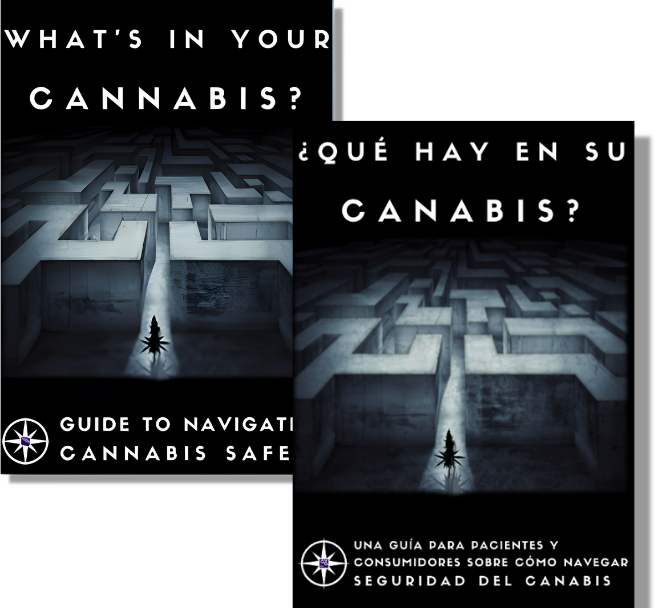
Products sold in California's cannabis program must be tested for contaminants, pesticides, and adulterants in accordance with thresholds set by state regulators. Click here to see specific requirements for California products.
It can be challenging for patients to determine which businesses offering cannabis products are licensed and approved by the state. Review this list of medical cannabis retailers to find out where to purchase regulated cannabis in California.
You can use cannabis on private property. You cannot smoke cannabis where it is illegal to smoke tobacco. You cannot smoke cannabis within 1,000 feet of a school, day care center, or youth center while children are present. For complete information, visit the California Department of Cannabis Control — What’s Legal.
Patients CANNOT medicate or possess medical cannabis in these locations:
- Any public place, including restaurants or bars
- Anywhere it is illegal to smoke tobacco
- Within 1,000 feet of a school, day care center, or youth center while children are present
- Federal lands (such as national parks)
- Cannabis cannot be taken across state lines
Property owners can ban the use of cannabis on privately-owned property. Check your rental agreement for restrictions.
California has an adult-use cannabis program, but registering as a medical cannabis patient and obtaining an MMIC still offers important benefits over recreational purchase.
Federal Protections Apply Only to Registered Patients
Some federal protections are now available, but only to patients who are officially registered in their state’s medical cannabis program.
A federal order issued April 28th,2026, AG Order No. 6754-2026, treats a state medical cannabis certification or registration as similar to a prescription under federal law. This means that being registered is not just a state requirement; it may also affect whether a patient qualifies for federal protections.
To receive these protections, a patient’s registration must stay active, current, and in good standing. Learn more here.
Tax Exemption
Qualified patients who present a valid MMIC are exempt from sales and use tax when purchasing medical cannabis, medical cannabis concentrate, edible medical cannabis products, or topical cannabis at licensed retailers.
Legal Protections
The MMIC identifies the cardholder as a person protected under the provisions of Proposition 215 (the Compassionate Use Act, 1996) and Senate Bill 94 (Chapter 27, Statutes of 2017). It is used to help law enforcement identify the cardholder as legally authorized to possess certain amounts of medical cannabis.
Privacy Protections
Health and Safety Code Section §11362.713 provides privacy rights for patients by ensuring that all patient information is deemed “medical information” under California’s Confidentiality of Medical Information Act.
Custodial and Parental Rights
The status and conduct of a qualified patient who acts in accordance with the Compassionate Use Act shall not, by itself, be used to restrict or abridge custodial or parental rights to minor children in any action or proceeding under the jurisdiction of family or juvenile court.
Higher Possession and Purchase Limits
The MMIC identifies the cardholder as a person protected under the provisions of Proposition 215 (the Compassionate Use Act, 1996) and Senate Bill 94 (Chapter 27, Statutes of 2017). It is used to help law enforcement identify the cardholder as legally authorized to possess certain amounts of medical cannabis. Medical patients may purchase up to 8 ounces of cannabis, while adult-use consumers are limited to 1 ounce. Medical dispensaries may offer medical cannabis products not available at adult-use retailers.
Keeping the Medical Program Strong
Enrollment helps demonstrate continued patient need for California’s medical cannabis program. A strong registry helps protect and sustain the program, supports continued access for patients with serious health needs, and reinforces the importance of maintaining a medical pathway alongside adult-use access.
California does not have medical cannabis reciprocity laws. Out-of-state medical cannabis cards are not recognized in California. However, adult-use cannabis is legal for anyone 21 or older, so out-of-state visitors can purchase at licensed adult-use retailers.
*UPDATE: AG ORDER NO. 6754-2026 CHANGED FEDERAL CANNABIS LAWS ON APRIL 28, 2026: Learn more here.
Federal cannabis laws affect far more than whether a patient can access medical cannabis. For decades, federal prohibition has limited protections for medical cannabis patients under laws such as the Americans with Disabilities Act (ADA) and the Fair Housing Act (FHA). As a result, patients have often been denied the basic protections that people with other serious health conditions expect in employment, housing, healthcare, and access to federal programs.
Federal prohibition has also affected patients’ access to essential healthcare, housing, and financial support programs, sometimes forcing patients to choose between the medicine they need and the benefits they depend on. It has also created barriers to federal employment, healthcare autonomy, firearm ownership, and other aspects of daily life.
As federal and state cannabis laws change, implementation matters. Advocates must stay vigilant to ensure public agencies, private institutions, employers, housing providers, and healthcare systems update their policies in ways that respect patient rights and protect safe, legal access to medical cannabis.
It is important to stay active, engaged, and informed. Sign up to get ASA updates and learn more about ending patient discrimination.
Rights and protections for medical cannabis patients are evolving. In some cases, outdated policies may impact how patients are treated. In other cases, like those in the military, policy changes will have to come from Washington, DC. In the case of organ transplants, stigma still plays a role in medical cannabis patients having access to life-saving treatment, even if state laws ban discrimination. Please use the resources below to better understand patient rights and how to navigate these programs and services.

Medical cannabis may be legal in your state, but it is illegal to cross state lines, even if the bordering state also has a medical cannabis program. For more information about traveling as a medical cannabis patient, check out our Travel Guide.
Stigma and discrimination also make patients targets for law enforcement encounters. Keep in mind that the best law enforcement encounter is the one that never occurs! It's crucial for individuals involved in medical cannabis to understand not only medical cannabis laws and regulations but also their rights. Be Prepared. Know Your Rights!
| State laws frequently change; if you find information that is out of date, incorrect, or has a broken link, let us know! Email [email protected] |
Medical cannabis patients can find additional resources here.
Get Involved! Learn more about ASA Campaigns and Take Action to improve the lives of medical cannabis patients today!
If you appreciate ASA's work, join now to become a part of the movement & sign up to get ASA updates.

Share this page