MEDICAL CANNABIS PATIENTS & CAREGIVERS
|
The Louisiana Department of Health oversees the Louisiana Cannabis Program, which was first enacted through legislation in 2015. The program has evolved over the years, with updated Regulation of Medical Marijuana Rules published in 2026. Patients and their caregivers must be registered with the program to benefit from the rights and protections granted under these statutes. |
Medical cannabis may not be the best treatment choice for all patients. Learn more.
A LEGAL MEDICAL CANNABIS PATIENT ...
A legal medical cannabis patient in Louisiana:
- Is a Louisiana resident, or a person who has been a resident for 30 or more days.
- Has a recommendation from an authorized clinician licensed and in good standing with their relevant licensing board. Authorized clinicians include physicians, nurse practitioners with prescriptive authority, and medical psychologists. Authorized clinicians may recommend therapeutic cannabis for any condition that meets this definition of "debilitating medical condition" under R.S. 40:1046(A)(2)(a). These include:
- Cancer
- Glaucoma
- Neurodegenerative diseases and conditions, including: Alzheimer's disease, amyotrophic lateral sclerosis, Huntington's disease, Lewy body dementia, motor neuron disease, Parkinson's disease, and spinal muscular atrophy
- Positive status for human immunodeficiency virus (HIV)
- Acquired immune deficiency syndrome (AIDS)
- Cachexia or wasting syndrome
- Seizure disorders
- Epilepsy
- Spasticity
- Severe muscle spasms
- Intractable pain
- Crohn's disease
- Muscular dystrophy
- Multiple sclerosis
- Post-traumatic stress disorder (PTSD)
- Certain conditions associated with autism spectrum disorder (specific behavioral criteria apply; see statute)
- Traumatic brain injury
- A concussion diagnosed by an authorized clinician
- Chronic pain associated with fibromyalgia
- Chronic pain associated with sickle cell disease
- Any condition for which a patient is receiving hospice care or palliative care
- Presents the authorized clinician's written or electronic recommendation directly to a licensed marijuana retailer to purchase medical cannabis. Louisiana does not issue a state patient registry card, and no separate state registration is required for most patients.
Note: Patients who are minors (under 18) may participate through a parent or legal guardian. Special rules apply to recommendations involving autism spectrum disorder for patients under 18. See the Enrolling Minor Patients section below.
ENROLLMENT PROCESS
Louisiana does not use a state patient registry enrollment process for most adult patients. Instead:
- Visit an authorized clinician (physician, nurse practitioner with prescriptive authority, or medical psychologist) licensed and in good standing in Louisiana.
- If the clinician determines that you have a debilitating medical condition and that therapeutic cannabis may be appropriate for your care, they will issue a written or electronic recommendation.
- The recommendation is sent directly from the clinician to a licensed marijuana retailer. The retailer enters the patient's information into the Louisiana Medical Marijuana Tracking System (LMMTS) within 24 hours of receiving the recommendation.
- Bring a valid government-issued photo ID to the retailer when picking up your products.
- Recommendations are valid for up to 12 months from the date issued.
- Telehealth recommendations are permitted. Under R.S. 40:1046(K), nothing in the statute prevents an authorized clinician from recommending therapeutic cannabis through telehealth.
PATIENT RENEWAL
Recommendations are valid for up to 12 months. To continue accessing medical cannabis after your recommendation expires, contact your authorized clinician for a new recommendation. There is no separate state renewal process; the renewal is handled through your clinician.
ENROLLING MINOR PATIENTS
Qualifying minors may participate in the Louisiana medical cannabis program through a parent or legal guardian.
Special rules apply to minors under 18 with autism spectrum disorder. Under R.S. 40:1046(A)(2)(b), no authorized clinician may recommend medical cannabis for the treatment of any condition associated with autism spectrum disorder for a patient under the age of 18 unless the clinician consults with a pediatric subspecialist who provides care to patients with autism spectrum disorder.
Patients under the age of 21 face an additional restriction on product type: under R.S. 40:1046(A)(5)(b), a retailer may not sell raw or crude marijuana (cannabis flower) to any person under 21 without a recommendation from an authorized clinician specifically recommending that form for that patient. Other product forms (such as oils, tinctures, edibles, and capsules) remain available with a standard recommendation.
Louisiana does not operate a cannabis-specific caregiver registration program. There is no separate caregiver application, ID card, or state enrollment process.
The term "caregiver" in Louisiana medical cannabis law refers to any person, either temporarily or permanently, responsible for the care of a person who is aged or an adult with a physical or mental disability. This may include adult children, parents, relatives, neighbors, and personnel of care facilities, among others.
A caregiver may pick up medical cannabis products on behalf of a patient at a licensed marijuana retailer, or receive products via the retailer's delivery service. Caregivers also receive possession immunity under R.S. 40:966(F).
A parent or domiciliary parent who possesses medical cannabis on behalf of a minor patient also receives possession immunity under R.S. 40:966(F), provided the cannabis is in a permissible form and was obtained pursuant to a legitimate recommendation from an authorized clinician.
Because Louisiana does not maintain a caregiver registry or issue caregiver credentials, there is no formal enrollment process. Caregivers should confirm with the patient's retailer what identification or documentation is needed to pick up products on the patient's behalf.
Dispensaries:
Medical cannabis in Louisiana is sold exclusively through licensed marijuana retailers permitted by the Louisiana Department of Health. As of January 1, 2025, the LDH Cannabis Program assumed regulatory oversight of these retail sites following the transfer of authority under Act 693 of the 2024 Legislature.
Under R.S. 40:1046(G), the state may issue up to 30 total retail locations, including satellite locations. Each LDH health administrative region must have at least one retailer. Retailers are also required to offer delivery to patients in each zip code within their region at least once per month.
For a list of licensed marijuana retailers, visit the LDH Cannabis Program page.
What to bring:
- Your authorized clinician's written or electronic recommendation (sent directly to the retailer; confirm with the retailer that it has been received)
- Your photo ID
- A list of your prescribed medications (for initial appointment or if your medications change).
- Payment for your medicine. Insurance companies do not cover the cost of medical cannabis.
Possession Limits:
Under R.S. 40:1046(A)(5)(a), no retailer may sell more than two and one-half ounces (71 grams) of raw or crude cannabis flower to any individual patient in a 14-day period. Other product forms are dispensed according to the authorized clinician's recommendation.
Available Product Forms Include:
- Oils, extracts, tinctures, or sprays
- Solid oral dosage forms (pills, capsules, tablets)
- Liquid oral dosage forms (solutions or suspensions)
- Gelatin- or pectin-based chewables
- Topical creams, ointments, or lotions
- Transdermal patches
- Suppositories
- Metered-dose inhalers
- Edible products intended for ingestion
- Combustible forms (flower) intended for inhalation
- Other forms approved by the department
Home Cultivation:
Home cultivation is not permitted under Louisiana law. Patients must obtain medical cannabis products exclusively from a licensed marijuana retailer.
Need tips on home cultivation?
Cannabis Product Safety:
Cannabis, in its natural form, is inherently safe for most patients, but it is especially susceptible to contaminants during cultivation, manufacturing, handling & even storing. Whether you are purchasing cannabis from regulated, grey, or illicit markets or cultivating your own cannabis, you should be aware of the contaminants commonly found in cannabis and the symptoms that accompany their presence.
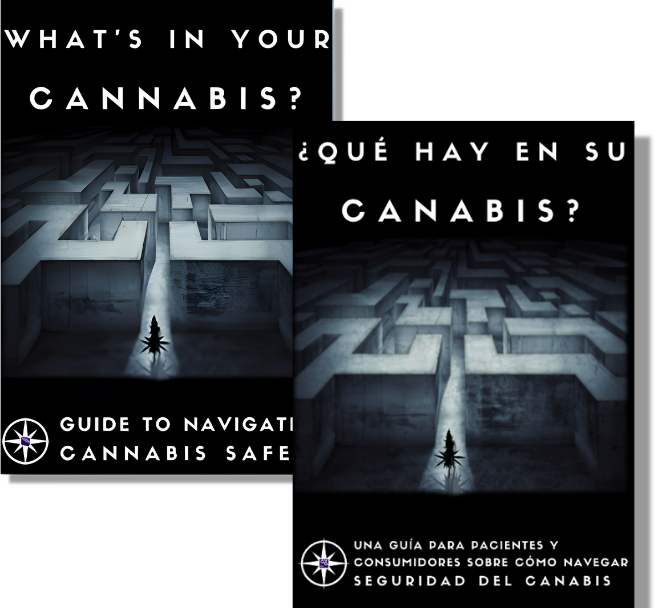
Products sold in Louisiana's dispensaries and adult-use retail locations must be tested for contaminants, pesticides, and adulterants based on these thresholds set by state regulators. For more information about cannabis safety, download ASA's "What’s in Your Cannabis? A Patient & Consumer Guide to Navigating Cannabis Safety."
It can be challenging for patients to determine which businesses offering cannabis products are licensed and approved by the state. Review this list of medical cannabis retailers to find out where to purchase regulated cannabis in Louisiana.
Because Louisiana does not operate a patient registry, the standard benefits of registry participation, often tied to a registry card, are structured differently here. The protections available to Louisiana patients are based on holding a valid recommendation from an authorized clinician.
Federal Protections Apply Only to Registered Patients
Some federal protections are now available, but only to patients who are officially registered in their state’s medical cannabis program.
A federal order issued April 28th,2026, AG Order No. 6754-2026, treats a state medical cannabis certification or registration as similar to a prescription under federal law. This means that being registered is not just a state requirement; it may also affect whether a patient qualifies for federal protections.
To receive these protections, a patient’s registration must stay active, current, and in good standing. Learn more here.
Possession Immunity: Patients who possess medical cannabis in a permissible form and for a condition, pursuant to a legitimate recommendation from an authorized clinician, are exempt from state prosecution for possession.
Workers' Compensation: Employers and their workers' compensation insurers are not required to pay for medical cannabis in claims under the Louisiana Workers' Compensation law.
Access to a Pharmacist: Each permitted retailer must designate at least one licensed pharmacist to be available to patients by telephone or video conference during business hours. Patients may consult with the designated pharmacist regarding their products.
LEGAL PROTECTIONS
Patients who possess medical cannabis in a form authorized under R.S. 40:1046 for a condition enumerated in that statute, pursuant to a legitimate recommendation from an authorized clinician, are exempt from state prosecution for possession of cannabis. This protection also extends to:
- A parent or domiciliary parent who possesses medical cannabis on behalf of a minor child pursuant to a legitimate recommendation
- Caregivers
- Visiting qualifying patients
Louisiana does accept visiting qualifying patients. A visiting qualifying patient is defined as a non-resident of Louisiana or a person who has been a resident for fewer than 30 days who provides a licensed retailer with a copy of a medical cannabis registry card or equivalent credential showing that the patient currently receives medical cannabis in another state under that state's laws and rules.
Requirements at the retailer:
- Present a valid medical cannabis registry identification card or equivalent credential from your home state
- Present a valid government-issued photo ID
- Complete a certification form confirming you have been diagnosed with one or more debilitating medical conditions and that you will not divert any cannabis dispensed to you
The same possession limits apply to visiting patients as to Louisiana residents. Products may only be dispensed within Louisiana and may not be delivered to an out-of-state address.
For more information about traveling as a medical cannabis patient, check out our Travel Guide.
*UPDATE: AG ORDER NO. 6754-2026 CHANGED FEDERAL CANNABIS LAWS ON APRIL 28, 2026: Learn more here.
Federal cannabis laws affect far more than whether a patient can access medical cannabis. For decades, federal prohibition has limited protections for medical cannabis patients under laws such as the Americans with Disabilities Act (ADA) and the Fair Housing Act (FHA). As a result, patients have often been denied the basic protections that people with other serious health conditions expect in employment, housing, healthcare, and access to federal programs.
Federal prohibition has also affected patients’ access to essential healthcare, housing, and financial support programs, sometimes forcing patients to choose between the medicine they need and the benefits they depend on. It has also created barriers to federal employment, healthcare autonomy, firearm ownership, and other aspects of daily life.
As federal and state cannabis laws change, implementation matters. Advocates must stay vigilant to ensure public agencies, private institutions, employers, housing providers, and healthcare systems update their policies in ways that respect patient rights and protect safe, legal access to medical cannabis.
It is important to stay active, engaged, and informed. Sign up to get ASA updates and learn more about ending patient discrimination.
Rights and protections for medical cannabis patients are evolving. In some cases, outdated policies may impact how patients are treated. In other cases, like those in the military, policy changes will have to come from Washington, DC. In the case of organ transplants, stigma still plays a role in medical cannabis patients having access to life-saving treatment, even if state laws ban discrimination. Please use the resources below to better understand patient rights and how to navigate these programs and services.

Medical cannabis may be legal in your state, but it is illegal to cross state lines, even if the bordering state also has a medical cannabis program. For more information about traveling as a medical cannabis patient, check out our Travel Guide.
Stigma and discrimination also make patients targets for law enforcement encounters. Keep in mind that the best law enforcement encounter is the one that never occurs! It's crucial for individuals involved in medical cannabis to understand not only medical cannabis laws and regulations but also their rights. Be Prepared. Know Your Rights!
| State laws frequently change; if you find information that is out of date, incorrect, or has a broken link, let us know! Email [email protected] |
Medical cannabis patients can find additional resources here.
Get Involved! Learn more about ASA Campaigns and Take Action to improve the lives of medical cannabis patients today!
If you appreciate ASA's work, join now to become a part of the movement & sign up to get ASA updates.
Share this page