Resources for State Policymakers & Advocates
When Americans for Safe Access (ASA) was founded in 2002, eight states had medical cannabis laws that provided only criminal exemptions to cannabis laws. Patient collectives formed to provide access emerged to meet urgent needs, operating underground and under constant threat of state and federal enforcement. Over the past 24 years, ASA has made tremendous progress in shaping medical cannabis policy across the U.S., bringing the legal framework for state-based access programs, product safety protocols, and civil protections to state laws and passing limited federal protections.

Today, forty-nine states, the District of Columbia, and four territories have passed medical cannabis laws (40 total states have medical cannabis access programs), but patients continue to face serious gaps in affordability, access, and continuity of care. Until Congress passes federal legislation allowing the integration of cannabis into U.S. healthcare systems, states are the only avenue for legal access. ASA continues to work with advocates to improve state laws while working toward a national medical cannabis program. ASA regularly contributes comments and testimony on pending state legislation and regulations to keep state cannabis programs patient-focused.
The following resources are designed to help state policymakers and advocates strengthen patient protections and prepare for the transition to a national medical cannabis program.
STATE LEGISLATIVE & REGULATORY GUIDES


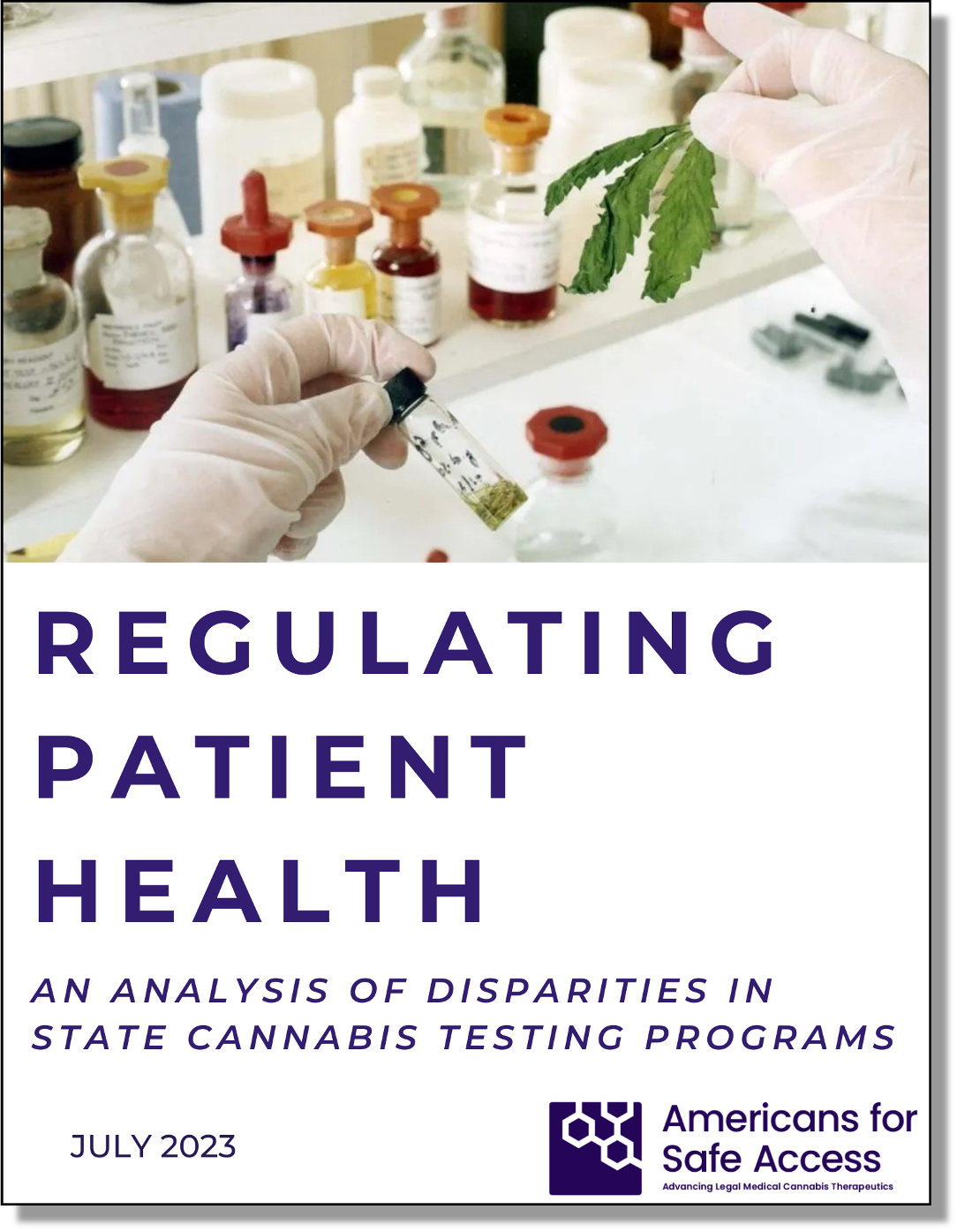
STATE CAMPAIGNS


THE ROLE OF STATES IN PROTECTING PATIENT ACCESS
The modern medical cannabis movement was born the moment Congress closed the door on federal medical access. When cannabis was classified as a Schedule I substance under the Controlled Substances Act of 1970—defined as having “no currently accepted medical use”—patients were left without legal pathways for care. The first crack in that wall came in 1978, when a federal court recognized medical necessity in the case of patient Bob Randall, leading to the creation of the federal Compassionate Investigational New Drug (IND) program. For a brief moment, cannabis entered U.S. healthcare under FDA supervision, offering proof that regulated medical use was possible.

That progress did not last. In 1992, the federal government shut down the IND program under pressure from Drug War advocates, once again abandoning patients and making clear that federal leadership on medical cannabis was not coming.
STATE PROGRAMS WERE CREATED OUT OF NECESSITY
Patients and advocates turned to the states not because it was the ideal solution, but because it was the only one available. Early state laws focused on compassionate use protections and legal defenses, with California’s Compassionate Use Act of 1996 becoming the first lasting state response to federal inaction.
When Americans for Safe Access (ASA) was founded in 2002, only eight states had medical cannabis laws, and most offered little more than narrow criminal protections. Patient collectives emerged to meet urgent needs, often operating underground and under constant threat of federal enforcement. Raids, arrests, and prosecutions made clear that state action was taking place in the shadow of federal prohibition.
ASA was formed with a clear understanding of this reality: state programs were never the goal. They were triage—an emergency response to protect patients while advocates worked to dismantle the federal barriers that made those stopgaps necessary in the first place. Through local access laws, regulatory standards, research advocacy, and sustained pressure on federal institutions, states—guided by patient advocates—began building the infrastructure that federal policy refused to provide.
PATIENT WORKED WITH STATES TO BUILD WHAT FEDERAL POLICY REFUSED TO CREATE
For more than 30 years, states have stepped in where federal prohibition left patients without care. In the absence of a comprehensive federal medical cannabis framework, states have developed, tested, and refined patient-centered policies in real-world conditions.
Through access laws, regulatory standards, research advocacy, and direct pressure from patient communities, states began building the infrastructure that federal policy refused to create. Those efforts have shaped product safety standards, access models, patient protections, and the broader understanding of cannabis as medicine.
Today, every state except Idaho has enacted some form of medical cannabis access. But progress remains uneven, and patients continue to face serious gaps in affordability, access, and continuity of care.
PATIENTS ARE STILL AT RISK
A growing backlash against adult-use and hemp markets now threatens to undermine patient-focused policy. In many states, the medical cannabis policy has been diluted, leaving patients caught between competing market pressures and outdated federal law.
That means states still have work to do. Protecting patient access now requires more than simply preserving existing programs. It requires strengthening them, defending their medical purpose, and preparing for the impact of changing federal and state laws.
STATE MEDICAL CANNABIS PROGRAMS HAVE SHOWN WHAT IS POSSIBLE
State-level reforms have demonstrated what whole-plant, patient-centered care can achieve. They have also helped build the evidence, experience, and regulatory models needed for a future federal framework.
ASA’s proposed Medical Cannabis and Cannabinoid Act (MCCA) provides that path forward. The legislation would create a new Schedule VI for cannabis, establish an Office of Medical Cannabis and Cannabinoid Control within the U.S. Department of Health and Human Services, and align national safety, access, and research standards.
If you appreciate ASA's work, sign up to get alerts and updates and make a donation to support ASA's vital mission.

Share this page