Veterans who participate in a state medical cannabis program may encounter discrimination involving VA healthcare, pain management, mental health services, medications, referrals, housing, benefits, forms, or assistance with state registration. Problems may include loss of care, refusal to provide information or documentation, or medical cannabis being recorded as substance misuse instead of medicine.
VA clinicians and programs operate within a federal system and may cite federal policy, prescribing restrictions, drug-testing rules, treatment agreements, or program requirements. These policies may be applied without distinguishing state-authorized medical use from impairment, misuse, or conduct that actually affects eligibility for care or services.
The federal law is new, and VA policies and staff guidance may not yet reflect the change. Veterans may need to educate providers, patient advocates, benefits staff, and housing programs. The new protections do not require a VA clinician to recommend medical cannabis, but veterans should be able to ask how their patient status affects care and request an individualized review of unrelated services or treatment.
The federal law is new; VA policies & staff guidance may not yet reflect the change.Patients may have to educate human resources staff, supervisors, testing companies, and medical review officers. The new protections do not grant anyone the right to work while impaired or to ignore legitimate safety requirements, but they support requesting an individualized review rather than automatic punishment based solely on patient status or a test result. |
THE AG ORDER DOES NOT EXPLICITLY CHANGE THE RIGHTS OF VETERANS.
Veterans continue to face a conflict between state medical cannabis laws and Department of Veterans Affairs policy. The Department of Veterans Affairs currently states that veterans will not be denied VA benefits because of marijuana use, encourages veterans to discuss marijuana use with VA providers, and allows VA providers to record marijuana use in the veteran's medical record for treatment planning. That policy recognizes the importance of communication but falls short of allowing VA clinicians to provide meaningful support for participation in a state medical cannabis program.
VETERANS HEALTH ADMINISTRATION DIRECTIVE 1315 governs access to Veterans Health Administration clinical programs for veterans participating in state-approved marijuana programs. Under the current policy, veterans who rely on the Department of Veterans Affairs as their primary healthcare provider remain unable to receive medical cannabis recommendations, referrals, state forms, or registration assistance from VA clinicians, even when they live in a state with a lawful medical cannabis program.
The Department of Veterans Affairs must also update its electronic medical record systems. Medical cannabis use should be documented through a distinct code or field that is separate from non-medical use or substance misuse. Veterans Health Administration intake and documentation standards should include route of administration, chemical composition when known, dose, frequency of use, participation in a state medical cannabis program, the certifying healthcare professional when applicable, and potential interactions with prescribed medications.
WHY ASA IS COLLECTING REPORTS FROM VETERANS?
Americans for Safe Access is collecting information about these incidents to better quantify how often veterans are denied support, experience disruptions in care, or have medical cannabis documented inaccurately. This information will strengthen advocacy to update VA and Veterans Health Administration policies and protocols. ASA is also seeking veterans who are willing to share their experiences with Congress, either publicly or without identifying information, so policymakers can understand how current policies affect real patients.
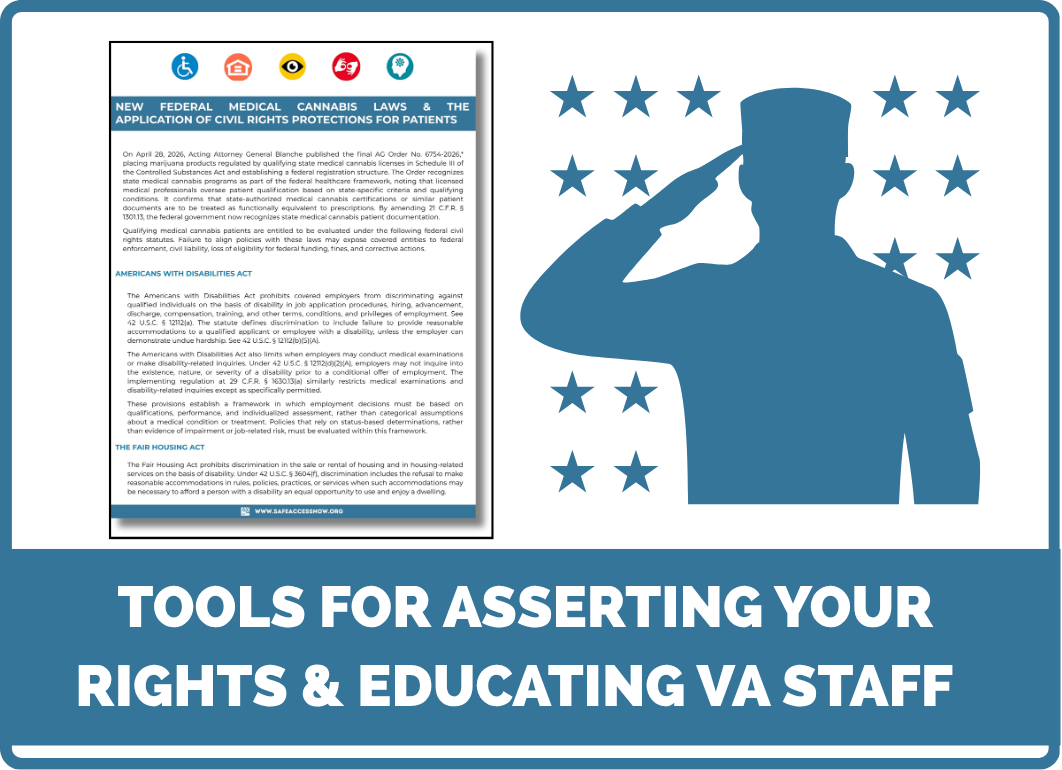
Veterans can use the resources on this page to communicate with a VA clinician, patient advocate, medical center, benefits office, housing program, or other VA service. These include educational materials about the law and patients’ rights, as well as sample requests for individualized review. A request does not guarantee that the VA will reverse a decision or provide a particular service. Because these protections are new, meaningful implementation may require continued education, patient-advocate complaints, clinical appeals, benefits appeals, or other administrative review.
PATIENT & CAREGIVER RESOURCES:


NEED HELP DOCUMENTING OR REPORTING DISCRIMINATION? |
The loss of healthcare, pain treatment, mental health services, housing, benefits, or other support can create an immediate crisis. Even so, documenting what happened, reporting discrimination to ASA, and educating VA institutions about discriminatory practices are essential to making these protections real.
1. Assert your rights and be prepared to educate the VA provider or program.
2. Request an individualized review and a written explanation of the policy being applied.
3. Keep and organize VA records, secure messages, notices, and appeal deadlines.
4. Report the discrimination.
REPORTING DISCRIMINATION
Whenever possible, request the policy and decision in writing, document statements about federal law or federal funding, preserve notices and communications, and record every upcoming deadline.
The checklist below can help veterans document what happened, identify the VA policy or decision involved, and gather the records needed to request review, file an appeal, restore services, or report discrimination.
You don't need every document on this checklist before reporting an incident. Report urgent situations promptly, continue gathering records, and keep copies of everything you submit.

Download Veterans’ Services Discrimination Checklist

Helpful ASA Resources
The following Americans for Safe Access resources can help patients and caregivers understand their state medical cannabis program, assert their rights, document discrimination, and seek assistance.
Know Your State’s Medical Cannabis Laws | Understand and Assert Your Rights | Tools for Asserting Your Rights | Report Medical Cannabis Discrimination | Traveling with Medical Cannabis | ASA Patient Guides | ASA Resources for Patients and Caregivers
If you appreciate ASA's work, sign up for alerts and updates and donate to support ASA's vital mission.

Share this page