Not every form of medical cannabis discrimination fits neatly into one category. Patients and caregivers may face problems involving licensing bodies, insurers, professional associations, government agencies, service providers, financial institutions, community organizations, or other institutions.
These cases may involve denial of access, penalties, loss of credentials, refusal to recognize medical status, application of a drug policy, or statements that medical cannabis participation is criminal or prohibited by federal law. The details matter because different organizations operate under different legal and regulatory requirements.
The federal law is new, and many institutions have not updated their policies.Patients and caregivers may have to educate decision-makers and ask them to identify the specific rule being applied. The new protections do not eliminate every restriction, but they support individualized review rather than assumptions based only on medical cannabis status. |
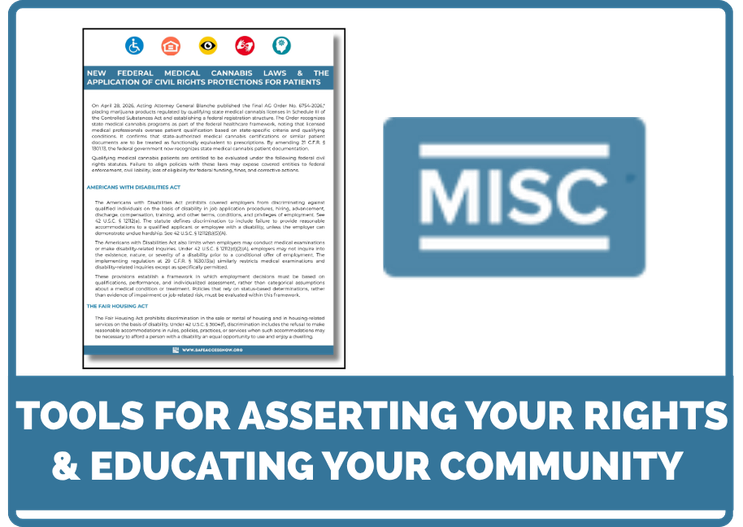
Patients and caregivers can use the resources on this page to communicate with an organization, licensing body, insurer, professional association, government office, or other institution involved in discrimination that does not fit another category. These include educational materials about the law and patients’ rights, as well as sample requests for an individualized review or reasonable accommodation. A request does not guarantee that the organization will reverse its decision. Because these protections are new, meaningful implementation may require continued education, administrative complaints, appeals, public pressure, or litigation.
PATIENT & CAREGIVER RESOURCES:


NEED HELP DOCUMENTING OR REPORTING DISCRIMINATION? |
Discrimination that does not fit a familiar category can be especially difficult to navigate. Even so, documenting what happened, reporting discrimination to ASA, and identifying the policy or decision-maker involved are essential to making these protections real.
1. Assert your rights and be prepared to educate the organization.
2. Request a reasonable accommodation, modification, or individualized review.
3. Keep and organize policies, notices, records, and communications.
REPORTING DISCRIMINATION
Whenever possible, request the policy and decision in writing, document statements about federal law or federal funding, preserve notices and communications, and record every upcoming deadline.
The checklist below can help patients and caregivers document what happened, identify the organization or policy involved, and gather the records needed to request review, challenge a decision, or report discrimination.
You do not need to have all the documents on this checklist before reporting an incident. Report urgent situations promptly, continue gathering records, and keep copies of everything you submit.

Download Miscellaneous Discrimination Checklist

Helpful ASA Resources
The following Americans for Safe Access resources can help patients and caregivers understand their state medical cannabis program, assert their rights, document discrimination, and seek assistance.
Know Your State’s Medical Cannabis Laws | Understand and Assert Your Rights | Tools for Asserting Your Rights | Report Medical Cannabis Discrimination | Traveling with Medical Cannabis | ASA Patient Guides | ASA Resources for Patients and Caregivers
If you appreciate ASA's work, sign up for alerts and updates and donate to support ASA's vital mission.

Share this page