MEDICAL CANNABIS PATIENTS & CAREGIVERS
|
The New Jersey Medical Cannabis Program was created through the enactment of the New Jersey Compassionate Use Medical Marijuana Act and the Jake Honig Compassionate Use Medical Cannabis Act. The Cannabis Regulatory Commission oversees the program. Patients and their caregivers must be registered with the program to benefit from the rights and protections granted under these statutes. |
Medical cannabis may not be the best treatment choice for all patients. Learn more.
A LEGAL MEDICAL CANNABIS PATIENT ...
1. must be a New Jersey resident.
2. must be diagnosed with a qualifying medical condition by a New Jersey healthcare practitioner who is registered with the NJMCP. Qualifying medical conditions include:
- Amyotrophic lateral sclerosis
- Anxiety
- Cancer
- Chronic pain
- Dysmenorrhea
- Glaucoma
- Inflammatory bowel disease, including Crohn's disease
- Intractable skeletal muscular spasticity
- Migraine
- Multiple sclerosis
- Muscular dystrophy
- Opioid Use Disorder
- Positive status for Human Immunodeficiency Virus (HIV) and Acquired Immune Deficiency Syndrome (AIDS)
- Post-Traumatic Stress Disorder (PTSD)
- Seizure disorder, including epilepsy
- Sickle cell anemia
- Terminal illness with a prognosis of less than 12 months to live
- Tourette Syndrome
3. must maintain a bona fide relationship with a healthcare practitioner who is registered with the NJMCP. Under the NJMCP, a bona fide relationship is defined as one in which the healthcare practitioner has ongoing responsibility for the assessment, care, and treatment of a patient's qualifying medical condition, and at least one of the following conditions is met:
- The practitioner-patient relationship has existed for at least one year, or
- The healthcare practitioner has seen and/or assessed the patient for the qualifying medical condition on at least four visits, or
- The healthcare practitioner assumes responsibility for providing management and care of the patient's qualifying medical condition after conducting a comprehensive medical history and physical examination, including a personal review of the patient's medical record maintained by other treating physicians, reflecting the patient's reaction and response to conventional medical therapies.
4. must obtain an Authorizing Provider Statement from your registered healthcare practitioner. This statement will include a reference ID number and a registry ID number, which you will need to complete your registration. See Enrollment Instructions below for the full step-by-step process.
5. must have a valid NJMCP registry ID
ENROLLMENT PROCESS
To enroll in the New Jersey Medicinal Cannabis Program, you must have a qualifying medical condition and be under the care of a participating healthcare practitioner who is registered with the program.
Step 1: Consult with a participating New Jersey healthcare practitioner who is registered with the NJMCP and with whom you have a bona fide relationship. Together, you and your practitioner will determine whether adding cannabis to your course of treatment may be beneficial.
Step 2: Your healthcare practitioner will provide you with an Authorizing Healthcare Practitioner Statement. This document will include a reference ID number and a registry ID number, which you will need to create your account in the patient portal.
Step 3: Go to the NJMCP patient portal and create your account using your reference ID and registry ID exactly as they appear on your Authorizing Healthcare Practitioner Statement. Your portal account will allow you to track your application status, verify your allotment and authorization period, request ID cards, and send messages to Patient Services.
Step 4: During registration, you will need to provide the following:
- The name of an Alternative Treatment Center (ATC) dispensary where you will purchase your medicinal cannabis. You can change your ATC in the portal at any time.
- A recent full-face, front-facing photograph taken within the last 60 days, against a plain white background, without a hat or glasses, with eyes open and a neutral expression, and without filters.
- Proof of New Jersey residency. Accepted documents include a current New Jersey government-issued ID showing your current address, or two proofs of residency from the following list:
- A utility or cell phone bill from the last 90 days
- A W-2, 1099 Statement, Form 1098, or other IRS or New Jersey Division of Taxation correspondence from the last year showing your name and address (Form 1040 and Form 1095 are not accepted)
- A property tax bill, jury summons, Social Security Administration documents, or other federal, state, or local government correspondence from the last 90 days showing your name and address
- Your last three monthly bank statements showing your name and address
- Your last three consecutive pay stubs
- An official deed
Step 5: Select your ID card option. Digital ID cards are free. Physical ID cards are available for a $10 fee. Both are valid for two years.
Once your application is approved, you can access your digital registry ID card through your patient portal account. Renewal reminders are sent 60 days before your card expires. You may renew at any time after receiving that notice.
For additional help with registration, the CRC offers a video walkthrough for adult patient registration.
PATIENT RENEWAL
Your NJMCP registry ID card is valid for two years. Renewal reminders are sent to you 60 days before your card expires, and you may renew at any time after receiving that notice.
To renew, log in to your account at the NJMCP patient portal. Through your portal account, you can also:
- View your active electronic ID card
- Make payments for new, renewed, or replacement ID cards
- View your authorization and application status
- View your purchase history
- Update your contact information
- Add or change a caregiver
- File a complaint
Digital ID cards are free at renewal. Physical ID cards are available for a $10 fee.
ENROLLING MINOR PATIENTS
Minor patients may participate in the New Jersey Medicinal Cannabis Program. A custodial parent, guardian, or legal custodian must consent in writing to the minor's medical use of cannabis and must acknowledge they will control the acquisition and possession of all dispensed cannabis.
To register a minor patient, you will need the following, as described on the New Patient Registration page:
- An Authorizing Healthcare Practitioner Statement from a registered NJMCP provider, which includes the reference ID and registry ID needed to create the minor's portal account.
- If the authorizing practitioner is not a pediatrician, a Minor Attestation from a pediatrician affirming their belief that the minor is likely to receive therapeutic or palliative benefit from the medical application of cannabis.
To register a minor patient, the parent or guardian should use the Minor Patient Registration portal. A video walkthrough is also available: Registering a Minor Patient.
Registered NJMCP patients may designate up to two caregivers to purchase medicinal cannabis on their behalf from a licensed Alternative Treatment Center (ATC) if the patient's condition renders them physically unable to visit an ATC themselves. Caregivers are chosen by the patient and are typically a friend or family member.
To qualify as a caregiver under the New Jersey Medicinal Cannabis Program, you must:
- Be a New Jersey resident
- Be at least 18 years old
- Submit to a criminal background investigation if you are not an immediate family member of the patient (fingerprinting forms are provided after the online registration process is initiated)
Caregivers must obtain an NJMCP identification card through the same registration process as patients. A caregiver can be added during the patient's initial registration or at any time afterward through the patient's portal account. A designated caregiver may serve no more than one other qualifying patient at a time.
Caregiver ID cards are free in digital format. Physical ID cards are available for a $10 fee. Renewal reminders are sent 60 days before the card expires, and caregivers may renew at any time after that notice is sent. Note that if a caregiver is added after the patient has already received their ID card, the caregiver's card will share the patient's existing expiration date, which may be less than two years away.
To add a caregiver, the patient logs in to their NJMCP patient portal account.
Dispensaries:
After your enrollment is approved, you may purchase medicinal cannabis at a licensed Alternative Treatment Center (ATC) or dispensary in New Jersey. You are registered to purchase from one ATC at a time and may transfer to a different ATC through your patient portal at any time.
Many licensed dispensaries also offer delivery services. You can find dispensaries and delivery services near you using the CRC dispensary finder.
What to Bring:
- Your valid NJMCP digital registry ID card (accessible through your patient portal)
- Government-issued photo ID
- Payment for your purchase. Insurance does not cover the cost of medicinal cannabis.
- A list of your current medications (recommended for your first visit)
Note: If your registration is still under review, you may visit a dispensary with your government-issued ID before your card is issued. The dispensary can look up your information in the NJMCP registry once you have initiated registration in the portal.
Patient Allotment:
Registered qualifying patients may receive cannabis orders of up to 85 grams (3 oz) per 30-day period, as confirmed by the New Jersey Cannabis Regulatory Commission. Your authorizing healthcare practitioner will determine your individual authorized amount, which may be less than the program maximum. Terminally ill patients are exempt from the maximum limit.
Your monthly allotment may be used in any combination of product forms, including flower, concentrates, oil, and ingestibles. Note that ingestibles are measured in milligrams rather than grams.
Home Cultivation:
New Jersey does not permit registered patients or caregivers to grow cannabis at home. Under current law, the CRC does not have the authority to permit or regulate home cultivation of medicinal cannabis. Patients who wish to advocate for home cultivation are encouraged to contact their state legislators.
Need tips on home cultivation?
Cannabis Product Safety:
Cannabis, in its natural form, is inherently safe for most patients, but it is especially susceptible to contaminants during cultivation, manufacturing, handling & even storing. Whether you are purchasing cannabis from regulated, grey, or illicit markets or cultivating your own cannabis, you should be aware of the contaminants commonly found in cannabis and the symptoms that accompany their presence.
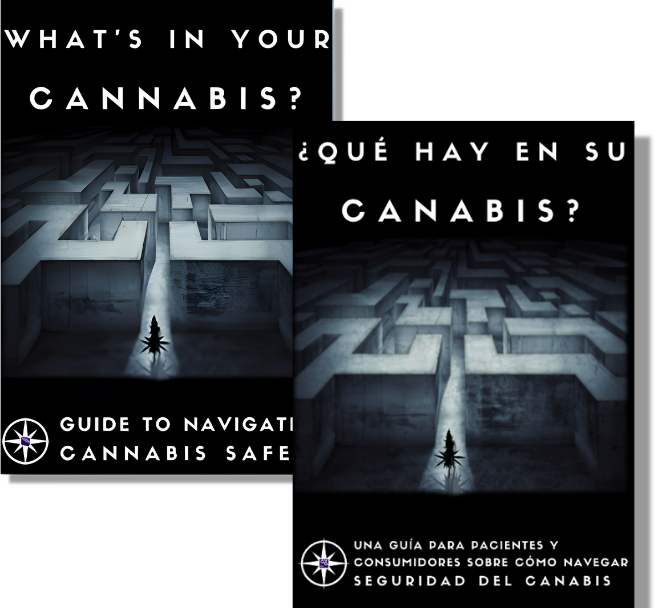
Products sold in New Jersey's dispensaries and adult-use retail locations must be tested for contaminants, pesticides, and adulterants based on these thresholds set by state regulators. For more information about cannabis safety, download ASA's "What’s in Your Cannabis? A Patient & Consumer Guide to Navigating Cannabis Safety."
It can be challenging for patients to determine which businesses offering cannabis products are licensed and approved by the state. Review this list of medical cannabis retailers to find out where to purchase regulated cannabis in New Jersey.
Registered medicinal cannabis patients may use their cannabis anywhere permitted under New Jersey law. The rules vary depending on how you consume.
Smoking and vaping:
Medicinal cannabis patients may smoke their cannabis anywhere smoking is allowed under New Jersey law. However, several important restrictions apply.
- New Jersey's Smoke Free Air Act prohibits smoking of any kind in most public spaces. This applies to medicinal cannabis.
- Private property owners, including landlords, have the right to prohibit cannabis smoking on their property. Review the terms of your lease or rental agreement before smoking at home.
- Do not smoke or consume cannabis in a private vehicle that is in motion.
- Do not smoke or consume cannabis on federal lands or in federal buildings.
Other forms of consumption:
Patients using ingestibles, oils, concentrates, or other non-smoked forms are not subject to the smoking location restrictions above, but should still follow applicable state and local laws and any rules set by private property owners.
New Jersey has an adult-use cannabis program, but registering as a medical cannabis patient still offers important benefits. While the medical program may require additional steps, registration can provide patients and caregivers with added support, stronger protections, and access to medical guidance.
Federal Protections Apply Only to Registered Patients
Some federal protections are now available, but only to patients who are officially registered in their state’s medical cannabis program.
A federal order issued April 28th,2026, AG Order No. 6754-2026, treats a state medical cannabis certification or registration as similar to a prescription under federal law. This means that being registered is not just a state requirement; it may also affect whether a patient qualifies for federal protections.
To receive these protections, a patient’s registration must stay active, current, and in good standing. Learn more here.
LEGAL PROTECTIONS
Under the Jake Honig Compassionate Use Medical Cannabis Act (N.J.S.A. 24:6I-6), registered qualifying patients and their caregivers who act in accordance with the program's requirements are protected from:
- Arrest, prosecution, property forfeiture, and criminal or civil penalties related to the authorized medical use of cannabis
- Civil or administrative penalties, or denial of any right or privilege, including disciplinary action by a professional licensing board, related to authorized medical use
- Having their registration or application for registration used alone as probable cause to search their person or property
These protections extend to designated caregivers, institutional caregivers, healthcare practitioners, and others acting in accordance with the program.
PRIVACY PROTECTIONS
The New Jersey Cannabis Regulatory Commission takes patient privacy seriously and does not share enrollment information without a patient's expressed written consent. For patient information to be shared with a third party, including an employer, the patient must complete a Release of Records Form through the patient portal.
CIVIL PROTECTIONS
Employment - Under N.J.S.A. 24:6I-6.1, it is unlawful for an employer to take an adverse employment action against an employee based solely on the employee's status as a registered qualifying patient. An adverse employment action includes refusing to hire, barring or discharging from employment, requiring retirement, or discriminating in compensation or any terms, conditions, or privileges of employment.
If an employee tests positive for cannabis, the employer must provide written notice giving the employee three days to provide a legitimate medical explanation, which may include their healthcare practitioner authorization and proof of program registration, or to request a confirmatory retest at the employee's own expense.
Employers retain the right to prohibit cannabis use and possession at the workplace and to address demonstrated on-the-job impairment.
Housing - Under N.J.S.A. 24:6I-6(i), no person may refuse to rent, lease, or sublease real property to a prospective tenant based solely on the tenant's status as a registered program participant, or discriminate in the terms, conditions, or privileges of a rental or lease on that basis alone. This protection does not apply if compliance would result in the landlord losing a monetary or licensing-related benefit granted under federal law.
Child Custody - Under N.J.S.A. 24:6I-6(m), a person's status as a registered qualifying patient, designated caregiver, or institutional caregiver shall not constitute the sole grounds for entering an order that restricts or denies custody of, or visitation with, a minor child.
Additionally, under N.J.S.A. 24:6I-6(o), no action or proceeding by the Division of Child Protection and Permanency may be initiated against a parent or legal guardian on the sole grounds that the person is a registered qualifying patient or caregiver. Nothing in this provision prevents any action based on actual harm or risk of harm to a child.
Organ Transplant - Under N.J.S.A. 24:6I-6(g), a qualifying patient's authorized use of medical cannabis shall be considered equivalent to the authorized use of any other medication used at the direction of a healthcare practitioner for purposes of medical care, including organ transplants. Authorized cannabis use shall not constitute the use of an illicit substance or otherwise disqualify a qualifying patient from needed medical care.
TAX BENEFITS
The New Jersey state sales tax rate on medicinal cannabis purchases is 0% for registered patients, as confirmed by the New Jersey Cannabis Regulatory Commission. Municipal taxes may apply up to 2% depending on the municipality where the ATC is located. Medicinal cannabis is not covered by any health insurance plan or Medicaid in New Jersey.
Registered patients also receive priority service at ATCs over adult-use consumers, and may purchase up to 85 grams per 30-day period compared to the 28.35-gram single-transaction limit for adult-use consumers.
Keeping the Medical Program Strong
Enrollment helps demonstrate continued patient need for Minnesota’s medical cannabis program. A strong registry helps protect and sustain the program, supports continued access for patients with serious health needs, and reinforces the importance of maintaining a medical pathway alongside adult-use access.
New Jersey accepts visiting medicinal cannabis patients from other states through a temporary registration process administered by the New Jersey Cannabis Regulatory Commission.
Visiting patients may register for a nonrenewable, six-month NJMCP card for use during their stay in New Jersey. A home state medical cannabis card alone does not authorize purchases at New Jersey ATCs. Visiting patients must obtain a New Jersey temporary card before making any purchases.
To register as a visiting patient:
- Consult with a healthcare practitioner who is registered with the NJMCP. The practitioner will enroll you in the registry and provide an Authorizing Healthcare Practitioner Statement with a reference ID number and registry ID number.
- Obtain a current copy of your registration in your home state's medical cannabis program.
- Use your reference ID, registry ID, and home state registration documentation to create an account and complete registration through the NJMCP patient portal.
Once registered, visiting patients receive the same benefits as New Jersey resident patients during their six-month registration period, including:
- The ability to purchase medicinal cannabis at licensed Alternative Treatment Centers (ATCs) across New Jersey
- Purchase allotment of up to 85 grams per 30-day period, subject to the authorizing practitioner's written instructions
- Exemption from New Jersey state sales tax (0%) on medicinal cannabis purchases, as confirmed by the CRC Patient FAQs
- Access to patient-only service lines and patient-only hours at dispensaries
- Priority service over adult-use consumers
The temporary card is nonrenewable. Visiting patients who establish New Jersey residency during their stay and wish to continue in the program must apply as a new resident patient.
For more information about traveling as a medical cannabis patient, check out our Travel Guide.
*UPDATE: AG ORDER NO. 6754-2026 CHANGED FEDERAL CANNABIS LAWS ON APRIL 28, 2026: Learn more here.
Federal cannabis laws affect far more than whether a patient can access medical cannabis. For decades, federal prohibition has limited protections for medical cannabis patients under laws such as the Americans with Disabilities Act (ADA) and the Fair Housing Act (FHA). As a result, patients have often been denied the basic protections that people with other serious health conditions expect in employment, housing, healthcare, and access to federal programs.
Federal prohibition has also affected patients’ access to essential healthcare, housing, and financial support programs, sometimes forcing patients to choose between the medicine they need and the benefits they depend on. It has also created barriers to federal employment, healthcare autonomy, firearm ownership, and other aspects of daily life.
As federal and state cannabis laws change, implementation matters. Advocates must stay vigilant to ensure public agencies, private institutions, employers, housing providers, and healthcare systems update their policies in ways that respect patient rights and protect safe, legal access to medical cannabis.
It is important to stay active, engaged, and informed. Sign up to get ASA updates and learn more about ending patient discrimination.
Rights and protections for medical cannabis patients are evolving. In some cases, outdated policies may impact how patients are treated. In other cases, like those in the military, policy changes will have to come from Washington, DC. In the case of organ transplants, stigma still plays a role in medical cannabis patients having access to life-saving treatment, even if state laws ban discrimination. Please use the resources below to better understand patient rights and how to navigate these programs and services.

Medical cannabis may be legal in your state, but it is illegal to cross state lines, even if the bordering state also has a medical cannabis program. For more information about traveling as a medical cannabis patient, check out our Travel Guide.
Stigma and discrimination also make patients targets for law enforcement encounters. Keep in mind that the best law enforcement encounter is the one that never occurs! It's crucial for individuals involved in medical cannabis to understand not only medical cannabis laws and regulations but also their rights. Be Prepared. Know Your Rights!
| State laws frequently change; if you find information that is out of date, incorrect, or has a broken link, let us know! Email [email protected] |
Medical cannabis patients can find additional resources here.
Get Involved! Learn more about ASA Campaigns and Take Action to improve the lives of medical cannabis patients today!
If you appreciate ASA's work, join now to become a part of the movement & sign up to get ASA updates.
Share this page