MEDICAL CANNABIS PATIENTS & CAREGIVERS
|
The Illinois Department of Public Health oversees the Illinois Medical Cannabis Patient Program, established through the Compassionate Use of Medical Cannabis Pilot Program Act in 2014. Patients and their caregivers must be registered with the program to benefit from the rights and protections granted under these statutes. |
Medical cannabis may not be the best treatment choice for all patients. Learn more.
A Legal Medical Cannabis Patient:
1. Is an Illinois resident.
2. Is at least 18 years of age, or is a minor patient whose parent or legal guardian applies on their behalf.
3. Has a diagnosed debilitating medical condition and a written certification from an Illinois-licensed certifying health care professional (MD, DO, APRN-FPA, or PA) with a current controlled substances license. Qualifying conditions include:
- Cancer
- Epilepsy and seizure disorders
- HIV/AIDS
- Multiple sclerosis
- Post-traumatic stress disorder (PTSD)
- Parkinson's disease
- ALS (amyotrophic lateral sclerosis)
- Crohn's disease
- Fibromyalgia
- Chronic pain
- Autism spectrum disorder
- Glaucoma
- Migraines
- Rheumatoid arthritis
Illinois recognizes more than 50 qualifying "debilitating medical conditions". This list is updated periodically. Illinois residents may petition IDPH annually to add new conditions.
4. Is registered in the Illinois Department of Public Health (IDPH) Medical Cannabis Patient Program and holds a valid registry identification card. Cards are available in 1-year, 2-year, and 3-year terms. Since June 22, 2021, cards have been issued digitally, and patients can download or print them from their IDPH online account. A temporary card is available while an application is under review.
ENROLLMENT INSTRUCTIONS
Step 1: Consult with a licensed Illinois certifying health care professional.
Your certifying health care professional must be an MD, DO, APRN-FPA, or PA with an active Illinois license and a current controlled substances license. They will evaluate whether you have a qualifying debilitating condition and, if so, create a written certification for you through the IDPH online portal.
The Illinois Department of Public Health, Division of Medical Cannabis, does not maintain or share a list of health care practitioners participating in the program.
The program suggests the following for finding a participating health care practitioner:
- Ask your current health care team if they participate in the medical cannabis program.
- Ask your current health care team for a referral to a practitioner who participates in the program.
- Search online, including the websites of medical cannabis retailers, for clinics and practitioners who are participating.
- Contact a nonprofit organization or support group related to your medical condition for recommendations.
Step 2: Your certifying health care professional submits your written certification through the IDPH portal.
Your certifying health care professional creates your written certification electronically through the IDPH Health Care Professional portal. You do not receive a paper certification. Once submitted, your certification will appear as a selectable option in your patient application.
Step 3: Apply online.
Once your certification is on file, complete your patient application through the IDPH Medical Cannabis Patient Program portal. Select your certifying health care professional's certification from the drop-down menu. The system is case-sensitive.
Step 4: Pay the application fee and download your card.
Application fees are $50 for a 1-year card, $100 for a 2-year card, and $125 for a 3-year card. A reduced fee tier is available for qualifying patients. Once approved, your registry identification card is available to download or print from your online account.
PATIENT RENEWAL
IDPH sends reminder emails beginning 90 days before your card expires. Renewal requirements are the same as for initial enrollment. Apply through the IDPH patient portal. Cards not renewed before expiration are treated as new applications.
ENROLLING MINOR PATIENTS
Patients under 18 require two written certifications: one from the certifying health care professional and one from a reviewing health care professional. The two-certification requirement does not apply to minors with a terminal illness diagnosis. A parent or legal guardian must apply on the minor's behalf. One caregiver is included at no charge in the application for a minor. Up to three caregivers may be named. Minor qualifying patients do not need to submit a photo.
For minor patient registration instructions, visit: https://dph.illinois.gov/topics-services/prevention-wellness/medical-cannabis/new-patient-resources/registering-a-minor-patient.html
BECOMING A LEGAL CAREGIVER
After enrollment is approved, you can purchase medical cannabis at a licensed Illinois dispensary. Find Medical Cannabis Dispensary Locations.
WHAT TO BRING
- Your valid Illinois medical cannabis registry identification card
- Government-issued photo ID
- A list of your current medications (recommended for your first visit)
- Payment for your medecine. insurance does not cover the cost of medical cannabis
POSSESSION LIMITS
Registered qualifying patients may possess up to 2.5 ounces of usable cannabis during any 14-day period. This is defined in statute as the patient's "adequate supply" (statutory term). The total amount possessed between a patient and their designated caregiver combined may not exceed this limit.
Patients who require a larger supply may request a waiver. A certifying health care professional may submit a written statement to IDPH providing a substantial medical basis for why 2.5 ounces is insufficient to properly alleviate the patient's debilitating medical condition during a 14-day period. IDPH must approve the waiver before a patient may possess amounts above the standard limit.
CANNABIS EXPUNGEMENT
In June 2019, Governor JB Pritzker signed the Cannabis Regulation and Tax Act (Public Act 101-0027, 410 ILCS 705) into law. The Act took effect January 1, 2020 and established an expungement process for certain past cannabis offenses. Expungement removes eligible cannabis offense records from the public criminal history record.
There are two pathways under the Act:
1. Automatic expungement applies to minor cannabis offense records that did not result in a conviction — including arrests that resulted in no charges, dismissed charges, or acquittals — for possession, manufacture, delivery, or intent to deliver under 30 grams of cannabis, where the incident did not involve a violent crime or penalty enhancement. Law enforcement agencies and the Illinois State Police are required to automatically expunge these records within statutory timelines. No action is required by the individual.
2. Conviction expungement for minor cannabis offenses of under 30 grams that did result in a conviction requires a pardon from the Governor authorizing expungement. The Illinois State Police identifies eligible conviction records and forwards them to the Illinois Prisoner Review Board for consideration under the Governor's pardon and expungement process. If a pardon is granted, a petition for expungement is filed in the circuit court.
For cannabis offenses involving 30 to 500 grams, the Governor's clemency process may also apply, but individuals must petition the court to vacate the conviction after receiving a pardon.
For free legal assistance with cannabis record expungement, contact New Leaf Illinois, a state-funded initiative providing free legal representation through nonprofit organizations statewide.
For more information, review the Illinois State Police cannabis expungement page and the Cannabis Regulation Oversight Office expungement page.
Home Cultivation:
Registered qualifying patients who are at least 21 years of age and have been Illinois residents for at least 30 days may grow up to five cannabis plants at home. The following rules apply:
- The five-plant limit applies per household, not per patient. If more than one registered qualifying patient lives at the same address, the combined household limit is still five plants.
- Only plants more than five inches tall count toward the limit.
- All plants must be kept in an enclosed, locked space that is not visible to the public.
- Seeds must be purchased from a licensed dispensary. Seeds may not be given or sold to anyone who is not a registered qualifying patient.
- Only the registered patient may cultivate. Designated caregivers may not grow, possess, or distribute cannabis plants on behalf of a patient.
- Home cultivation is not available to patients under 21 years of age.
Recreational cannabis users who are not registered qualifying patients may not grow cannabis at home under Illinois law.
Need tips on home cultivation?
Cannabis Product Safety:
Cannabis, in its natural form, is inherently safe for most patients, but it is especially susceptible to contaminants during cultivation, manufacturing, handling & even storing. Whether you are purchasing cannabis from regulated, grey, or illicit markets or cultivating your own cannabis, you should be aware of the contaminants commonly found in cannabis and the symptoms that accompany their presence.
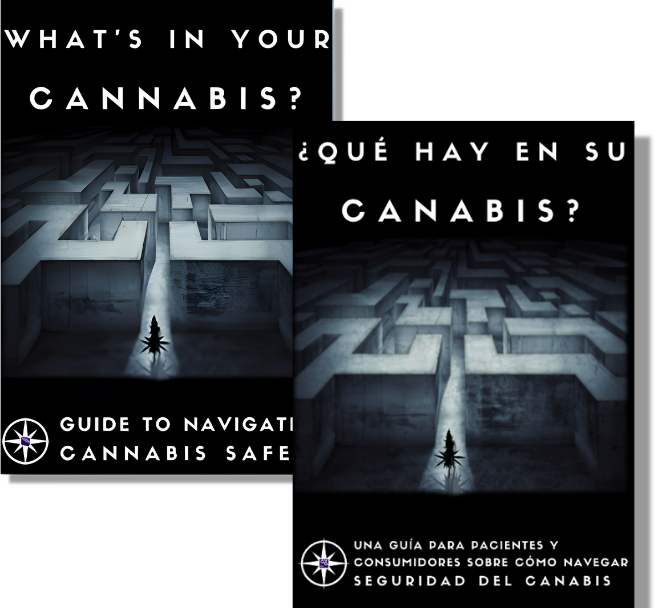
Products sold in Illinois dispensaries and adult-use retail locations must be tested for contaminants, pesticides, and adulterants based on these thresholds set by state regulators. For more information about cannabis safety, download ASA's "What’s in Your Cannabis? A Patient & Consumer Guide to Navigating Cannabis Safety."
It can be challenging for patients to determine which businesses offering cannabis products are licensed and approved by the state. Review this list of medical cannabis retailers to find out where to purchase regulated cannabis in Illinois.
Registered patients may use medical cannabis in permitted private locations.
Patients may NOT use or possess medical cannabis in:
- Any public place where a person could reasonably be expected to be observed by others
- Any health care facility
- Any place where smoking is prohibited under the Smoke Free Illinois Act (410 ILCS 82), which covers most enclosed public places and workplaces
- Any school bus or the grounds of any preschool, primary, or secondary school
- Any correctional facility
- Any motor vehicle, aircraft, or motorboat while operating or in actual physical control of the vehicle
- Any private residence used at any time for licensed child care, foster care, or other similar social service care
- Any federal property, including federal parks and buildings
- Any private business that has restricted or prohibited cannabis use on its premises
- Any university, college, or other institution of post-secondary education that has restricted or prohibited cannabis use on its property
SMOKING AND VAPING RESTRICTIONS
Smoking cannabis is subject to all restrictions that apply under the Smoke Free Illinois Act (410 ILCS 82). This includes a prohibition on smoking in enclosed public places, places of employment, and within 15 feet of entrances, exits, windows, and ventilation intakes of covered buildings. Smoking cannabis in any public place where a person could reasonably be expected to be observed by others is prohibited under the Compassionate Use of Medical Cannabis Program Act (410 ILCS 130/30).
USE AT SCHOOL — ASHLEY'S LAW
Registered minor qualifying patients may access medical cannabis-infused products in a school setting under Ashley's Law (105 ILCS 5/22-33). Medical cannabis-infused products include foods, oils, ointments, and other products containing usable cannabis. Smoking is not permitted under this law.
Who may administer on school grounds:
- A parent, guardian, or registered designated caregiver, provided both the student and the caregiver hold valid IDPH registry identification cards. The caregiver must remove any remaining product from the school premises after administration.
- A properly trained school nurse or school administrator, on school premises, at school-sponsored activities, and before or after school in school-operated programs, including school bus transport. School nurses and administrators must complete an annual training curriculum developed by ISBE in consultation with IDPH.
- A registered minor qualifying patient may self-administer under the direct supervision of a school nurse or school administrator.
A school may refuse to allow administration if it would disrupt the educational environment, expose other students to the product, or cause the school to lose federal funding. No school staff member may be required to administer a medical cannabis-infused product.
Illinois has an adult-use cannabis program, but registering as a medical cannabis patient still offers important benefits. While the medical program may require additional steps, registration can provide patients and caregivers with added support, stronger protections, and access to medical guidance.
Federal Protections Apply Only to Registered Patients
Some federal protections are now available, but only to patients who are officially registered in their state’s medical cannabis program.
Federal Protections Apply Only to Registered Patients
Some federal protections are now available, but only to patients who are officially registered in their state’s medical cannabis program.
A federal order issued April 28th,2026, AG Order No. 6754-2026, treats a state medical cannabis certification or registration as similar to a prescription under federal law. This means that being registered is not just a state requirement; it may also affect whether a patient qualifies for federal protections.
To receive these protections, a patient’s registration must stay active, current, and in good standing. Learn more here.
LEGAL PROTECTIONS
Under the Compassionate Use of Medical Cannabis Program Act (410 ILCS 130/25), registered qualifying patients and their designated caregivers have the following state-level legal protections when acting in accordance with the program:
- A registered qualifying patient is not subject to arrest, prosecution, or denial of any right or privilege, including civil penalties or disciplinary action by an occupational or professional licensing board, for the medical use of cannabis, provided the patient possesses no more than their authorized adequate supply (2.5 ounces per 14-day period, or an IDPH-approved waiver amount). For registered patients who are licensed professionals, this protection applies provided that cannabis use does not impair the patient while engaged in the practice of their licensed profession.
- A registered designated caregiver is not subject to arrest, prosecution, or denial of any right or privilege, including civil penalties or disciplinary action by a professional licensing board, for assisting a registered qualifying patient with the medical use of cannabis, provided the caregiver possesses no more than the patient's authorized adequate supply. The combined total possessed by the patient and caregiver may not exceed the patient's adequate supply.
- A registered qualifying patient or designated caregiver is not subject to arrest, prosecution, or denial of any right or privilege for possession of cannabis that is incidental to medical use but does not qualify as usable cannabis under the Act.
- There is a rebuttable presumption that a registered qualifying patient is engaged in lawful medical use of cannabis if the patient is in possession of a valid registry identification card and an amount of cannabis within the authorized adequate supply. This presumption may be rebutted by evidence that the conduct was not for the purpose of treating or alleviating the patient's debilitating medical condition.
- A cardholder under this Act may not be considered an unlawful user of or person addicted to narcotics solely as a result of their status as a registered qualifying patient or designated caregiver.
These protections apply under Illinois state law only. They do not provide immunity from federal law enforcement or prosecution under federal statutes.
Privacy Protections
IDPH is required by law to establish and maintain a confidential registry of registered qualifying patients and their designated caregivers. The following information is confidential and protected from public disclosure under the Compassionate Use of Medical Cannabis Program Act (410 ILCS 130/15 and 410 ILCS 130/150):
- Applications, renewals, and their supporting information submitted by qualifying patients and designated caregivers
- The individual's name and any other identifying information of persons to whom IDPH has issued registry identification cards
- All medical records provided to IDPH in connection with a registry application
This information is exempt from disclosure under the Illinois Freedom of Information Act. IDPH maintains a confidential list of cardholders for the purpose of verifying registry identification cards to law enforcement and dispensaries only.
CIVIL PROTECTIONS
Employment
Under the Compassionate Use of Medical Cannabis Program Act (410 ILCS 130/40), no employer may refuse to hire, or otherwise penalize, a person solely because of their status as a registered qualifying patient or registered designated caregiver, unless doing so would put the employer in violation of federal law or cause the employer to lose a monetary or licensing-related benefit under federal law or regulations.
Note: This protection is based on registration status, not cannabis use itself. Employers retain the right to enforce drug-free workplace policies and to take action where cannabis use actually impairs job performance.
Housing
Under 410 ILCS 130/40, no landlord may refuse to lease to, or otherwise penalize, a person solely because of their status as a registered qualifying patient or registered designated caregiver, unless doing so would put the landlord in violation of federal law or cause the landlord to lose a monetary or licensing-related benefit under federal law or regulations.
A landlord may prohibit the smoking of cannabis on the premises. This does not affect other methods of use.
Child Custody
Under 410 ILCS 130/40, a person who is otherwise entitled to custody of or visitation or parenting time with a minor may not be denied that right solely on the basis of their status as a registered qualifying patient or caregiver acting in accordance with the Act. There is no presumption of neglect or child endangerment based solely on that status.
This protection does not apply if the person's conduct related to cannabis created an unreasonable danger to the safety of the minor, as established by clear and convincing evidence.
Organ Transplant
Under 410 ILCS 130/40, for the purposes of medical care, including organ transplants, a registered qualifying patient's authorized use of cannabis in accordance with the Act is considered the equivalent of the authorized use of any other medication used at the direction of a certifying health care professional. A registered qualifying patient's cannabis use may not constitute the use of an illicit substance or otherwise disqualify the patient from needed medical care.
Tax Benefits
Registered medical cannabis patients are exempt from the adult-use cannabis excise tax, which ranges from 10% to 25% depending on the THC content of the product. Medical cannabis sales are instead taxed at the 1% rate applicable to prescription and nonprescription medications under Illinois law.
Keeping the Medical Program Strong
Enrollment helps demonstrate continued patient need for Illinois’s medical cannabis program. A strong registry helps protect and sustain the program, supports continued access for patients with serious health needs, and reinforces the importance of maintaining a medical pathway alongside adult-use access.
Illinois does not have a reciprocity program for out-of-state medical cannabis patients. Patients who hold a valid medical cannabis card from another state may not use that card to purchase cannabis at Illinois dispensaries under the medical program.
Visitors age 21 or older may purchase cannabis at licensed Illinois adult-use dispensaries under the Cannabis Regulation and Tax Act, subject to adult-use possession limits and applicable excise taxes. Adult-use purchases do not carry the legal protections, tax benefits, or higher possession limits available to registered Illinois medical cannabis patients.
*UPDATE: AG ORDER NO. 6754-2026 CHANGED FEDERAL CANNABIS LAWS ON APRIL 28, 2026: Learn more here.
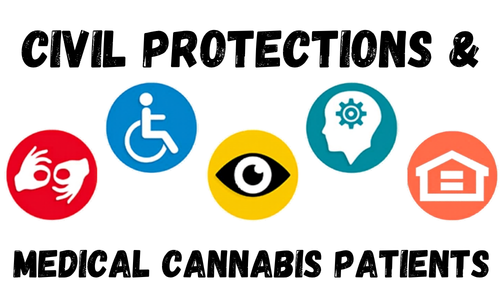
Federal cannabis laws affect far more than whether a patient can access medical cannabis. For decades, federal prohibition has limited protections for medical cannabis patients under laws such as the Americans with Disabilities Act (ADA) and the Fair Housing Act (FHA). As a result, patients have often been denied the basic protections that people with other serious health conditions expect in employment, housing, healthcare, and access to federal programs.
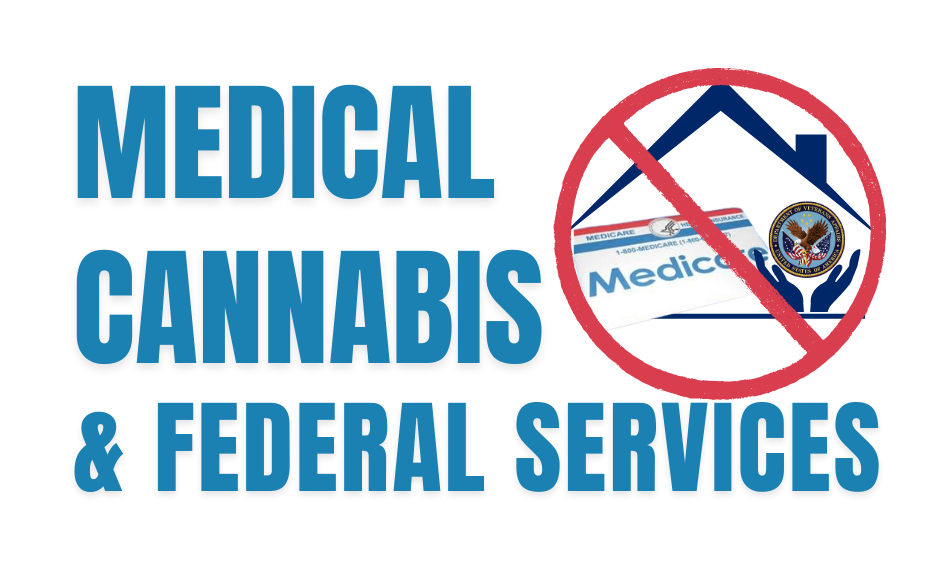
Federal prohibition has also affected patients’ access to essential healthcare, housing, and financial support programs, sometimes forcing patients to choose between the medicine they need and the benefits they depend on. It has also created barriers to federal employment, healthcare autonomy, firearm ownership, and other aspects of daily life.
As federal and state cannabis laws change, implementation matters. Advocates must stay vigilant to ensure public agencies, private institutions, employers, housing providers, and healthcare systems update their policies in ways that respect patient rights and protect safe, legal access to medical cannabis.
It is important to stay active, engaged, and informed. Sign up to get ASA updates and learn more about ending patient discrimination.
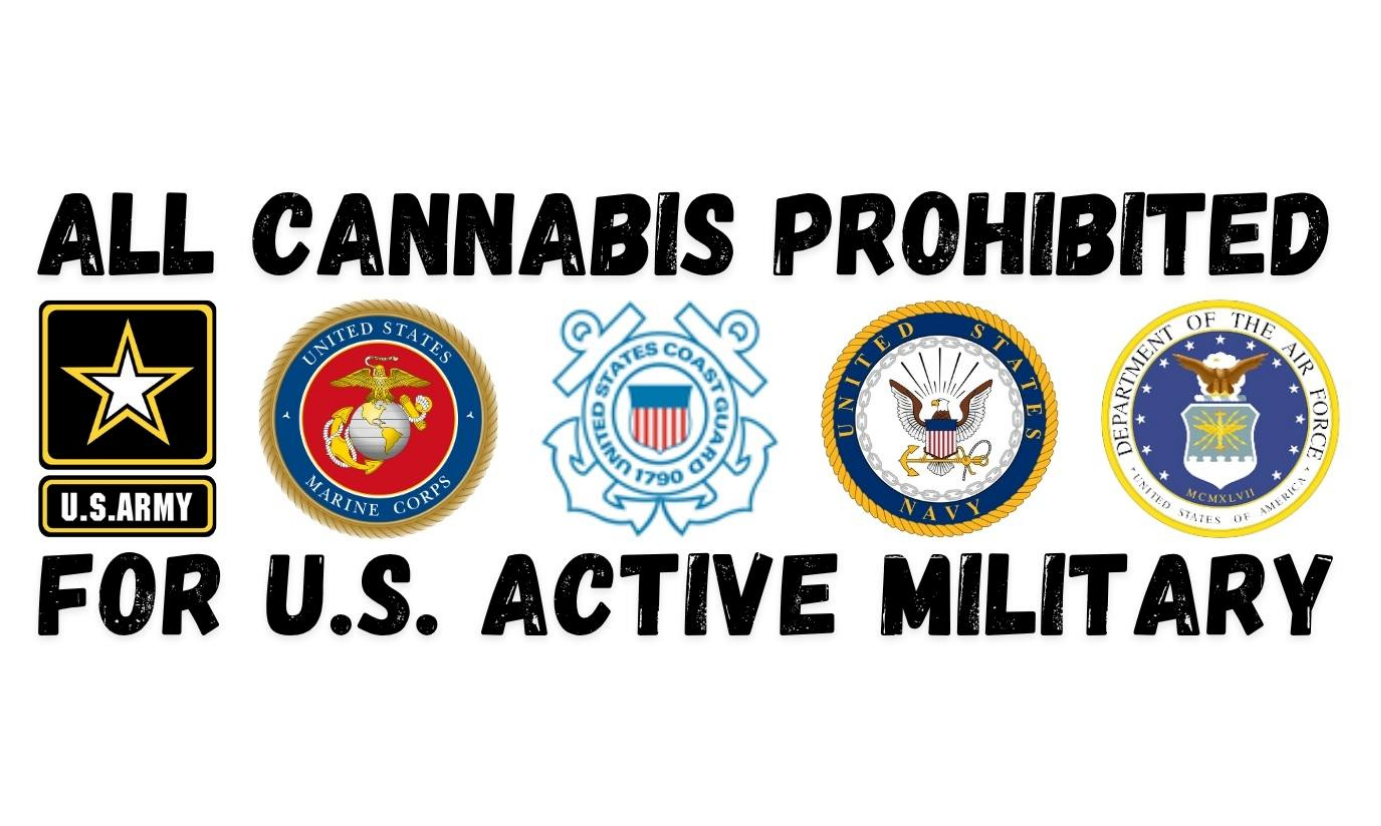
Rights and protections for medical cannabis patients are evolving. In some cases, outdated policies may impact how patients are treated. In other cases, like those in the military, policy changes will have to come from Washington, DC. In the case of organ transplants, stigma still plays a role in medical cannabis patients having access to life-saving treatment, even if state laws ban discrimination. Please use the resources below to better understand patient rights and how to navigate these programs and services.
Medical cannabis may be legal in your state, but it is illegal to cross state lines, even if the bordering state also has a medical cannabis program. For more information about traveling as a medical cannabis patient, check out our Travel Guide.
Stigma and discrimination also make patients targets for law enforcement encounters. Keep in mind that the best law enforcement encounter is the one that never occurs! It's crucial for individuals involved in medical cannabis to understand not only medical cannabis laws and regulations but also their rights. Be Prepared. Know Your Rights!
| State laws frequently change; if you find information that is out of date, incorrect, or has a broken link, let us know! Email [email protected] |
Medical cannabis patients can find additional resources here.
Get Involved! Learn more about ASA Campaigns and Take Action to improve the lives of medical cannabis patients today!
If you appreciate ASA's work, join now to become a part of the movement & sign up to get ASA updates.
Share this page