Trump Administration’s Role in New Hemp Law Nears Deadline
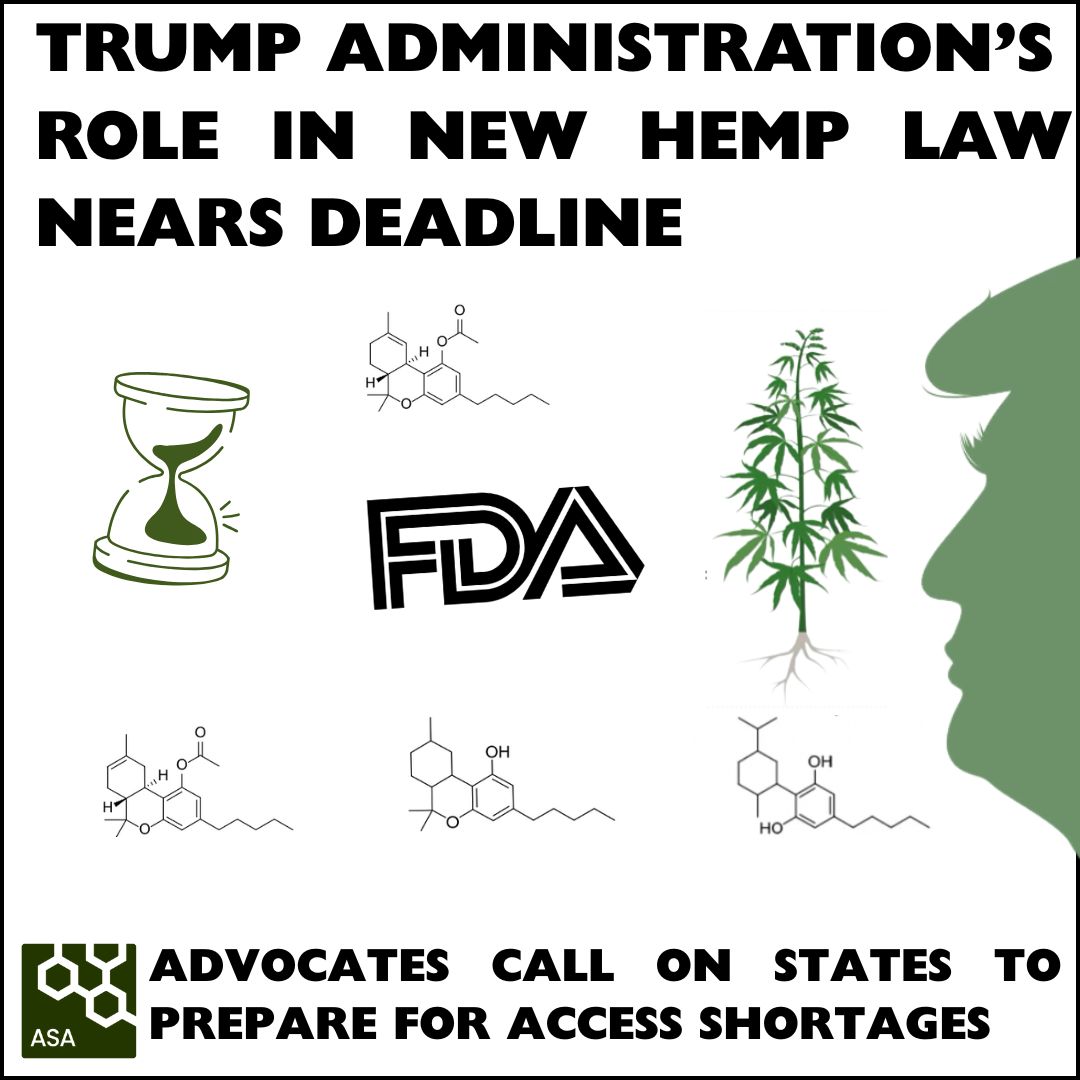 WASHINGTON, D.C. — Tuesday, February 10, 2026, is the deadline Congress set for the U.S. Food and Drug Administration (FDA) to publish definitions and classifications of cannabinoids under the new federal hemp law enacted in November 2025 (H.R. 5371 — The Continuing Appropriations, Agriculture, Legislative Branch, Military Construction and Veterans Affairs, and Extensions Act, 2026).
Section 781 of H.R. 5371 established statutory definitions for “industrial hemp” and “hemp-derived cannabinoid products” and imposed a new “total THC” standard. When these provisions take effect on November 11, 2026, they will close the loophole that allowed unregulated intoxicating products to proliferate — but they will also remove most full-spectrum cannabinoid products from lawful commerce.
Limited Federal Authority
Under the law, the FDA is required to publish an exhaustive list of cannabinoids referenced in the statute, including:
- Cannabinoids naturally produced by Cannabis sativa L.
- Tetrahydrocannabinol (THC) class cannabinoids
- Cannabinoids with similar effects to THC or marketed as such
- Clarification of the term “container” tied to new THC limits
This action is not expected to prevent the loss of access to full-spectrum cannabinoid medicines relied upon by millions of patients.
Despite President Trump’s December 2025 Executive Order acknowledging flaws in the hemp law, the Administration lacks authority to directly revise the Controlled Substances Act (CSA). The Executive Order can urge Congress to act and direct federal agencies to proceed with rescheduling reviews, but it cannot restore patient protections on its own.
Patients at Risk
Without congressional action or coordinated state responses, patients who turned to hemp-derived products due to cost, access deserts, and limited availability in medical programs may face abrupt disruptions in care.
The FDA’s February deadline does not establish clinical pathways, insurance coverage, or patient safeguards. Improvements to state cannabis programs are the best hope vulnerable patients have for uninterrupted access to cannabinoid medicines.
ASA Releases Policy Roadmap for States
In response to the passage of HR 5371, Americans for Safe Access (ASA) has released:
Protecting Patient Access: A Compassionate Response to Changing Federal Hemp Laws
 The policy briefing provides governors, regulators, and legislators with practical tools to address the coming transition.
“Americans for Safe Access has prepared this briefing to help state leaders navigate this moment with clarity, accuracy, and compassion,” said Steph Sherer, Executive Director of ASA. “Effective responses must account not only for patients currently dependent on the unregulated hemp marketplace, but also for the conditions that made it their only viable option.”
“Congress should commend states for their role as laboratories of democracy for medical cannabis policy,” Sherer added. “Until comprehensive federal legislation is enacted, the health and safety of vulnerable patients remain in the hands of the states.”
What ASA’s Briefing Provides
ASA’s briefing offers a patient-centered roadmap that:
- Explains what changed in federal hemp law and why the 2026 deadline matters
- Identifies who is at risk and why hemp became a default access pathway
- Clarifies why rescheduling and executive action alone do not protect patients
- Details emergency rules and legislative options states can deploy now
- Connects state action to a national medical cannabis framework
Resources for Media
Download Policy Briefing: Protecting Patient Access: A Compassionate Response to Changing Hemp Laws
View Compassionate Response Actions
About Americans for Safe Access
Founded in 2002, Americans for Safe Access is the nation’s largest organization of medical cannabis, wellness, and healthcare stakeholders working to close policy and regulatory gaps and ensure safe and legal access to cannabis for therapeutic use and research.

Share this page