For Immediate Release: Patient Advocates Warn: Federal Hemp Changes Will Cut Off Medicine for Millions
Americans for Safe Access Campaign Pushes Compassionate Response from States
Washington, D.C. — The decades-long struggle to secure safe and reliable access to cannabis therapeutics nationwide is turning to the states for leadership once again. New federal hemp laws set to take effect in November 2026 will disrupt access to full-spectrum cannabinoid medicines relied upon by millions of patients—and in the absence of a comprehensive national medical cannabis framework, the fallout will once again land on state leaders.
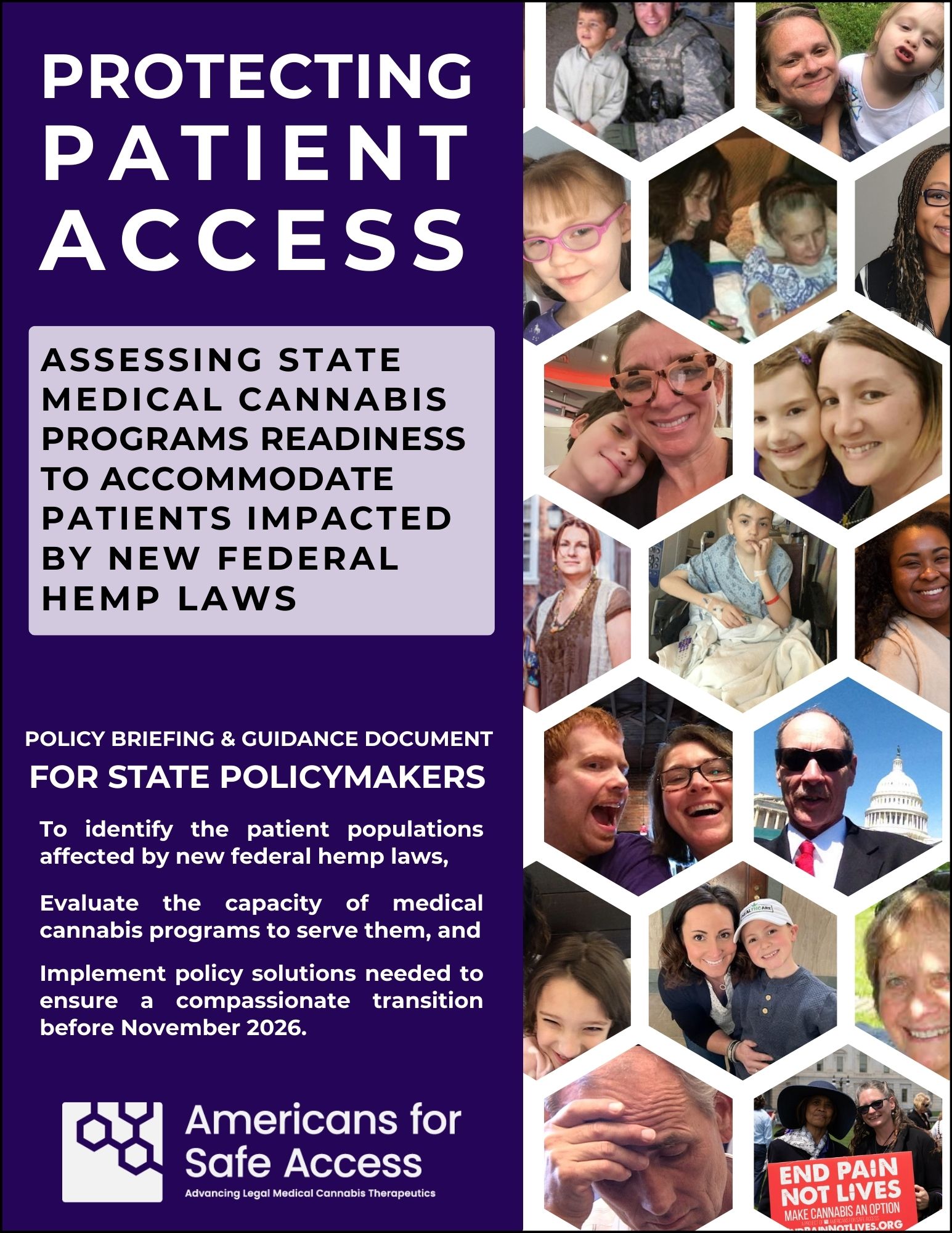 Yesterday, Americans for Safe Access (ASA) released Protecting Patient Access: Assessing State Medical Cannabis Programs' Readiness to Accommodate Patients Impacted by New Federal Hemp Laws. This policy briefing and guidance document warns governors, state policymakers, and regulators that without state action, patients who depend on full-spectrum cannabinoid medicines will face abrupt loss of care.
The policy briefing and campaign are in response to language added to H.R. 5371—the Continuing Appropriations, Agriculture, Legislative Branch, Military Construction and Veterans Affairs, and Extensions Act, 2026, that establishes statutory definitions for “industrial hemp” and “hemp-derived cannabinoid products” and imposes a new “total THC” standard. Together, when they go into effect on November 11, 2026, these clarifications will close the “loophole” that allowed unregulated intoxicating products to proliferate—but they will also remove most full-spectrum cannabinoid products from lawful commerce
The briefing opens with a letter from ASA's Executive Director, Steph Sherer:
“Americans for Safe Access (ASA) has prepared this briefing to help state leaders navigate this moment with clarity, accuracy, and compassion… Effective responses must account not only for patients currently dependent on the unregulated hemp marketplace, but also for the conditions that made it their only viable option. Barriers such as cost, access deserts, and limited product availability, driven by competition for shelf space in adult-use markets, left patients with few options.”
Today, ASA is launching a national call to action urging patients and advocates to place this briefing directly in the hands of state legislators and governors—and ensure patients are considered in policy decisions concerning cannabis and cannabinoid marketplaces in communities across the country. The goal: ensure states act before the November 2026 deadline.
The briefing highlights who is most at risk. Seniors, veterans, people with disabilities, cancer patients, and children with rare diseases have relied on full-spectrum cannabinoid medicines from the hemp marketplace for years. Many turned to hemp only after being pushed out of state medical cannabis programs by cost, geography, clinical barriers, or shrinking product options in adult-use markets.
The report dispels the misconception that President Trump’s Executive Order or cannabis rescheduling will fix these access gaps. Executive action cannot override statutory limits, and rescheduling alone does not legalize medical cannabis or restore patient rights. Without state-level transition strategies, millions of patients face losing medicines they use to manage chronic pain, epilepsy, PTSD, cancer symptoms, and other serious conditions when the new federal definitions take effect on November 11, 2026.
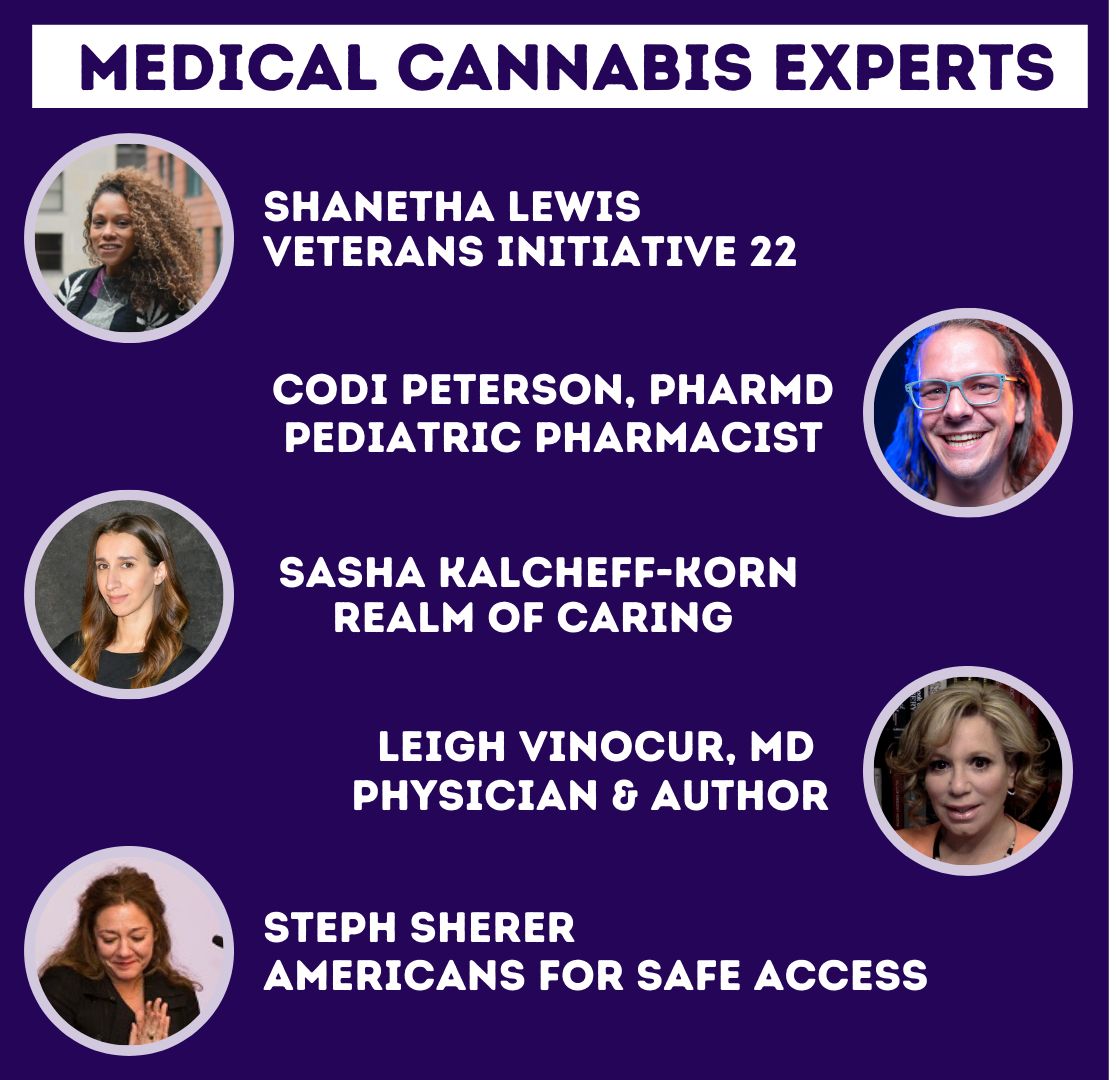 On Tuesday, ASA convened medical cannabis stakeholders representing the perspectives of physicians, pharmacists, veterans, patient advocates, and policy experts for the release of the policy briefing. Participants examined how federal changes—intended to close the intoxicating-hemp loophole—will also remove most full-spectrum cannabinoid products from lawful commerce unless states act.
Stakeholders drove home a clear message:
“Silence from state leaders today will mean suffering for patients tomorrow.”
ASA’s briefing provides state leaders with a patient-centered roadmap that:
- Explains what changed in federal hemp law and why the 2026 deadline matters
- Identifies who is at risk and why hemp became a default access pathway
- Clarifies why executive action and rescheduling alone do not protect patients
- Lays out emergency rules, legislative options, and program reforms states can deploy now
- Connects state action to the transition toward a national medical cannabis framework
For more than thirty years, states served as laboratories of democracy for medical cannabis. They built patient registries, safety standards, testing regimes, labeling systems, and clinical pathways—generating the real-world evidence that finally compelled HHS and FDA to recognize cannabis as having “currently accepted medical use.” These state-based experiments proved what federal policy refused to test.
“Congress should commend states for their role as laboratories of democracy for medical cannabis policy. Their next step should be passing comprehensive federal legislation that builds on the contribution of the 30-year state experiment and integrates cannabis and cannabinoid products into U.S. healthcare systems. Until then, the health and safety of the vulnerable patients remain in the hands of the states,” said Sherer. “Our hope is that state policymakers will embrace that responsibility swiftly and with compassion. This is a call to action for patient advocates to turn those hopes into reality."
Download Policy Briefing: Protecting Patient Access: A Compassionate Response to Changing Hemp Laws
View Compassionate Response Actions
Founded in 2002, Americans for Safe Access is the largest national organization of medical cannabis, wellness, and healthcare stakeholders addressing knowledge, policy, and regulatory gaps to ensure access to cannabis for therapeutic use and research.

Share this page