Demystifying the CMS CBD Pilot Program: Patient Advocates Convene National Briefing as Medicare CBD Pilot Nears Release
WASHINGTON, D.C. — Patient advocacy organizations are convening a national briefing today to explain the emerging federal framework for cannabinoid therapies referenced during a White House press conference announcing an Executive Order titled Increasing Medical Marijuana and Cannabidiol Research. The briefing will examine how the potential Medicare pilot program could influence federal health policy and the long-term strategy to achieve nationwide access to medical cannabis.
Dr. Mehmet Oz, Administrator of the Centers for Medicare & Medicaid Services (CMS), announced a forthcoming cannabinoid access pilot program within Medicare that could allow certain beneficiaries to access cannabidiol (CBD) products through participating healthcare systems.
“Today, our Innovation Center at CMS is announcing a new model and additional actions to give seniors access to cannabinoids — these are CBDs, they're not addictive — which many are already using to manage pain,” said Dr. Oz during the press conference.
The pilot program is expected to operate through the Center for Medicare and Medicaid Innovation (CMMI) and may provide coverage for CBD products recommended by physicians and delivered through participating healthcare organizations.
The Executive Order does not describe the pilot program in detail, leaving healthcare providers, patients, and policymakers with significant questions about how it will operate.
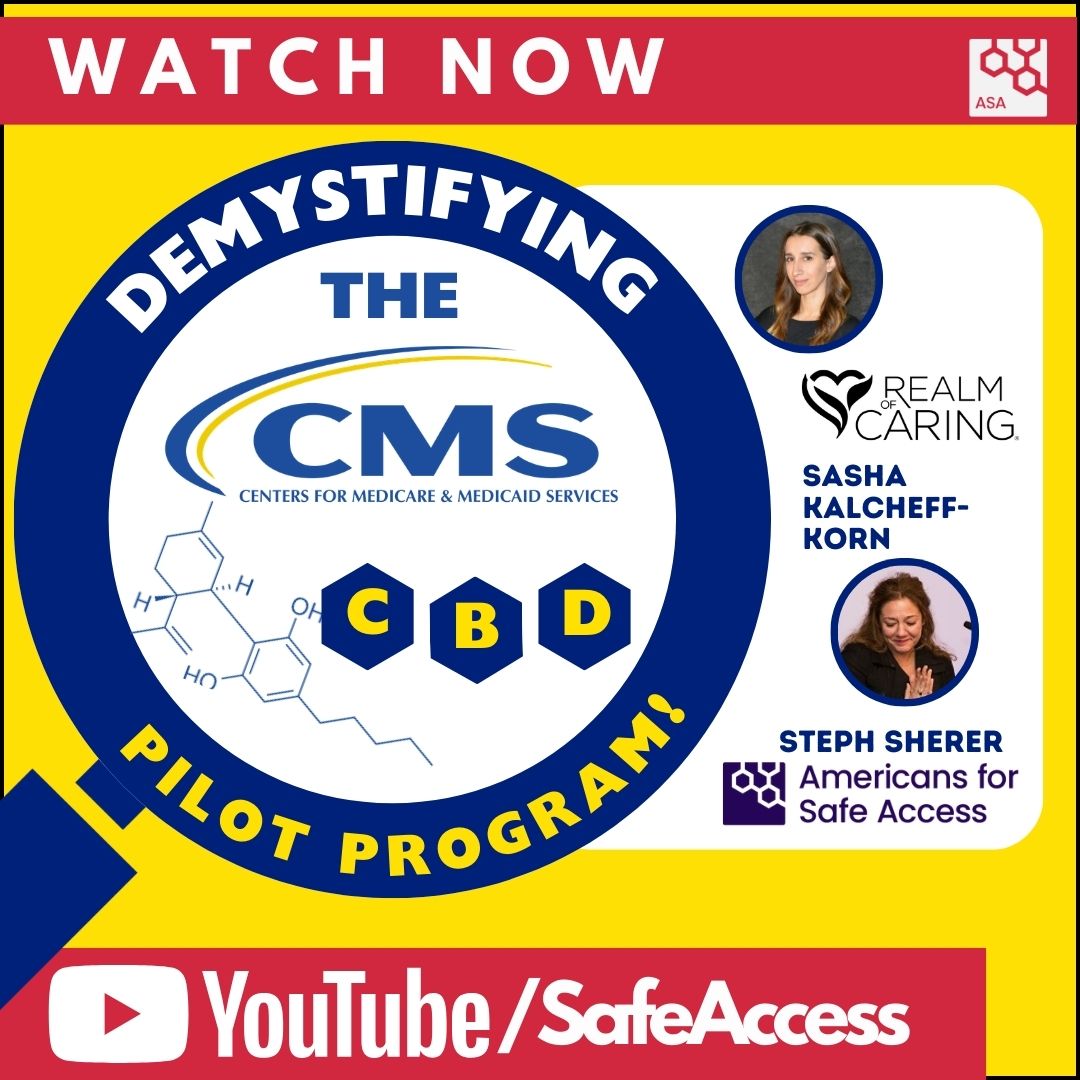
To address that uncertainty, Americans for Safe Access (ASA) and Realm of Caring are hosting the national briefing “Demystifying the CMS CBD Pilot Program.” The event will analyze available policy signals, potential regulatory pathways, and the pilot's implications for patients, healthcare providers, and cannabinoid product manufacturers.
“Patients have been navigating cannabinoid therapy without clear federal guidance for far too long,” said Sasha Kalcheff-Korn, Executive Director of Realm of Caring. “I’m pleased to join Steph Sherer for this conversation to help our communities better understand what the CMS pilot could mean for access, research, and the future integration of cannabinoid therapies into healthcare.”
If implemented, the program would represent the first federal initiative supporting patient access to cannabis-derived therapies in more than three decades. The last federal program designed to provide patients access to cannabis was the Food and Drug Administration’s Compassionate Investigational New Drug (IND) program, which allowed a limited number of patients to receive government-supplied cannabis for medical use. The program was closed to new patients in 1992 under the administration of President George H. W. Bush, amid growing demand from AIDS patients seeking legal access.
Its closure sparked a new phase of patient advocacy across the United States. With federal access pathways shut down, patients increasingly turned to state governments for protection from prosecution and, eventually, regulated access to medical cannabis, laying the groundwork for the state medical cannabis programs operating today.
The new Executive Order signals renewed federal interest in evaluating cannabinoid therapies and incorporating real-world evidence into healthcare policy.
“It is the policy of my Administration to increase medical marijuana and CBD research to better inform patients and doctors,” the Order states. “It is critical to close the gap between current medical marijuana and CBD use and medical knowledge of risks and benefits.”
The directive instructs federal health agencies—including the Department of Health and Human Services (HHS), Food and Drug Administration (FDA), Centers for Medicare & Medicaid Services (CMS), and the National Institutes of Health (NIH)—to develop research models using real-world evidence to evaluate cannabinoid therapies and inform standards of care.
The Order further directs agencies to develop research methods designed to:
- Improve access to hemp-derived cannabinoid products in accordance with federal law
- Evaluate health outcomes associated with cannabinoid therapies
- Assess long-term effects in vulnerable populations
- Generate real-world evidence to inform medical practice
While the Executive Order signals growing federal attention to cannabinoid therapies, it does not change federal law or establish new patient protections. Instead, it directs federal agencies and Congress to begin advancing research and policy development.
Because the Order requires agencies to operate using existing HHS budget authority, implementation will depend heavily on agency prioritization and future congressional appropriations. The timeline and scope of any pilot program, therefore, remain uncertain. This uncertainty is heightened by recent congressional action to close the federal hemp-derived cannabinoid loophole, which has been a primary pathway through which many Americans have accessed CBD products in recent years.
“Americans for Safe Access has been advocating for a national medical cannabis program for more than 24 years,” said Steph Sherer, Founder and Executive Director of Americans for Safe Access. “This Administration has taken an exciting step in that direction. However, like this program, the future of medical cannabis ultimately depends on Congress.”
The briefing will explore how a federal pilot program could operate in practice and what outcomes could inform future healthcare policy on cannabinoid therapies.
Topics Covered in the Briefing
-
-
- Federal agencies potentially involved in the pilot
- How the CMMI model could operate
- Which cannabinoid products may qualify under federal law
- How healthcare providers and Accountable Care Organizations (ACOs) may participate
- Potential research protocols and evidence requirements
- Expected timeline and scope of a pilot program
- What outcomes could shape future federal healthcare policy involving cannabinoid therapies
- What the pilot could mean for nationwide patient access to cannabinoid medicines
-
Briefing Details
Demystifying the CMS CBD Pilot Program
A National Stakeholder Briefing
Date: Monday, March 9, 2026
Time: 1:00 PM ET
WATCH NOW:
Speakers
Sasha Kalcheff-Korn
Executive Director, Realm of Caring
Having dedicated more than 13 years to nonprofit leadership focused on education, advocacy, and research related to cannabinoid therapies, Kalcheff-Korn leads initiatives to advance research, reduce stigma through education, and empower families navigating cannabinoid-based care.
Steph Sherer
Founder and Executive Director, Americans for Safe Access
Steph Sherer is an internationally recognized leader in medical cannabis patient advocacy. Motivated by personal experience with the therapeutic benefits of cannabis, she founded Americans for Safe Access in 2002. Under her leadership, ASA has grown into the nation’s largest patient-centered organization working to ensure access to cannabis for therapeutic use and research.
Press contact: [email protected]
About Americans for Safe Access
Americans for Safe Access (ASA) is the largest national organization of medical cannabis patients, healthcare professionals, researchers, and advocates working to ensure safe and legal access to cannabis for therapeutic use and research. ASA addresses critical gaps in knowledge, policy, and regulation while advancing the integration of cannabinoid therapies into healthcare systems. The organization represents more than 150,000 supporters in all 50 states.

Share this page