Cannabis Rescheduling: Progress, Validation, and Risk of Congressional Complacency
What Schedule III Really Means for Medical Cannabis Patients
The federal government’s move to acknowledge cannabis as having a “currently accepted medical use in treatment in the United States” is historic. After decades of patient advocacy, clinician testimony, and real-world evidence from state medical cannabis programs, federal policy could finally be catching up to reality—at least on paper.
But while Schedule III (or II) represents a significant shift, it does not “fix” medical cannabis. In fact, the biggest risk right now may be the widespread misconception that it does.
If Congress decides the job is done, patients could be stuck in yet another decade-long holding pattern—validated, but still unprotected.
Here is a breakdown of what Schedule III actually means for patients, and what it very clearly does not.
The Good News: Long-Overdue Validation for Patients and Clinicians
Rescheduling cannabis is an explicit acknowledgment of what patients and clinicians have known for years: cannabis has legitimate medical value. That recognition matters.
Rescheduling cannabis has the potential to positively shift social attitudes, reduce stigma, and foster greater acceptance among medical professionals, employers, and policymakers. These changes could help normalize medical cannabis use and create a more supportive environment for patients.
Social attitudes matter. Stigma shapes policy, access, and quality of care. Schedule III has the potential to normalize medical cannabis in ways that decades of state laws alone could not.
A Real Win for Research
One of the few truly concrete outcomes of Schedule III is its potential to advance cannabis research.
Moving cannabis out of Schedule I would reduce some of the most burdensome regulatory requirements related to storage, security, and handling. That could lower costs and open the door for more institutions to study cannabis—including dosing, interactions, and therapeutic applications.
This is essential. Patients deserve evidence-based guidance, but research access alone does not equal patient access—and that distinction matters.
The Not-So-Good News: The Status Quo Remains for State Medical Cannabis Programs
Here’s the part many headlines gloss over: rescheduling does not integrate state medical cannabis programs into the federal system.
State-authorized medical cannabis products would remain outside federally regulated frameworks unless Congress acts. There is no automatic registration pathway, no prescription model, and no federal recognition of state products as lawful medicines. Products from these markets would remain ineligible for federally approved clinical trials focused on efficacy.
Federal Illegality Still Looms
Unregulated Schedule II or III substances remain illegal under federal law.
While simple possession is rarely enforced, cultivation, manufacturing, and distribution outside federal protocols are still classified as drug trafficking—with severe penalties. For Schedule III substances, that can mean up to 10 years in prison and a $500,000 fine for a first offense, and 20 years and $1 million for subsequent offenses.
State medical cannabis programs are currently protected from federal interference under the Commerce-Justice-Science (CJS) amendment. But those protections must be renewed annually—and they apply only to medical programs, not to adult-use.
Despite reporting from cannabis businesses, rescheduling alone is also unlikely to alleviate tax burdens for cannabis businesses. Yes, Internal Revenue Code Section 280E applies only to Schedule I and II substances. But that does not mean state-licensed cannabis businesses automatically qualify for standard business deductions under Schedule III.
Federal law still treats unregulated cannabis manufacturing and distribution as illegal drug trafficking. Historically, the IRS has denied deductions for illegal activities under IRC 162(c)(2).
Without changes to federal law or the tax code—both of which require Congress—businesses claiming deductions prematurely are likely to find themselves in costly legal battles. When that happens, patients pay the price through higher costs, limited access, and instability in supply.
Progress, But Not Protection
Make no mistake: Schedule III is a victory for medical cannabis patients and advocates.
It validates decades of patient-led advocacy and confirms what state programs—our “laboratories of democracy”—have demonstrated all along. Those programs were built with compassionate use in mind and played a critical role in overcoming more than 50 years of federal resistance from HHS, DEA, and DOJ.
But validation is not the same as protection.
Schedule III does not:
- Legalize medical cannabis
- Improve state medical cannabis programs
- Restore federal rights for patients
- Ensure nationwide access
- Protect patients from discrimination
- Integrate cannabis into healthcare systems
What it does do is shift the conversation—from whether cannabis has medical value to how patients can safely access it. That shift is essential, but only if it leads to congressional action.
The Real Risk: Congress Moving on
Here’s the danger we can’t ignore.
If policymakers—and the public—believe Schedule III “solves” medical cannabis, Congress may step back entirely. That would leave patients stuck with fragmented state programs, annual budget-based protections, no federal rights, and no national framework for safety or access.
We’ve seen this before. Small wins become excuses for inaction. Patients are told to wait—again.
Without comprehensive legislation, patients could spend the next decade in limbo: acknowledged, but not protected; studied, but not served.
What Comes Next
Schedule III is not the end of the road. It’s a milestone.
Patients still need Congress to act—to establish a national medical cannabis program, create clear federal pathways for access and regulation, and ensure cannabis medicines are treated as healthcare.
The science is there. The patients are here. The question is whether policymakers will finish the job—or declare victory too soon.
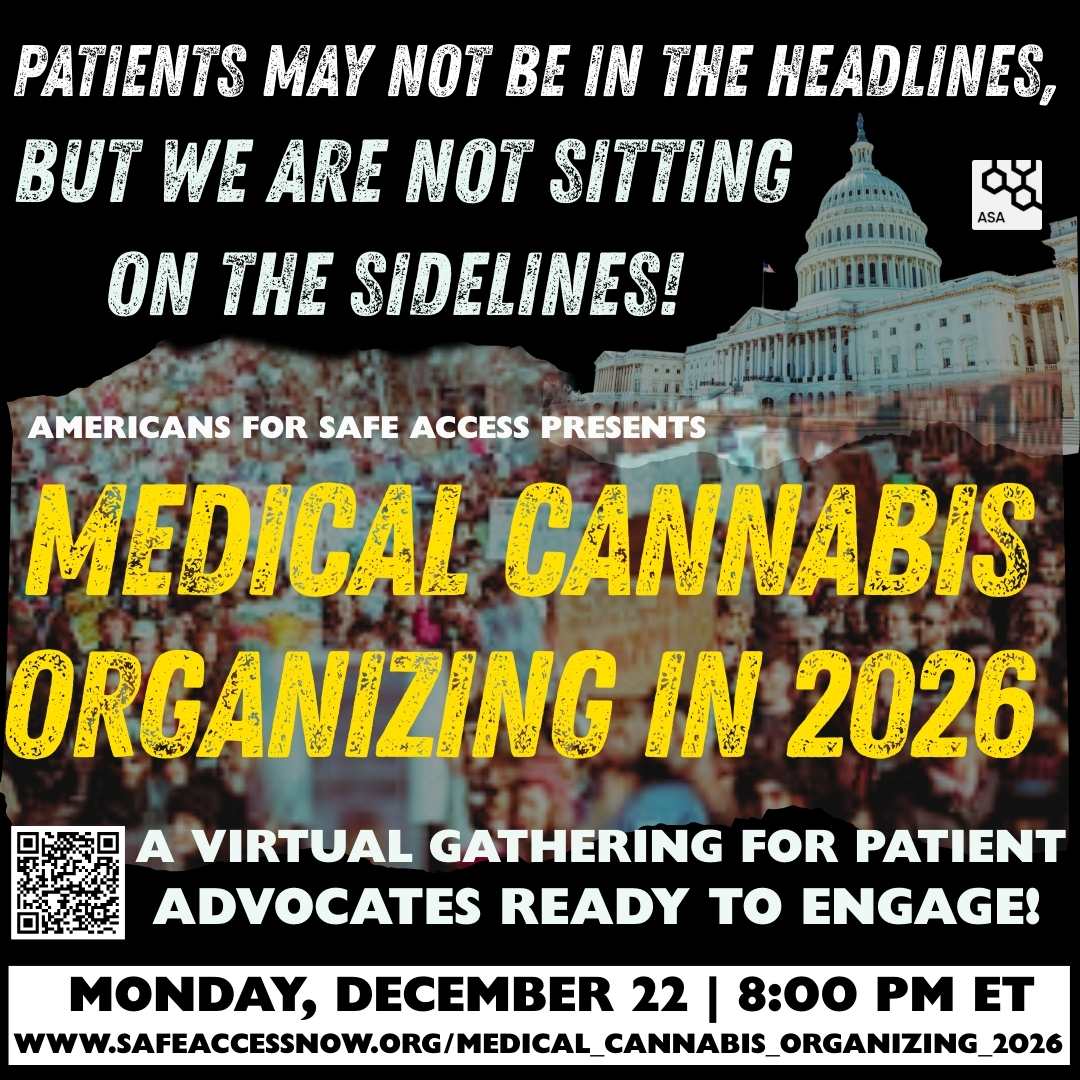
Medical cannabis patients may not always be in the headlines, but we are not sitting on the sidelines! Join Americans for Safe Access in telling Congress it is time for a national medical cannabis program!
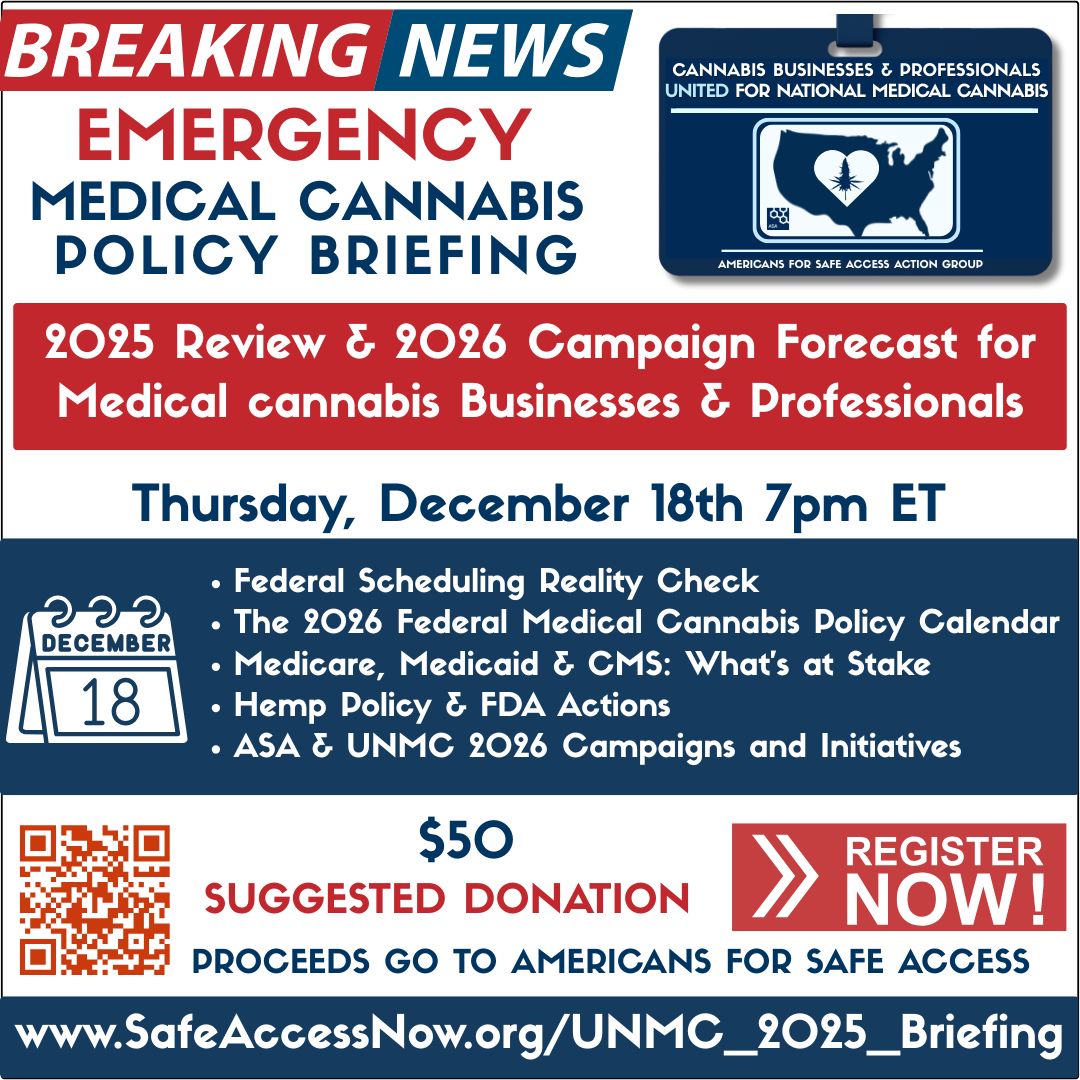
Get involved! Click on the image below for more information on these upcoming virtual events.
If you appreciate ASA's work, sign up to get alerts and updates and make a donation to support ASA's vital mission.

Share this page