Shedding the Prohibition Mindset: A New Framework for Medicine & Public Health
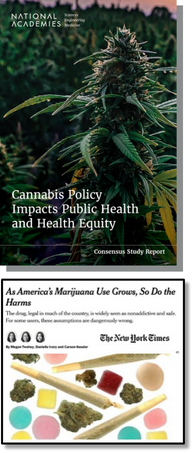 The September 2024 National Academies' report "Cannabis Policy Impacts Public Health and Health Equity" sparked cannabis-focused public health discussions in the media. That dialogue was further elevated by the popular New York Times' October 4, 2024, article, "As America’s Marijuana Use Grows, So Do the Harms." While the piece offered some valuable information for consumers, it portrayed cannabis primarily as a harmful substance without providing a deeper investigation into the source of the reported complaints and did little to evaluate how we could approach cannabis public health differently.
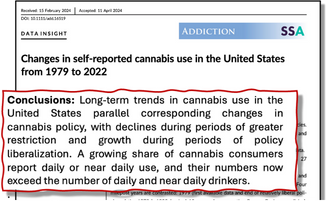 Similarly, the recent "Changes in Self-Reported Cannabis Use in the United States from 1979 to 2022," published in Addiction, inspired the Washington Post’s October 16, 2024 editorial by Dr. Leana S. Wen, "Marijuana Use is Rising. The Government Needs to Correct its Mistake," which reinforced a similarly narrow drug-abuse perspective, overshadowing critical insights into the complexity of cannabis use.
Due to a near-complete lack of federal oversight and data collection, it is unclear if the negative experiences Americans are having with “cannabis products” are from cannabis, hemp, or synthetic products, or contaminants such as heavy metals, pesticides, and residual solvents often found in unregulated or poorly regulated cannabis/hemp products. Thanks to decades of the federal government’s “reefer-madness” propaganda and prohibition, Americans still do not have a source they can trust when it comes to information about cannabis. This means efforts to spread health warnings, educate on contaminants and cannabis harms, and even guidance on drug interactions are viewed by the public with immense skepticism.
Addressing the Use v Abuse Paradox
Under prohibition, all data collected on cannabis consumers by the National Institute for Drug Abuse (NIDA), the Drug Enforcement Administration (DEA), the International Narcotics Control Bureau (INCB), and the United Nations Committee on Narcotic Drugs (UNCND) was categorized as “abuse.” Any “use” of illicit substances is viewed as abuse under a prohibition model, think cocaine, methamphetamines, etc. Through NIDA, the United States has funded billions of dollars to prove the harms of cannabis while underfunding studies that explore its therapeutic utility. So, it should be no surprise that data from this vantage point (i.e., looking at cannabis harms) dominates the number of research findings in comparison to those exploring its benefits. This can also be seen in how these agencies are responding to the increase in individuals “using” cannabis.
The framing of “Cannabis Use Surpassing Alcohol Use” in the US is deceptive and only serves the same stakeholders of prohibition, treatment centers, researchers exploring the harms of cannabis, and raising stock prices for businesses selling cannabis. Why is this the only comparative data set where we compare a non-medical substance like alcohol to a medical one like cannabis? Their use cases are not the same; it is a clear apples-to-oranges comparison.
We know from empirical data that healthcare costs are going down in states with medical cannabis laws, especially as it relates to other prescription drug use; we know that millions of Americans suffer from conditions that are not treated by options available in our current healthcare system.
Many Americans turn to cannabis for conditions that traditional healthcare options cannot address. A study in ACR Open Rheumatology, "Substituting Medical Cannabis for Medications Among Patients with Rheumatic Conditions in the United States and Canada*," found that 62.5% of participants substituted medical cannabis for medications, with 54.7% replacing NSAIDs, 48.6% opioids, 29.6% sleep aids, and 25.2% muscle relaxants. Following the substitution, most reported a reduction or cessation in their use of these medications.
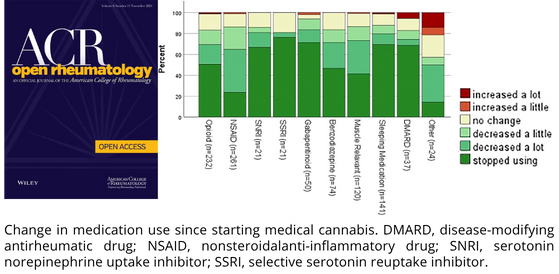 *Boehnke, K.F., Scott, J.R., Martel, M.O., Smith, T., Bergmans, R.S., Kruger, D.J., Williams, D.A. and Fitzcharles, M.-A. (2024), Substituting Medical Cannabis for Medications Among Patients with Rheumatic Conditions in the United States and Canada. ACR Open Rheumatology.
Rethinking “Cannabis Use Disorder”
The rush to classify daily cannabis use as “Cannabis Use Disorder” and promote abstinence-only treatments overlooks the possibility of self-medication as a motivation. The idea that regular use and tolerance would be enough to characterize something as abuse ignores the pharmacology of countless medications that create the same circumstance and do not have their own “use disorder.” There is a need for education and investment in research to provide better guidance rather than blanket assumptions and broad strokes about cannabis use.
If the U.S. had heeded the research recommendations of the National Academies' 2017 report "The Health Effects of Cannabis and Cannabinoids: The Current State of Evidence and Recommendations for Research", medical and public health professionals would have more tools at their disposal to discern the real harms from the benefits of cannabis and better educate and inform the public. Today, there is a real risk that the outsized federal research funds previously allocated to proving harm under prohibition will move directly into efforts to prove harm in the public health context. This sort of hyperfocus on harm is a risk to advancing cannabis-based medicines, leaving initiatives like the Medical Marijuana & Cannabidiol Research Expansion Act of 2022 without funding. While both areas deserve funding, and no substance is without its risks and harms, an understanding of the benefits of cannabis is likely to yield a better understanding of why people use cannabis and the best approach to address risks.
As for a better understanding of the harms of synthetic cannabinoids and those being manufactured (i.e., synthesized, not extracted) from hemp, the companies selling these products are responsible for proving they are safe, rather than the US taxpayers doing that work for them. If only there were a federal agency responsible for consumer protection for novel drugs, hmm?

Share this page