MEDICAL CANNABIS PATIENTS & CAREGIVERS
|
The Vermont Medical Cannabis Program was established through legislation enacted in 2004. The State of Vermont Cannabis Control Board oversees the program. Patients and their caregivers must be registered with the program to benefit from the rights and protections granted under these statutes. |
A LEGAL MEDICAL CANNABIS PATIENT ...
- Is a Vermont resident
- Has a qualifying medical condition
-
- Cancer
- Multiple sclerosis
- Human immunodeficiency virus (HIV) / acquired immune deficiency syndrome (AIDS)
- Glaucoma
- Crohn's disease
- Parkinson's disease
- Post-traumatic stress disorder (PTSD)
- Ulcerative colitis
- Medical conditions or their treatments that are chronic and debilitating and produce one or more of the following intractable symptoms also qualify: cachexia or wasting syndrome, chronic pain, severe nausea, or seizures.
-
- Has obtained a signed Health Care Professional Verification Form from a licensed health care professional
- Is registered with the Vermont Medical Cannabis Registry and holds a valid registry identification card
ENROLLMENT PROCESS
Step 1: Obtain a completed Health Care Professional Verification Form.
Your health care professional must complete the Health Care Professional Verification Form. The form must be signed and dated within 6 months of your application submission. The form can be submitted to the CCB by your provider through the online portal, or by fax, email, or mail.
The health care professional verification requires a bona fide health care professional-patient relationship, which includes a personal physical examination. This relationship must be at least three months in duration unless an exception applies (e.g., terminal illness, cancer, AIDS, recent onset condition, hospice care, or a recent change of provider).
Step 2: Apply online or by mail.
Apply online through the CCB Medical Applications portal or submit a print-and-mail application.
To complete your application, you will need:
- A valid Vermont driver's license or non-driver ID number
- A recent digital photo (color, head and shoulders, no hats or sunglasses, taken within the last 6 months)
- A completed Health Care Professional Verification Form submitted by or with your application
- A $50 non-refundable application fee (credit or debit card for online applications; check or money order payable to the Cannabis Control Board for paper applications)
If approved, you will receive your registry identification card by mail at the address you provided with your application. The card is valid for 3 years.
The CCB processes applications received within the last 30 days. Allow up to 30 days for review and card delivery.
PATIENT RENEWAL
Registry cards are valid for 3 years. A $50 renewal fee applies. To renew, log in to your existing account at the CCB Medical Applications portal.
A new Health Care Professional Verification Form is required with each 3-year renewal. If you have a card with a 1-year expiration date, a new verification form is required every other year when you renew before the expiration date. The form must be signed and dated within 6 months of submission.
ENROLLING MINOR PATIENTS
Patients under 18 years of age are eligible to register. For minors, the attestation on the application must be signed by a parent or legal guardian.
Patients under 18 may have up to 2 registered caregivers, but must have at least 1. For more information, visit the CCB Medical Program FAQ.
For minor patients, a bona fide health care professional-patient relationship is required.
A registered caregiver is a Vermont resident who has agreed to assist one or more registered patients with accessing and using cannabis for symptom relief. Caregivers are authorized to visit dispensaries and receive deliveries on behalf of their patients, and may assist with home cultivation.
To become a registered caregiver, you must:
- Be a Vermont resident
- Be 21 years of age or older
- Pass a criminal background check
- Submit a completed caregiver application and $50 fee
A registered caregiver may serve no more than two registered patients at a time. A patient may also be registered as a caregiver for up to two other patients, but may not register as their own caregiver. A patient is not required to have a caregiver unless the patient is a minor. Caregiver registrations are also valid for 3 years.
Apply online or print a caregiver application at the CCB Medical Applications, Forms and Submission Information page.
Dispensaries
Once they have received their card, registered patients and their caregivers may purchase cannabis at licensed medical dispensaries and at adult-use retail establishments that hold a medical-use endorsement. Patients are no longer required to designate a specific dispensary when registering.
A current list of medical dispensaries and endorsed retailers is available at the CCB Medical Dispensary Information page. Please note that adult-use retailers with a medical-use endorsement may have limited hours for patient and caregiver service; contact the retailer to confirm hours before visiting.
What to bring
- Your valid registry identification card. Your caregiver must bring theirs when picking up medicine.
- A list of your prescribed medications (for initial appointment or if your medications change).
- Payment for your medicine. Insurance companies do not cover the cost of medical cannabis.
Possession Limits
Registered patients and caregivers may possess up to 2 ounces of cannabis.
Home Cultivation
Under 7 V.S.A. § 952(b)(1), a registered patient or a registered caregiver on behalf of a patient may cultivate up to
- 6 mature and 12 immature cannabis plants per household
Cannabis harvested from these plants does not count toward the 2-ounce possession limit, provided it is stored in an indoor facility on the property where it was cultivated, and reasonable precautions are taken to prevent unauthorized access.
Need tips on home cultivation?
Cannabis Product Safety
Cannabis, in its natural form, is inherently safe for most patients, but it is especially susceptible to contaminants during cultivation, manufacturing, handling & even storing. Whether you are purchasing cannabis from regulated, grey, or illicit markets or cultivating your own cannabis, you should be aware of the contaminants commonly found in cannabis and the symptoms that accompany their presence.
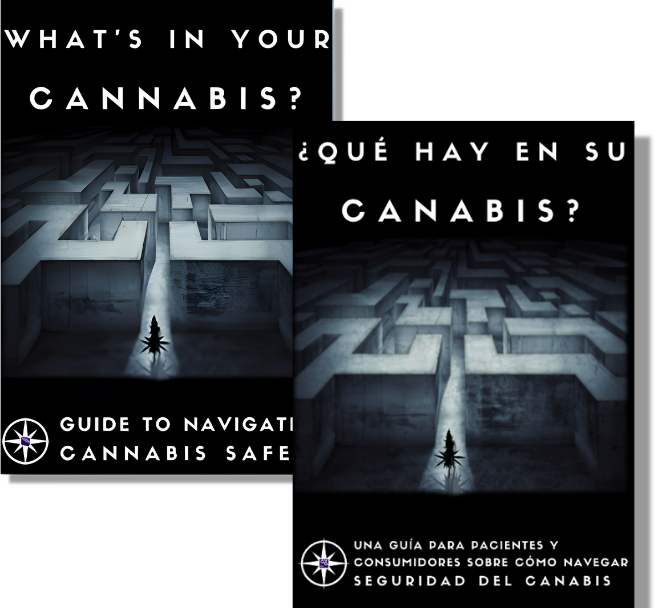
Products sold in Vermont's dispensaries and adult-use retail locations must be tested for contaminants, pesticides, and adulterants based on these thresholds set by state regulators. For more information about cannabis safety, download ASA's "What’s in Your Cannabis? A Patient & Consumer Guide to Navigating Cannabis Safety."
It can be challenging for patients to determine which businesses offering cannabis products are licensed and approved by the state. Review this list of medical cannabis retailers to find out where to purchase regulated cannabis in Vermont.
Medical cannabis can be used on private property, but cannot be smoked or vaped in places accessible to the general public.
Patients CANNOT medicate or possess medical cannabis in these locations:
- school bus or van
- any correctional facility
- state-operated treatment program, including the Minnesota sex offender program
- the grounds of a child care facility or a family or group family day care program
- the grounds of federal facilities (such as courthouses, post offices, airports, and national parks)
Vaping or smoking medical cannabis is prohibited:
Vermont law prohibits smoking cannabis in any public place, including school buses, public buses, other public vehicles, and any publicly owned building or space. These restrictions apply to registered patients.
Vermont has an adult-use cannabis program, but registering as a medical cannabis patient still offers important benefits. While the medical program may require additional steps, registration can provide patients and caregivers with added support, stronger protections, and access to medical guidance.
Federal Protections Apply Only to Registered Patients
Some federal protections are now available, but only to patients who are officially registered in their state’s medical cannabis program.
A federal order issued April 28th,2026, AG Order No. 6754-2026, treats a state medical cannabis certification or registration as similar to a prescription under federal law. This means that being registered is not just a state requirement; it may also affect whether a patient qualifies for federal protections.
To receive these protections, a patient’s registration must stay active, current, and in good standing. Learn more here.
Legal Protections
Registered patients and caregivers acting in accordance with the Vermont Medical Cannabis Registry program are protected from state arrest, prosecution, or civil penalties for lawful possession and use within program limits.
Privacy Protections
Under 7 V.S.A. § 952(c), individual names and identifying information about patients and caregivers on the Vermont Medical Cannabis Registry are exempt from public inspection under the Vermont Public Records Act and shall be kept confidential. The CCB may disclose identity and registered property address information to law enforcement only in response to a person-specific or property-specific inquiry made in connection with a bona fide investigation or prosecution. Law enforcement must keep that information confidential.
Medical dispensaries are required to keep patient information confidential, as stated by the CCB Medical Program FAQ.
Keeping the Medical Program Strong:
Enrollment helps demonstrate continued patient need for Vermont's medical cannabis program. A strong registry helps protect and sustain the program, supports continued access for patients with serious health needs, and reinforces the importance of maintaining a medical pathway alongside adult-use access.
Vermont does not recognize out-of-state medical cannabis patient cards and does not have a visiting patient or reciprocity program. Only patients registered in Vermont's program may legally purchase cannabis at state-licensed dispensaries and endorsed retailers.
Vermont does have a legal adult-use market. Adults 21 and older may purchase cannabis at licensed adult-use retailers regardless of state of residence.
For more information about traveling as a medical cannabis patient, check out our Travel Guide.
*UPDATE: AG ORDER NO. 6754-2026 CHANGED FEDERAL CANNABIS LAWS ON APRIL 28, 2026: Learn more here.
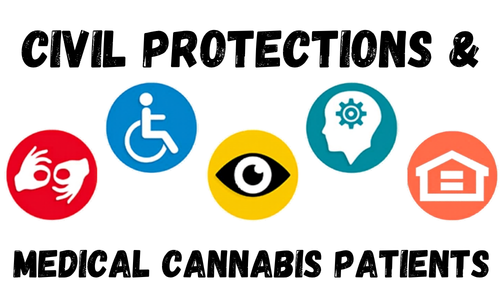
Federal cannabis laws affect far more than whether a patient can access medical cannabis. For decades, federal prohibition has limited protections for medical cannabis patients under laws such as the Americans with Disabilities Act (ADA) and the Fair Housing Act (FHA). As a result, patients have often been denied the basic protections that people with other serious health conditions expect in employment, housing, healthcare, and access to federal programs.
Federal prohibition has also affected patients’ access to essential healthcare, housing, and financial support programs, sometimes forcing patients to choose between the medicine they need and the benefits they depend on. It has also created barriers to federal employment, healthcare autonomy, firearm ownership, and other aspects of daily life.
As federal and state cannabis laws change, implementation matters. Advocates must stay vigilant to ensure public agencies, private institutions, employers, housing providers, and healthcare systems update their policies in ways that respect patient rights and protect safe, legal access to medical cannabis.
It is important to stay active, engaged, and informed. Sign up to get ASA updates and learn more about ending patient discrimination.
Rights and protections for medical cannabis patients are evolving. In some cases, outdated policies may impact how patients are treated. In other cases, like those in the military, policy changes will have to come from Washington, DC. In the case of organ transplants, stigma still plays a role in medical cannabis patients having access to life-saving treatment, even if state laws ban discrimination. Please use the resources below to better understand patient rights and how to navigate these programs and services.
Medical cannabis may be legal in your state, but it is illegal to cross state lines, even if the bordering state also has a medical cannabis program. For more information about traveling as a medical cannabis patient, check out our Travel Guide.
Stigma and discrimination also make patients targets for law enforcement encounters. Keep in mind that the best law enforcement encounter is the one that never occurs! It's crucial for individuals involved in medical cannabis to understand not only medical cannabis laws and regulations but also their rights. Be Prepared. Know Your Rights!
| State laws frequently change; if you find information that is out of date, incorrect, or has a broken link, let us know! Email [email protected] |
Medical cannabis patients can find additional resources here.
Get Involved! Learn more about ASA Campaigns and Take Action to improve the lives of medical cannabis patients today!
If you appreciate ASA's work, join now to become a part of the movement & sign up to get ASA updates.

Share this page