MEDICAL CANNABIS PATIENTS & CAREGIVERS
|
The Alaska Medical Cannabis Program was established through a medical marijuana law (SB 94), passed in 1998. The Department of Health and Social Services now oversees patient registration. |
Medical cannabis may not be the best treatment choice for all patients. Learn more.
A LEGAL MEDICAL CANNABIS PATIENT ...
1. Is a resident of Alaska.
2. Has one of the following medical conditions:
- cancer
- glaucoma
- positive status for human immunodeficiency virus, or acquired immune deficiency syndrome, or treatment for any of these conditions;
- cachexia
- severe pain
- severe nausea
- seizures
- epilepsy
- persistent muscle spasms
- multiple sclerosis (C)
- Any other medical condition, or treatment for such condition, approved by the department, under regulations adopted under AS17.37.060, or approval of a petition submitted under AS17.37.060.
- Any medical condition for which a patient’s health care practitioner has recommended, approved, or authorized the use of cannabis by that individual to treat the condition.
*Physicians and patients may petition the department to add conditions to this list under AS 17.37.060.
3. Is enrolled with the Alaska Department of Health and holds a valid registry identification card.
4. Enrollment is current (renewed annually).
ENROLLMENT PROCESS
Step 1: Get your condition certified
Your physician must personally examine you within the context of a bona fide physician-patient relationship. That examination must have taken place within the past 16 months. Your physician will provide a signed statement confirming:
- The examination took place, and the date it occurred
- You have been diagnosed with a debilitating medical condition
- The physician has considered other approved medications and treatments and concludes you may benefit from the medical use of cannabis
Step 2: Complete a sworn application
Submit the sworn application form provided by the Department. The form must include:
- Your name, address, date of birth, and Alaska driver's license or ID number
- Your physician's name, address, and phone number
- If applicable: the name, address, date of birth, and Alaska ID number of your designated primary or alternate caregiver
Step 3: Submit your application
Mail your original signed forms — and keep copies of everything — along with:
- A copy of your Alaska driver's license or ID card
- A $25 application fee (check or money order payable to the Bureau of Vital Statistics)
Important notes:
- If your application is denied or has errors, you cannot reapply for 6 months.
PATIENT RENEWAL
Registration must be renewed every year. Renewal requires all documentation, including a new signed physician's statement, even if nothing has changed. The renewal fee is $20. Your physician must have examined you within the 16 months before your renewal application.
If your card has already expired, your application will be treated as a new application, not a renewal.
ENROLLING MINOR PATIENTS
A parent or guardian must apply on behalf of a minor patient. The parent or guardian must:
- Submit all standard application documentation
- Provide a statement confirming they have been informed of the possible risks and benefits of the medical use of cannabis
- Consent to serve as the primary caregiver
- Agree to control the acquisition, possession, dosage, and frequency of use of cannabis for the patient
Patients under 21 cannot purchase cannabis directly from a retail store. A caregiver must make purchases on their behalf.
A caregiver in Alaska:
- Must be at least 21 years of age
- Must not have been convicted of a felony offense under AS 11.71 or AS 11.73, or a similar offense in any other jurisdiction
- Must not currently be on probation or parole from any jurisdiction
- Must submit a sworn statement to the Department confirming all of the above
Caregiver limits:
A caregiver may serve as a primary or alternate caregiver for only one patient at a time. Exception: A caregiver may serve two or more patients simultaneously if those patients are related to the caregiver by at least the fourth degree of kinship by blood or marriage.
A primary caregiver may only act in that role when physically in possession of the caregiver registry identification card. The same requirement applies to an alternate caregiver acting in the primary caregiver role.
Dispensaries:
After your enrollment is approved, you can access your registry account and pick up medical cannabis at your nearest licensed retail store. Find Medical Cannabis Dispensary Locations.
Alaska does not have separate medical dispensaries. Registered patients purchase from licensed adult-use retail stores. Patients must present their registry identification card and a government-issued photo ID at the time of purchase. Patients under 21 cannot purchase directly. A caregiver must purchase on their behalf.
What to bring:
- Your registry identification card
- Government-issued photo ID
- If you are under 21: your caregiver must bring their registry identification card and their own government-issued photo ID
Home Cultivation:
Under Alaska Statutes, AS 17.37.040, registered patients may grow up to six cannabis plants at their primary residence, with no more than three being mature at any time.
Cultivation is subject to the following requirements:
- Plants must not be visible to the public without the use of binoculars, aircraft, or other optical aids
- The cultivator must take reasonable precautions to secure plants from unauthorized access
- Cultivation may only occur on property lawfully in the cultivator's possession, or with the consent of the property owner
- Landlords may prohibit cultivation in rental agreements
- Violations are punishable by a fine of up to $750
A registered caregiver who is at least 21 years of age may cultivate cannabis plants on behalf of a registered patient.
Need tips on home cultivation?
Possession Limits
Under Alaska Statutes, AS 17.37.040, registered patients may possess:
- Up to 1 ounce of usable cannabis
- Up to 6 cannabis plants, with no more than 3 being mature at any time
Cannabis Product Safety:
Cannabis, in its natural form, is inherently safe for most patients, but it is especially susceptible to contaminants during cultivation, manufacturing, handling & even storing. Whether you are purchasing cannabis from regulated, grey, or illicit markets or cultivating your own cannabis, you should be aware of the contaminants commonly found in cannabis and the symptoms that accompany their presence.
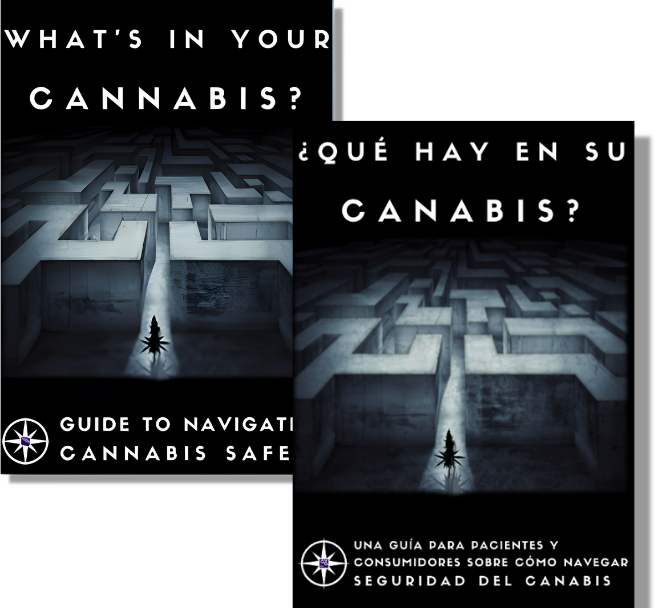
Products sold in Alaska's dispensaries and adult-use retail locations must be tested for contaminants, pesticides, and adulterants, in accordance with thresholds set by state regulators. Click here to see specific requirements for Alaska products.
For more information about cannabis safety, download ASA's "What’s in Your Cannabis? A Patient & Consumer Guide to Navigating Cannabis Safety."
It can be challenging for patients to determine which businesses offering cannabis products are licensed and approved by the state. Review this list of medical cannabis retailers to find out where to purchase regulated cannabis in Alaska.
Medical cannabis can be used on private property, but cannot be smoked or vaped in public places where smoking and vaping are prohibited under the Smokefree Alaska Law.
Patients CANNOT medicate or possess medical cannabis in these locations:
- Any school bus
- Any correctional facility
- Any medical facility or facility monitored by the Department of Health or the Department of Administration
- Within 500 feet of school grounds
- Within 500 feet of a recreation or youth center
- The grounds of federal facilities (such as courthouses, post offices, airports, and national parks)
Smoking or vaping medical cannabis is prohibited under AS 17.38.040:
- Any place of employment
- Any public place, including any indoor or outdoor area used by or open to the general public
- In any way that endangers the health or well-being of any person
Violations of the public consumption ban are punishable by a fine of up to $100.
Alaska has an adult-use cannabis program, but registering as a medical cannabis patient still offers important benefits. While the medical program may require additional steps, registration can provide patients and caregivers with added support, stronger protections, and access to medical guidance.
Legal Protections for Registered Patients
Registered patients and their caregivers are protected from arrest and prosecution for possession and use of cannabis within program limits under AS 17.37.030.
Privacy Protections
Patient records in the Alaska Medical Cannabis Registry are confidential and are not public records. Access to the registry is limited to authorized Department employees in the course of their official duties, and to peace officers in the course of a criminal investigation or prosecution.
Keeping the Medical Program Strong:
Enrollment helps demonstrate continued patient need for Alaska's medical cannabis program. A strong registry helps protect and sustain the program, supports continued access for patients with serious health needs, and reinforces the importance of maintaining a medical pathway alongside adult-use access.
Federal Protections Apply Only to Registered Patients
Some federal protections are now available, but only to patients who are officially registered in their state’s medical cannabis program.
A federal order issued April 28th,2026, AG Order No. 6754-2026, treats a state medical cannabis certification or registration as similar to a prescription under federal law. This means that being registered is not just a state requirement; it may also affect whether a patient qualifies for federal protections.
To receive these protections, a patient’s registration must stay active, current, and in good standing. Learn more here.
Alaska does not recognize out-of-state patient registry cards. Out-of-state patients may not use a registry card issued by another state to purchase cannabis at Alaska licensed retail stores.
For information about the Alaska Medical Cannabis Program, visit the Alaska Department of Health.
*UPDATE: AG ORDER NO. 6754-2026 CHANGED FEDERAL CANNABIS LAWS ON APRIL 28, 2026: Learn more here.
Federal cannabis laws affect far more than whether a patient can access medical cannabis. For decades, federal prohibition has limited protections for medical cannabis patients under laws such as the Americans with Disabilities Act (ADA) and the Fair Housing Act (FHA). As a result, patients have often been denied the basic protections that people with other serious health conditions expect in employment, housing, healthcare, and access to federal programs.
Federal prohibition has also affected patients’ access to essential healthcare, housing, and financial support programs, sometimes forcing patients to choose between the medicine they need and the benefits they depend on. It has also created barriers to federal employment, healthcare autonomy, firearm ownership, and other aspects of daily life.
As federal and state cannabis laws change, implementation matters. Advocates must stay vigilant to ensure public agencies, private institutions, employers, housing providers, and healthcare systems update their policies in ways that respect patient rights and protect safe, legal access to medical cannabis.
It is important to stay active, engaged, and informed. Sign up to get ASA updates and learn more about ending patient discrimination.
Rights and protections for medical cannabis patients are evolving. In some cases, outdated policies may impact how patients are treated. In other cases, like those in the military, policy changes will have to come from Washington, DC. In the case of organ transplants, stigma still plays a role in medical cannabis patients having access to life-saving treatment, even if state laws ban discrimination. Please use the resources below to better understand patient rights and how to navigate these programs and services.
Medical cannabis may be legal in your state, but it is illegal to cross state lines, even if the bordering state also has a medical cannabis program. For more information about traveling as a medical cannabis patient, check out our Travel Guide.
Stigma and discrimination also make patients targets for law enforcement encounters. Keep in mind that the best law enforcement encounter is the one that never occurs! It's crucial for individuals involved in medical cannabis to understand not only medical cannabis laws and regulations but also their rights. Be Prepared. Know Your Rights!
| State laws frequently change; if you find information that is out of date, incorrect, or has a broken link, let us know! Email [email protected] |
Medical cannabis patients can find additional resources here.
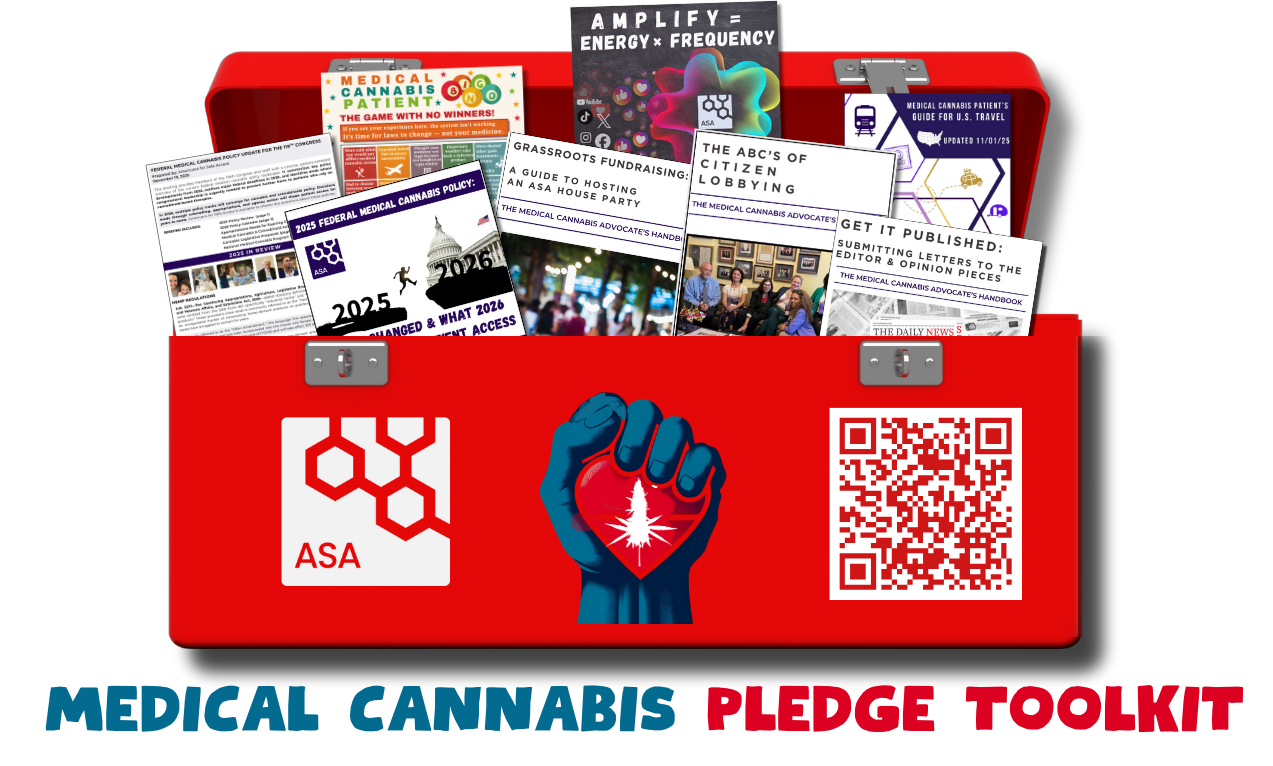
Get Involved! Learn more about ASA Campaigns and Take Action to improve the lives of medical cannabis patients today!
If you appreciate ASA's work, join now to become a part of the movement & sign up to get ASA updates.
Share this page