Can a Push for Nutrition Education Lead to the Endocannabinoid System in Medical School Curriculum?
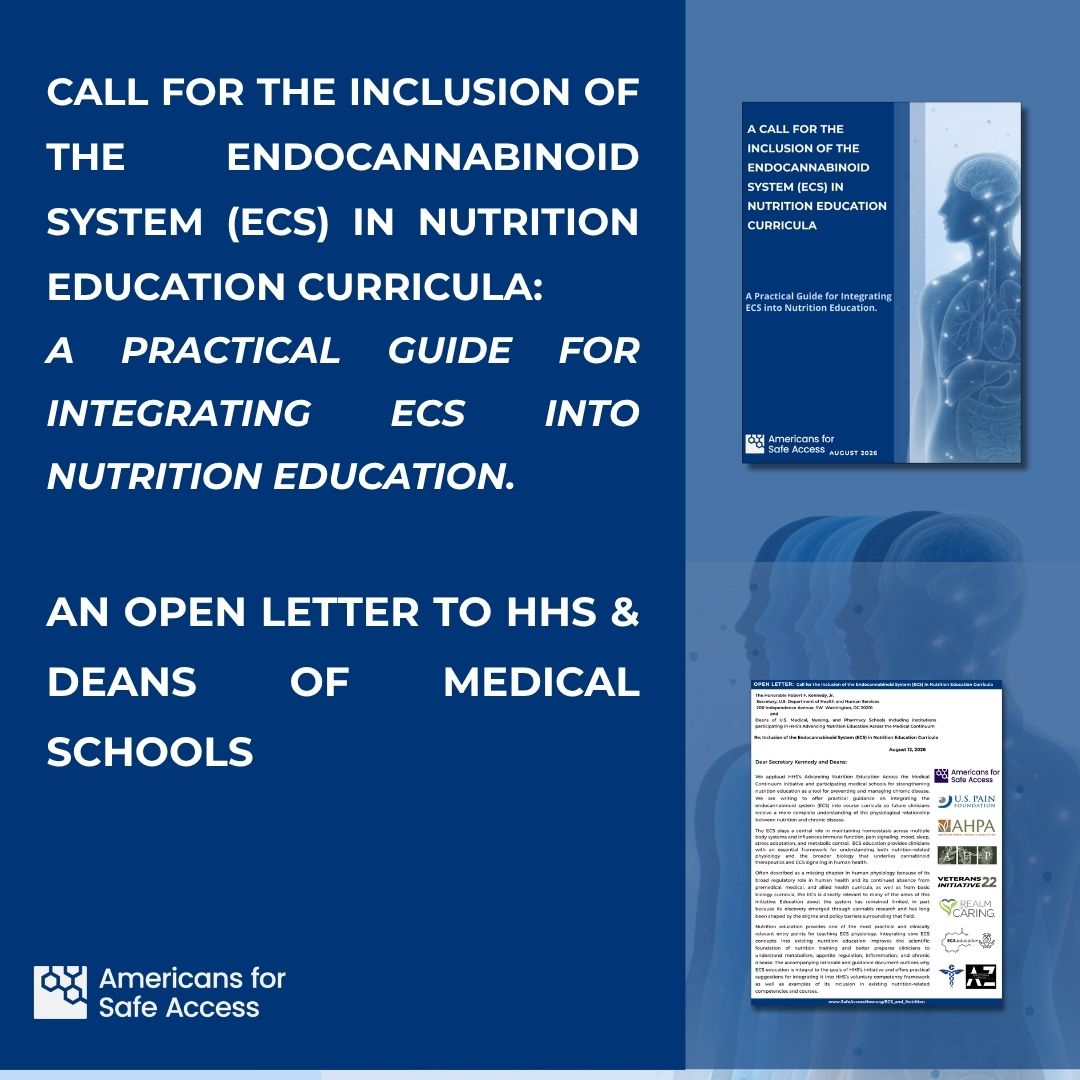 ASA and a coalition of scientists, clinicians, educators, and patient advocates are urging HHS and medical schools to use a historic expansion of nutrition education to close a long-standing gap in human physiology
The U.S. Department of Health and Human Services is leading one of the most significant efforts in decades to strengthen nutrition education in medical training. Americans for Safe Access is leading an effort to make HHS's campaign an opportunity for medical students to learn about the endocannabinoid system too.
Advancing Nutrition Education
 In March 2026, HHS launched Advancing Nutrition Education Across the Medical Continuum, an initiative intended to better prepare healthcare professionals to prevent and manage chronic disease. HHS has cited research findings that 75 percent of U.S. medical schools had no required clinical nutrition coursework and that only 14 percent of residency programs required nutrition training.
The initiative now includes 76 committed institutions across 36 states and reaches more than 52,000 medical students. Participating schools are committing to at least 40 hours of nutrition education across four years of undergraduate medical education, or a 40-hour competency equivalent. That is an important step. But the voluntary nutrition competency framework developed by HHS does not currently include the endocannabinoid system, or ECS.
ASA has launched an effort to change that!
Why the ECS Belongs in Nutrition Education
 The ECS is an endogenous lipid-signaling system that helps maintain balance across multiple physiological processes. It influences appetite, energy regulation, metabolism, inflammation, immune function, gut signaling, stress adaptation, sleep, mood, and pain. They are central to understanding nutrition, physiology, and chronic disease.
Dietary fats provide precursors that influence endocannabinoid production and signaling. Changes in the balance of omega-6 and omega-3 fatty acids can affect pathways related to inflammation, metabolism, neurological function, and energy regulation. The ECS therefore provides a biological framework for understanding how nutrition interacts with health across multiple organ systems. Yet many clinicians and medical educators remain unfamiliar with it.

Part of the reason is historical. Scientists identified the ECS while studying how compounds in cannabis interact with the human body. Because ECS science emerged through cannabis research, education about this physiological system has remained entangled with decades of marijuana stigma, prohibition, and limited research investment.
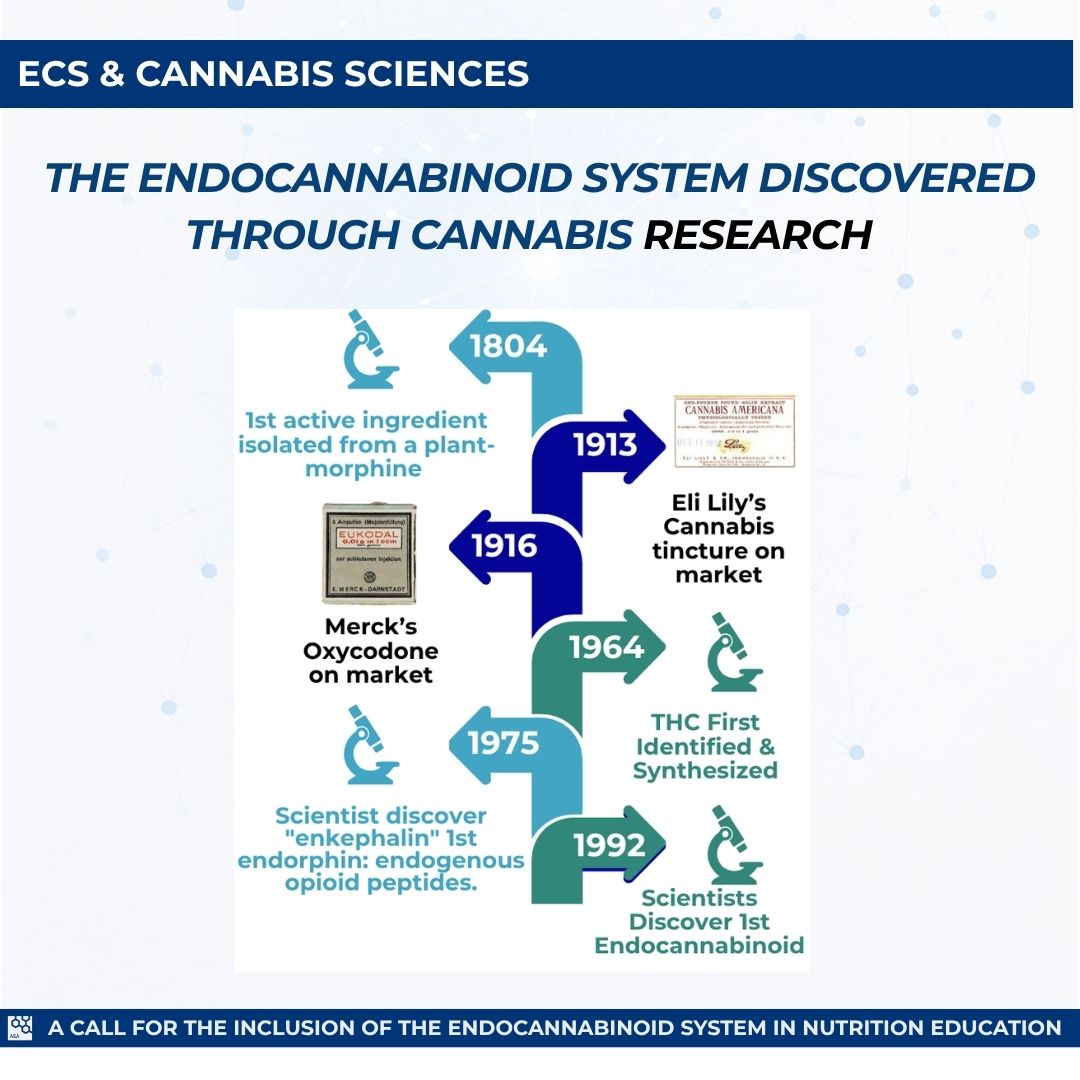 That history has allowed a basic area of human physiology to be treated as though it belongs only in conversations about cannabis. It does not. The ECS exists independently of the cannabis plant. It is part of human biology, and its relevance extends well beyond cannabinoid therapeutics.
A Guide for Medical Schools Inclusion of ECS Not a Call for a Cannabis Course
On August 12, Americans for Safe Access released A Call for the Inclusion of the Endocannabinoid System in Nutrition Education Curricula: A Practical Guide for Integrating ECS into Nutrition Education. ASA also delivered an open letter to HHS and the deans of medical schools participating in the federal nutrition education initiative.
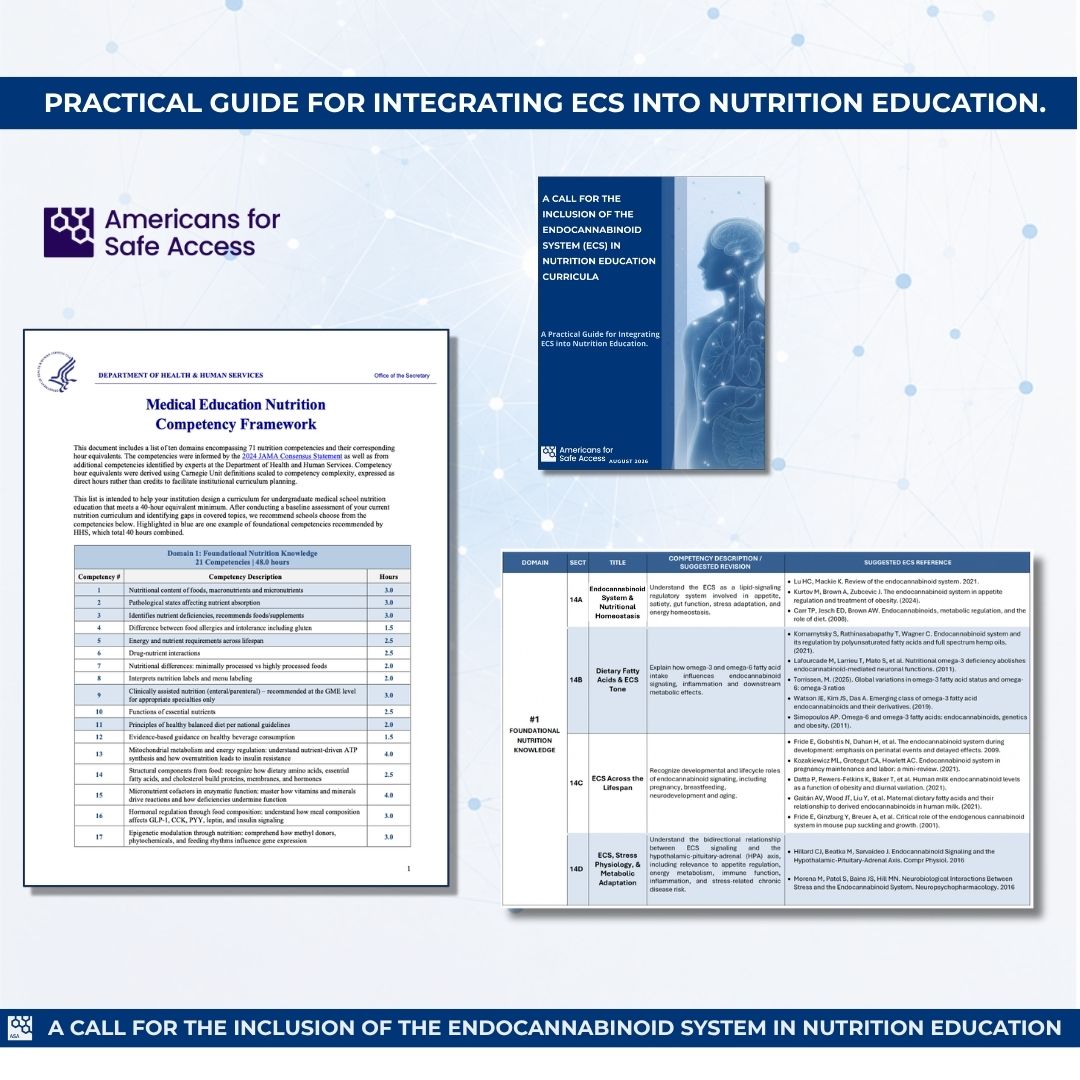
The request is practical: We are not asking medical schools to create a cannabis course. We are asking them to teach the physiology. The guide shows how ECS concepts can be incorporated into existing instruction on nutrition, metabolism, physiology, chronic disease, public health, lifespan development, and patient communication.
It maps suggested ECS content into HHS’s existing 10-domain Medical Education Nutrition Competency Framework rather than proposing a separate stand-alone curriculum.
The guide also uses publicly available course structures from Johns Hopkins, Stanford, the University of Pennsylvania, Yale, and the University of California, Berkeley to show where ECS concepts could naturally fit. These examples are not official university curricula or endorsements. They are teaching models intended to demonstrate that ECS education can be added without rebuilding entire courses.
What the Sign-On Letter Asks HHS and Medical Schools to Do
Physicians, pharmacists, nurses, researchers, educators, public officials, patient organizations, and experts in nutrition, integrativ
e medicine, and ECS science support the letter.
Together, the signatories are asking HHS and medical educators to:
- Include core ECS concepts in HHS’s voluntary Medical Education Nutrition Competency Framework.
- Integrate ECS science into existing nutrition, physiology, metabolism, and chronic-disease instruction where it is directly relevant.
- Work with scientists, clinicians, educators, curriculum leaders, and patient experts to develop accurate, evidence-informed teaching materials and implementation strategies.
ASA and participating experts have also offered to work directly with HHS, medical, nursing, and pharmacy schools, accrediting organizations, and curriculum leaders to identify appropriate competencies, recommend scientific literature, and support implementation.

This is not simply a request to add another topic to an already crowded curriculum. It is an effort to strengthen the physiological foundation students need to understand how nutrition, metabolism, inflammation, stress, and chronic disease intersect.
Why This Is a Patient Advocacy Issue
For ASA, ECS education is inseparable from patient advocacy.
Patients regularly encounter healthcare professionals who know little about the ECS and may have received no formal education about cannabinoid therapeutics. Patients are often left to explain their own treatment, defend their use of medical cannabis, or navigate clinical conversations shaped more by stigma than science.
That burden should not fall on patients.

Clinicians need enough ECS knowledge to communicate clearly with patients, assess cannabis use without making assumptions, recognize potential medication interactions, and distinguish therapeutic use or self-treatment from cannabis use disorder using appropriate clinical criteria.
They also need a broader understanding of the physiological systems involved in chronic disease.
 Three in four U.S. adults have at least one chronic condition, and more than half have two or more. Many patients manage several conditions simultaneously and take multiple medications. Adults age 65 and older make more than 600,000 emergency-department visits each year because of adverse drug events.
 Better education about nutrition and physiology will not eliminate those risks. But clinicians cannot provide fully informed, patient-centered care while a major regulatory system involved in metabolism, inflammation, pain, appetite, and stress remains missing from their education.
A Window That May Not Stay Open
Medical schools are revising nutrition education now.
HHS has created the framework. Institutions have made public commitments. Accrediting, assessment, and board organizations have pledged to strengthen nutrition education across medical training.
This is the moment to decide whether the next generation of clinicians will receive a more complete understanding of human physiology—or whether the ECS will remain excluded for another generation.
The opportunity is unusually clear. The solution is practical. And the need is rooted in both current science and patients' real experiences. The question is not whether the ECS is relevant to nutrition and chronic disease. The question is whether HHS and medical schools will act while the door is open.
 Take Action
Read and sign the open letter to HHS and medical educators
Download ASA’s practical guide
Share the guide with medical, nursing, pharmacy, nutrition, and public-health educators and ask them to include the endocannabinoid system wherever they teach nutrition, metabolism, physiology, and chronic disease.



Share this page